
7-Day Upper and Lower Split: Train 3 Times a Week: Progression Cycle 2
A practical seven-day strength and muscle plan with three focused gym sessions, active recovery and clear exercise guidance.
How to use this plan
Follow the days in order, log every working set, and finish each set with one to three good repetitions still available. Use the exercise animations to learn the movement and open the video when you need a full demonstration.
Monday
Upper Body / Push
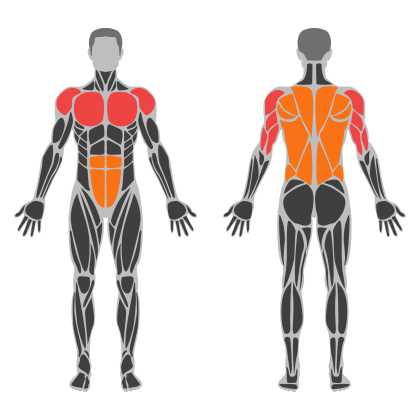
Upper Body / Push muscle focus
Red marks the primary training focus. Orange marks supporting muscle groups used throughout this session.
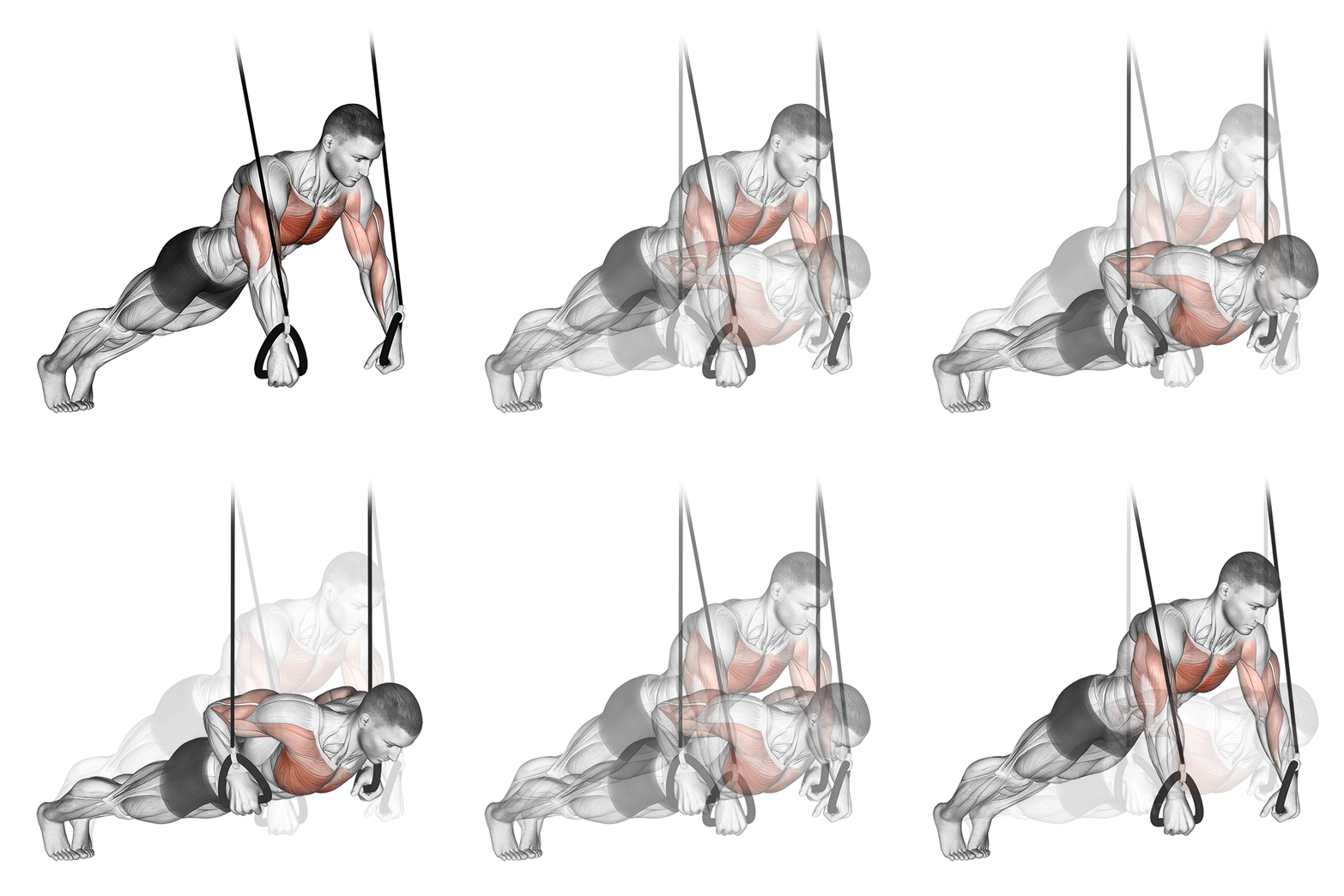
Ring Push-Up
The Ring Push Up is an advanced upper body exercise that targets the chest, shoulders, and triceps while engaging the core for stability. It involves performing push-ups using gymnastic rings, which adds an element of instability, requiring greater muscle activation and control.
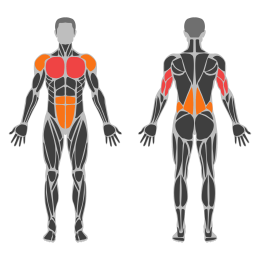
Muscle focus
Step-by-step cues
- Adjust the rings to hang just above the ground.
- Position yourself in a plank position with hands gripping the rings, arms fully extended, and feet together.
- Engage your core and maintain a straight line from head to heels.
- Lower your body by bending your elbows, keeping them close to your body.
- Descend until your chest is in line with your hands.
- Push through the rings to extend your arms and return to the starting position.
- Repeat for the desired number of repetitions.
Technical tips
- Ensure the rings are securely fastened before starting.
- Keep your wrists neutral to avoid strain.
- Focus on keeping your body stable throughout the movement.
- Control the descent to maximize muscle engagement.
- Avoid letting your elbows flare out too much; keep them at a 45-degree angle to your body.
- Maintain a tight core to prevent sagging in the lower back.
- Start with fewer repetitions if you're new to ring exercises.
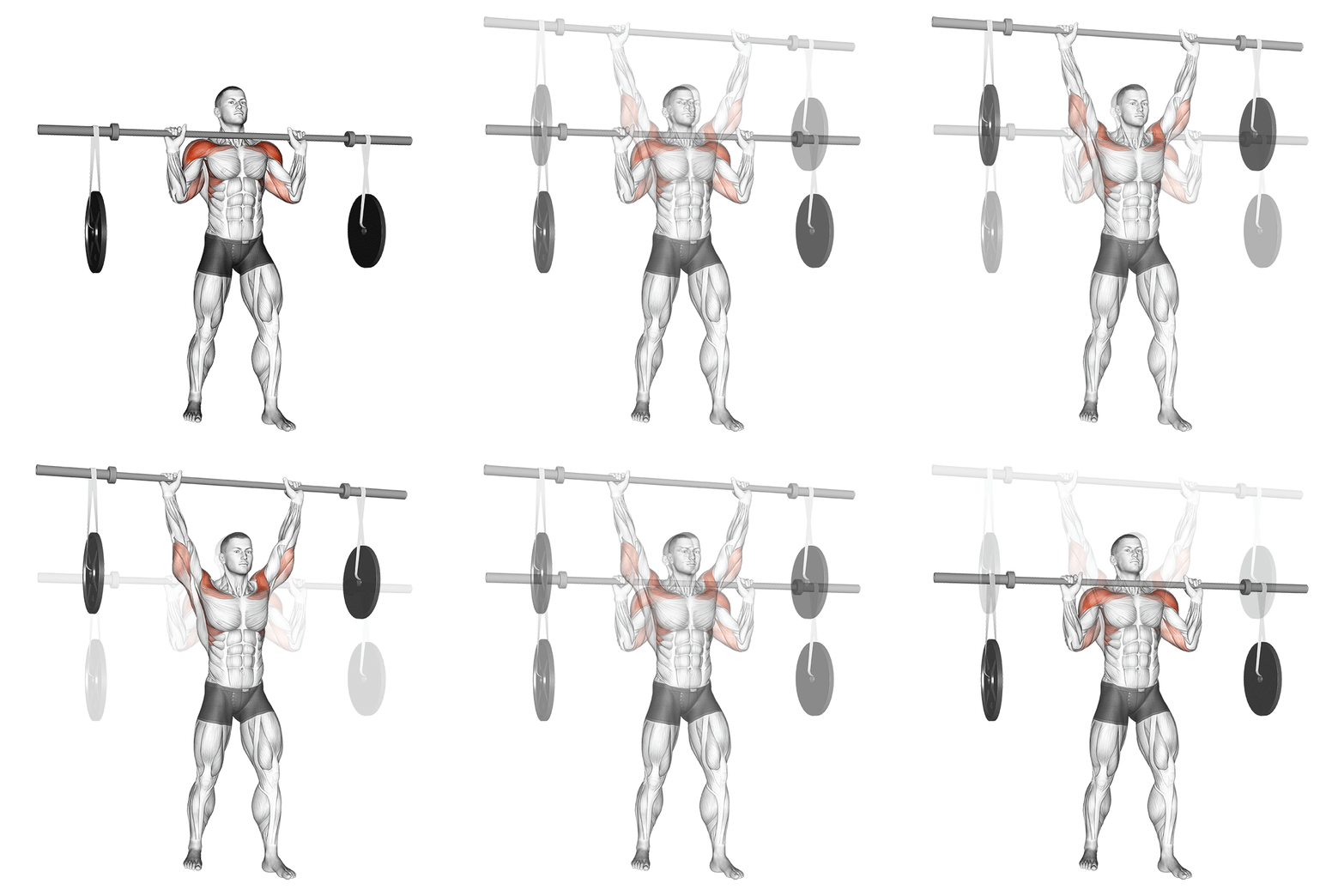
Tsunami Overhead Press
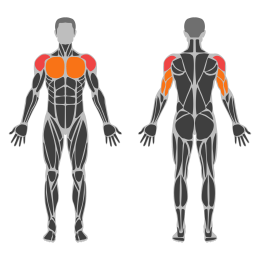
The Tsunami Overhead Press is a variation of the traditional overhead press, utilizing a flexible barbell known as the Tsunami Bar. This exercise targets the shoulders, triceps, and upper chest while engaging stabilizing muscles due to the bar's oscillating nature. It enhances strength, stability, and coordination.
Muscle focus
Step-by-step cues
- Begin by setting up the Tsunami Bar on a squat rack at shoulder height.
- Stand with your feet shoulder-width apart and grip the bar slightly wider than shoulder-width with an overhand grip.
- Unrack the bar and step back, keeping your core engaged and feet firmly planted.
- Position the bar at shoulder level with your elbows slightly in front of your body.
- Press the bar overhead by extending your arms fully, ensuring your head moves slightly forward as the bar passes your face.
- Lower the bar back to shoulder level in a controlled manner.
- Repeat for the desired number of repetitions.
Technical tips
- Maintain a tight core throughout the movement to stabilize your spine.
- Focus on controlling the bar's oscillations to enhance muscle engagement.
- Keep your wrists straight to avoid unnecessary strain.
- Ensure your elbows are not flaring out excessively during the press.
- Breathe out as you press the bar overhead and inhale as you lower it.
- Start with a lighter weight to master form and balance before progressing.
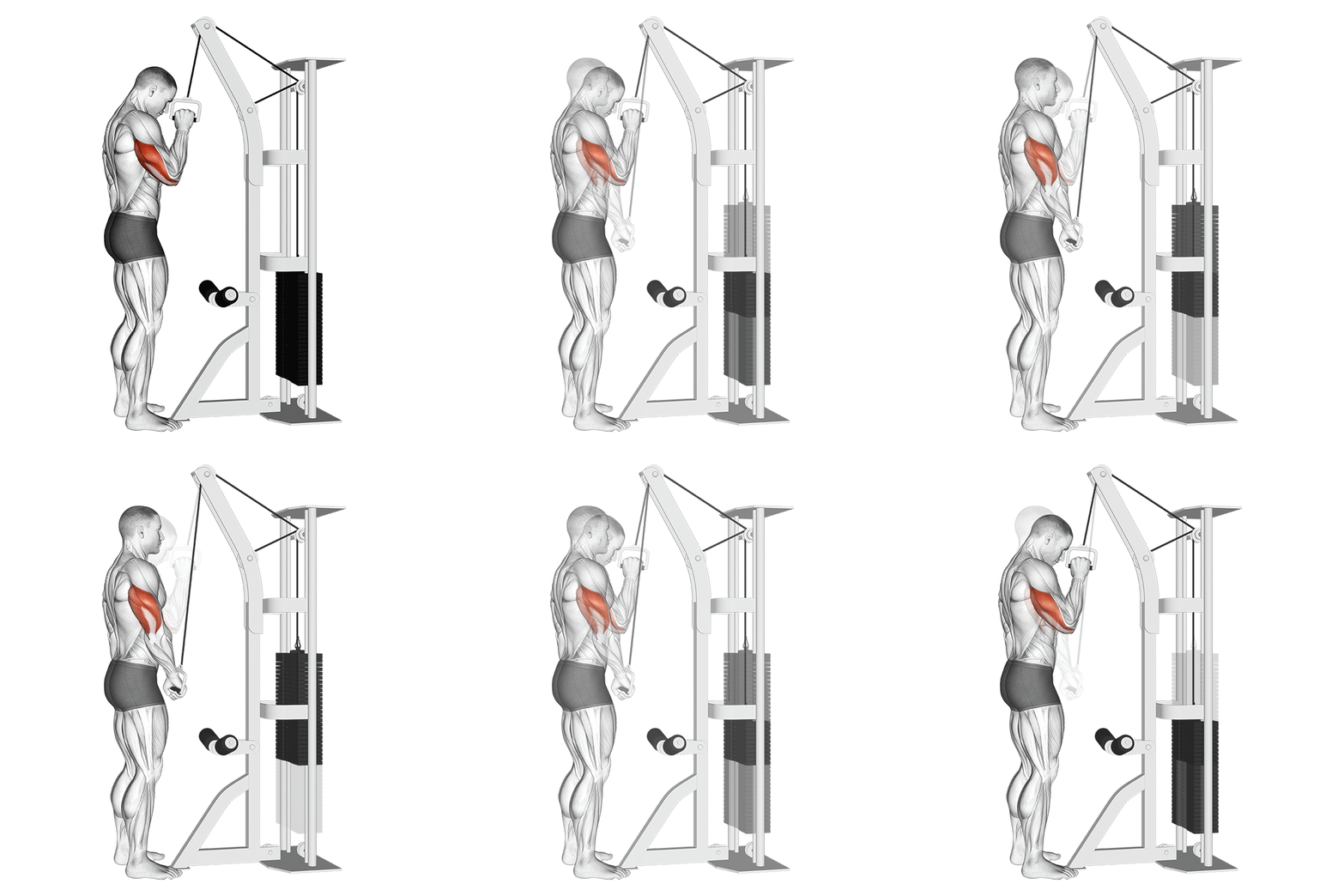
One-Arm Triceps Cable Pushdown
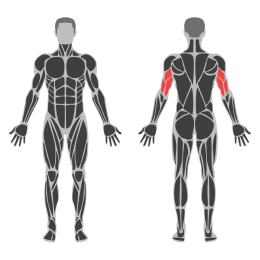
The One-Arm Triceps Cable Pushdown is an isolation exercise targeting the triceps brachii muscle. It is performed using a cable machine with a single handle attachment, allowing for unilateral training to correct muscle imbalances and enhance arm symmetry.
Muscle focus
Step-by-step cues
- Attach a single handle to the high pulley of a cable machine.
- Stand facing the machine with feet shoulder-width apart.
- Grasp the handle with one hand, palm facing down, and step back slightly to create tension in the cable.
- Position your upper arm close to your body and keep your elbow fixed at your side.
- Exhale and push the handle down by extending your elbow until your arm is fully straightened.
- Pause briefly at the bottom of the movement, ensuring full contraction of the triceps.
- Inhale and slowly return to the starting position with control, allowing your elbow to bend.
- Repeat for the desired number of repetitions before switching arms.
Technical tips
- Keep your core engaged and maintain a slight bend in your knees for stability.
- Avoid using momentum; focus on controlled movements to maximize muscle engagement.
- Ensure your wrist remains neutral throughout the exercise to prevent strain.
- Concentrate on squeezing the triceps at the bottom of each repetition for optimal contraction.
- Perform the exercise in front of a mirror if possible to monitor form and prevent elbow flare.
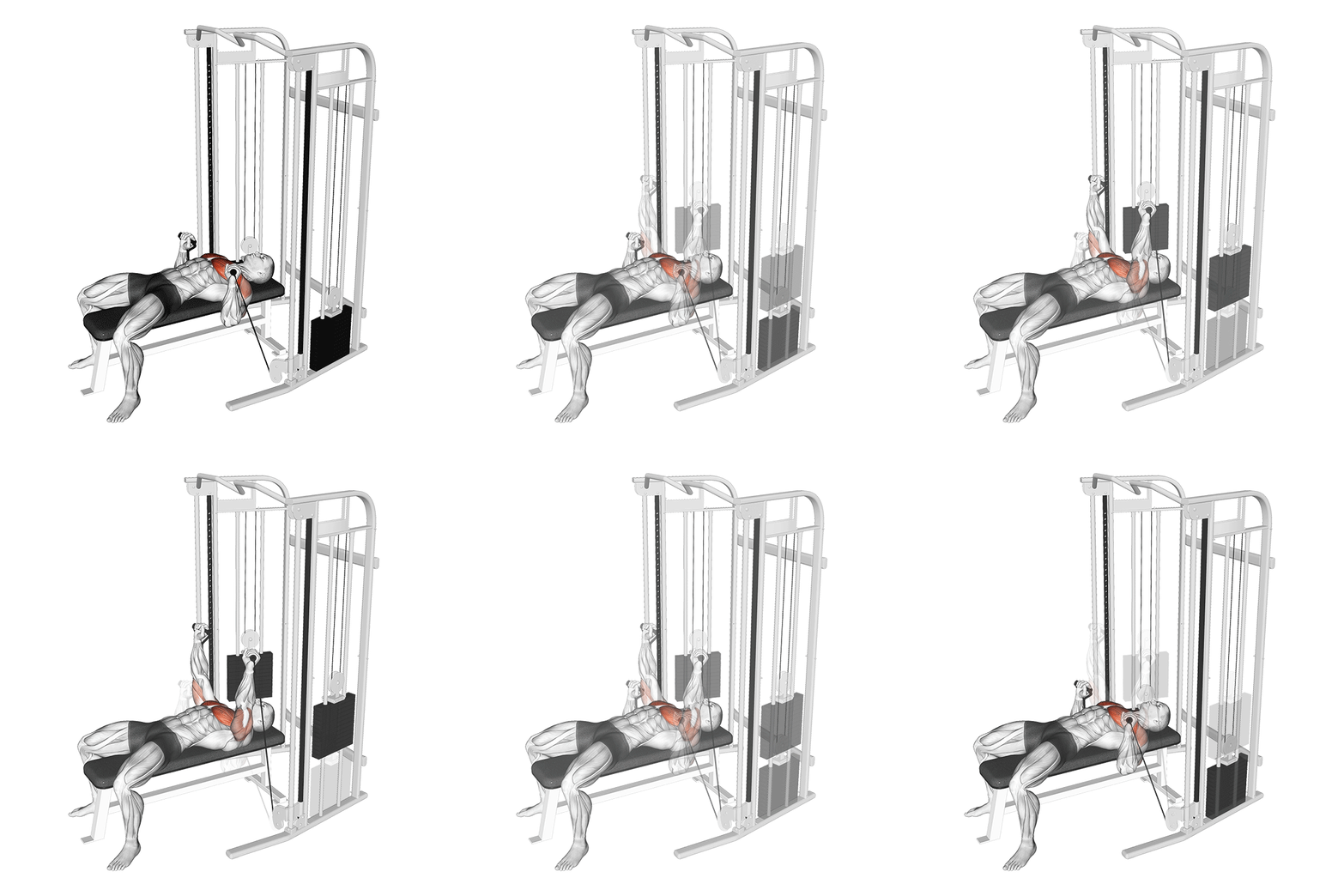
Cable Bench Press
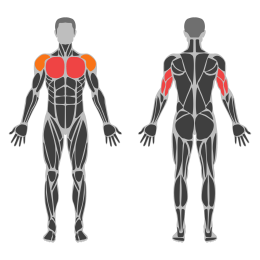
The Cable Bench Press is a variation of the traditional bench press that utilizes a cable machine to provide constant tension throughout the movement. This exercise targets the pectoral muscles, triceps, and anterior deltoids. It is performed on a flat bench with cables attached to a low pulley system, allowing for a controlled and smooth range of motion.
Muscle focus
Step-by-step cues
- Set up a flat bench between two low pulley machines. Attach D-handle attachments to each cable.
- Lie on the bench with your feet flat on the floor, ensuring your back is in contact with the bench.
- Grab each handle with an overhand grip and position your hands at chest level, elbows bent at approximately 90 degrees.
- Press the handles upward by extending your arms, keeping your wrists straight and aligned with your forearms.
- Pause briefly at the top of the movement, ensuring full contraction of the chest muscles.
- Slowly lower the handles back to the starting position, maintaining control and tension in the cables.
- Repeat for the desired number of repetitions.
Technical tips
- Maintain a neutral spine throughout the exercise to prevent lower back strain.
- Focus on squeezing your chest muscles as you press the handles upward for maximum engagement.
- Keep your elbows slightly tucked in to reduce stress on the shoulder joints.
- Control the movement both upwards and downwards to maximize muscle tension and effectiveness.
- Avoid locking out your elbows completely at the top of the movement to maintain continuous tension on the muscles.
- Ensure that your shoulder blades remain retracted and stable against the bench during the exercise.
Dumbbell Incline T Raise
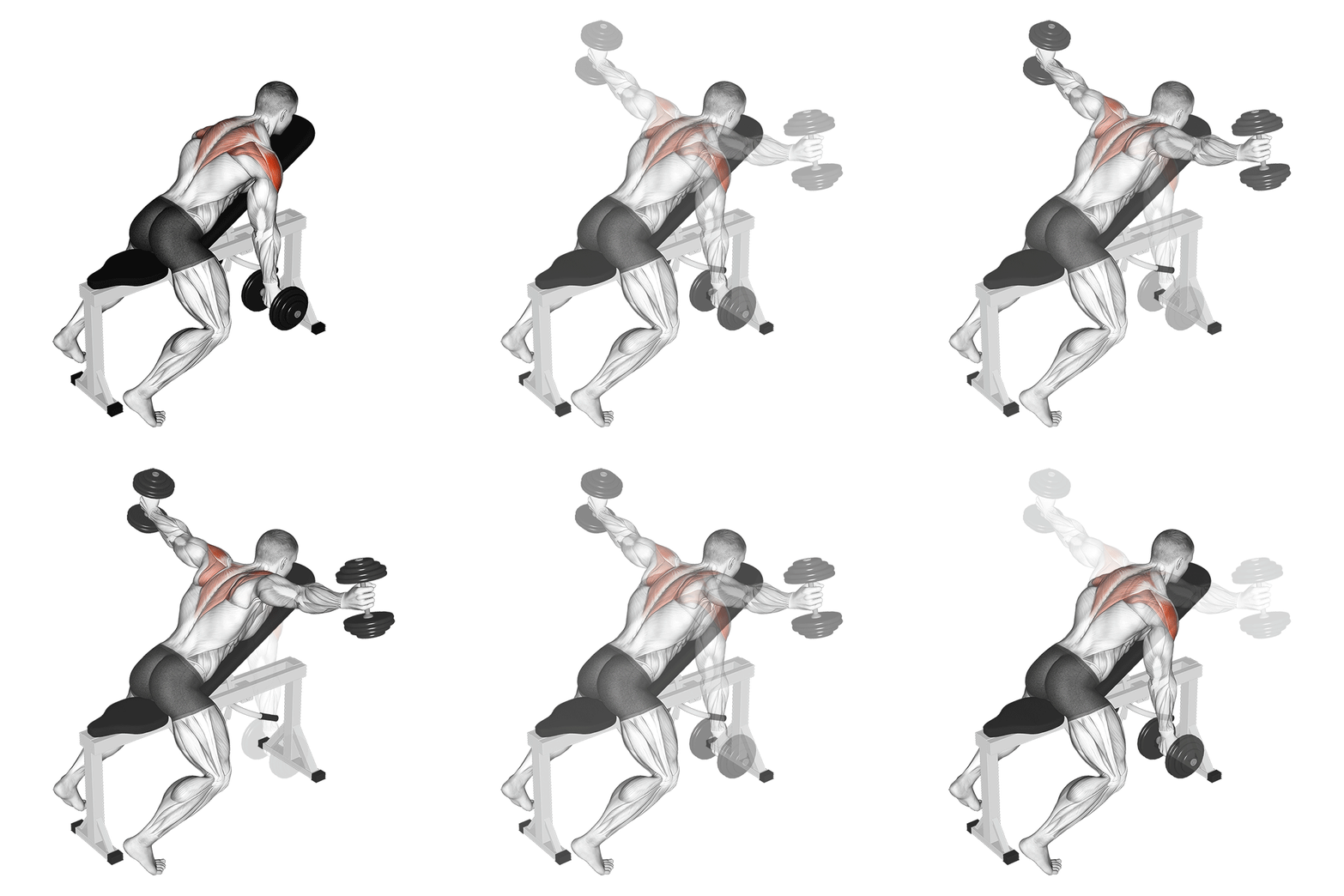
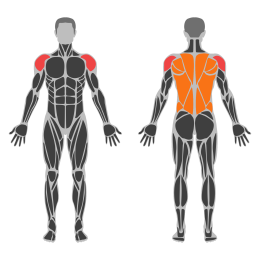
The Dumbbell Incline T Raise is an exercise targeting the upper back, specifically the rear deltoids, trapezius, and rhomboids. It involves lifting dumbbells while lying on an incline bench, forming a 'T' shape with your arms. This exercise helps improve posture and shoulder stability.
Muscle focus
Step-by-step cues
- Set an incline bench to a 30-45 degree angle.
- Lie face down on the bench with your chest supported and feet firmly on the ground.
- Hold a dumbbell in each hand with a neutral grip (palms facing each other).
- Extend your arms straight down towards the floor.
- Engage your core and keep your head in a neutral position.
- Raise your arms out to the sides until they are parallel to the floor, forming a 'T' shape.
- Squeeze your shoulder blades together at the top of the movement.
- Slowly lower the dumbbells back to the starting position.
- Repeat for the desired number of repetitions.
Technical tips
- Use light weights to maintain proper form and control throughout the exercise.
- Focus on squeezing your shoulder blades together as you lift the dumbbells.
- Keep your elbows slightly bent to reduce strain on the joints.
- Avoid using momentum; perform each repetition in a controlled manner.
- Maintain a neutral spine by keeping your head aligned with your torso.
- Breathe out as you lift the weights and inhale as you lower them.
Decline Diamond Push-Up
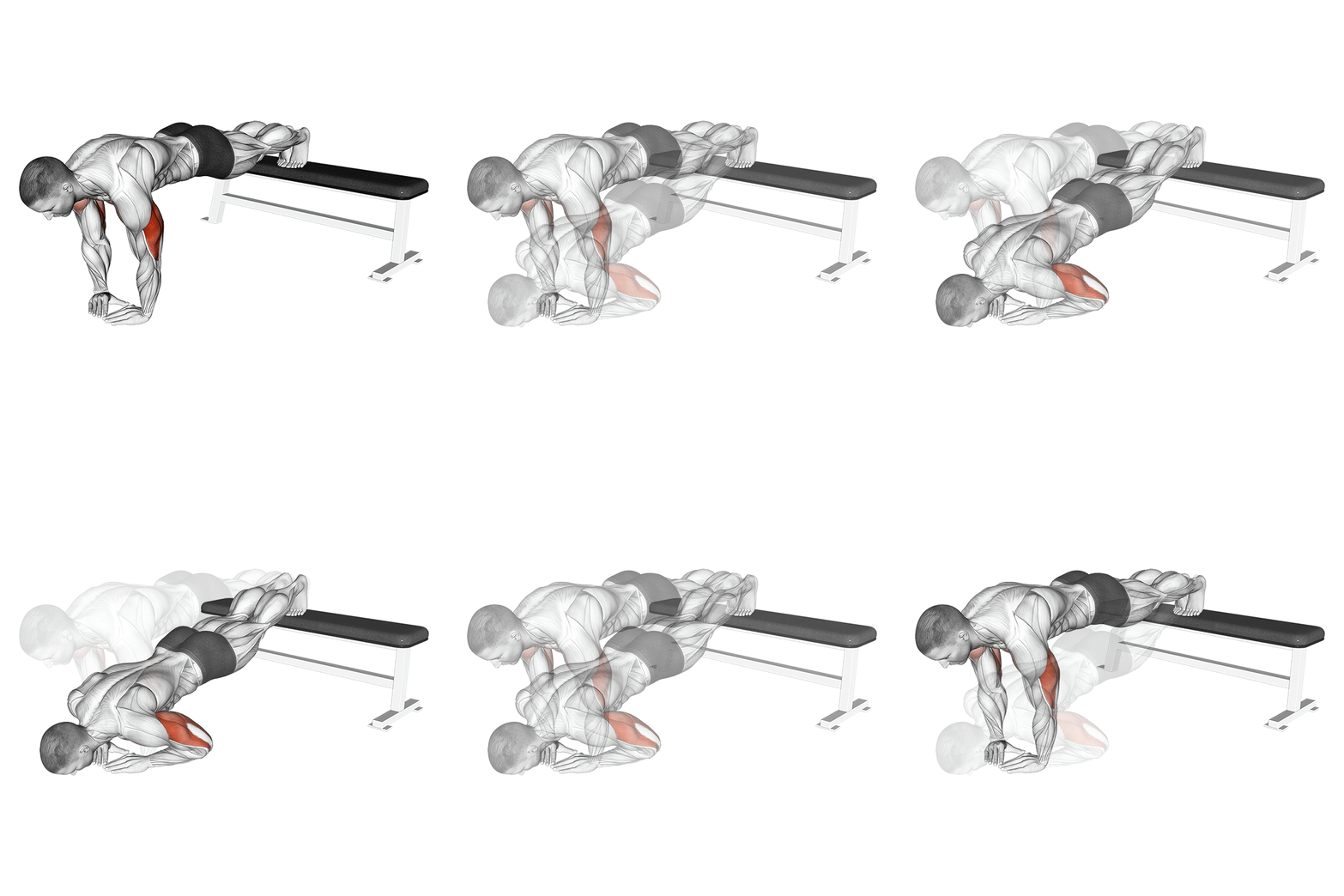
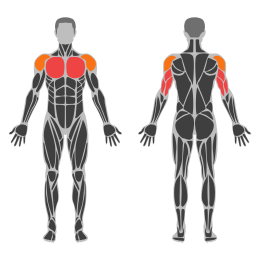
The Decline Diamond Push Up is a bodyweight exercise targeting the chest, triceps, and shoulders. It involves performing a push-up with feet elevated and hands positioned close together in a diamond shape, emphasizing the inner chest and triceps.
Muscle focus
Step-by-step cues
- Begin by placing your feet on an elevated surface such as a bench or step, ensuring your body is in a straight line from head to heels.
- Position your hands on the floor directly under your chest, forming a diamond shape by touching your thumbs and index fingers together.
- Engage your core and maintain a straight back throughout the movement.
- Lower your chest towards the floor by bending your elbows, keeping them close to your body.
- Pause briefly at the bottom of the movement, then push through your palms to return to the starting position.
- Repeat for the desired number of repetitions while maintaining proper form.
Technical tips
- Ensure your core is engaged to prevent sagging hips and maintain a straight body line.
- Focus on keeping your elbows close to your sides to maximize tricep engagement.
- Control the movement speed, especially when lowering your body, to increase muscle activation.
- If you find it difficult, start with a lower elevation or perform regular diamond push-ups until you build strength.
- Keep your neck neutral by looking slightly ahead of you rather than down.
Tuesday
Rest / Light Cardio
Walk for 45-60 minutes at a conversational pace and complete 10 minutes of mobility.
Wednesday
Lower Body Strength
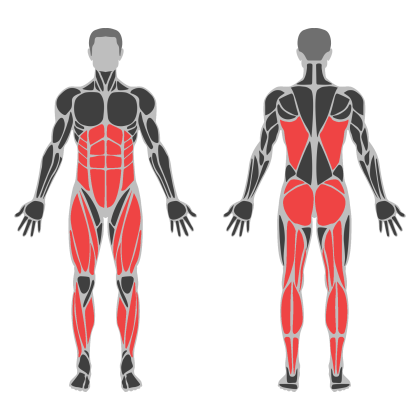
Lower Body Strength muscle focus
Red marks the primary training focus. Orange marks supporting muscle groups used throughout this session.
Lever Horizontal Leg Press
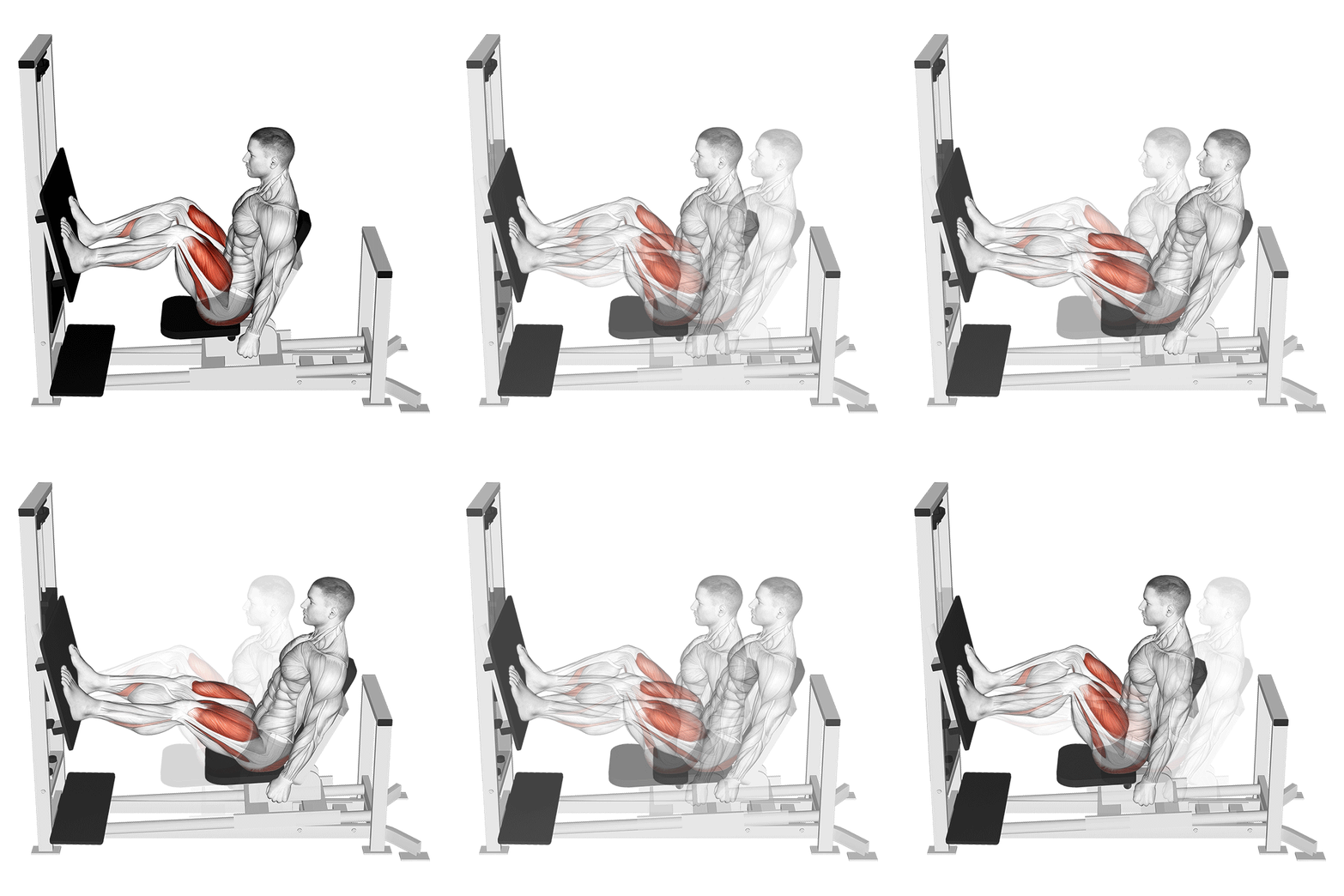
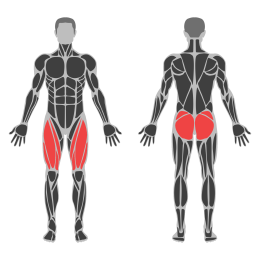
The Lever Horizontal Leg Press is a compound lower body exercise that targets the quadriceps, hamstrings, glutes, and calves. It involves pushing a weighted platform away from the body using the legs while seated in a reclined position. This exercise is performed on a specialized machine that provides stability and support, allowing for controlled movement and reduced risk of injury.
Muscle focus
Step-by-step cues
- Adjust the seat and backrest so that your knees are at a 90-degree angle when your feet are on the platform.
- Sit down and place your feet shoulder-width apart on the platform, ensuring your heels are flat.
- Grip the handles on either side of the seat for stability.
- Engage your core and press the platform away by extending your legs, keeping your feet flat and knees aligned with your toes.
- Do not lock your knees at the top of the movement; maintain a slight bend.
- Slowly return to the starting position by bending your knees, controlling the weight as it comes back towards you.
- Repeat for the desired number of repetitions.
Technical tips
- Ensure your lower back remains in contact with the seat throughout the exercise to prevent strain.
- Focus on pushing through your heels to engage more of your glutes and hamstrings.
- Keep your movements smooth and controlled to maximize muscle engagement and minimize joint stress.
- Avoid letting your knees collapse inward; keep them aligned with your toes to protect your joints.
- Breathe out as you press the platform away and inhale as you return to the starting position.
- Start with a lighter weight to perfect your form before increasing resistance.
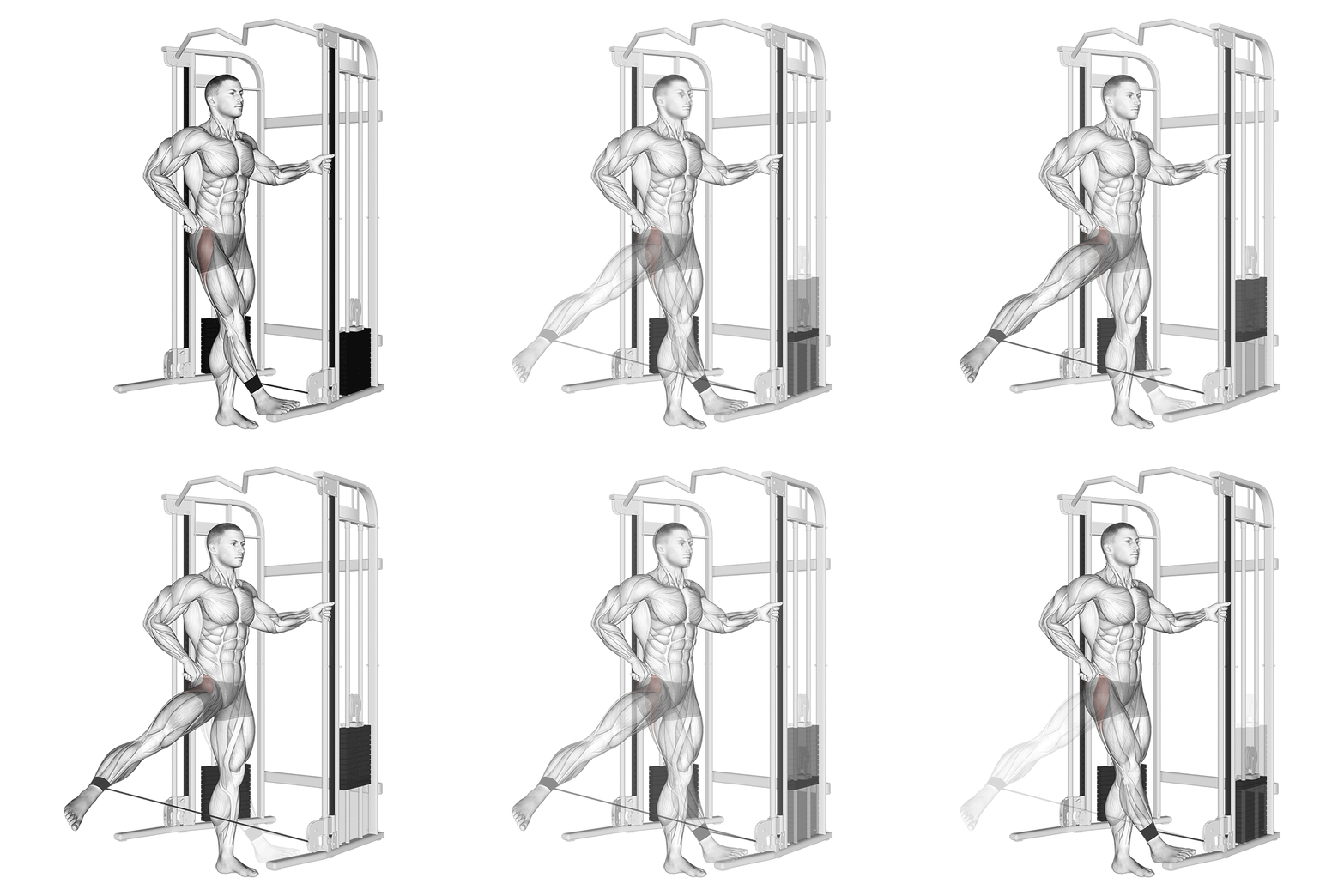
Cable Hip Abducction
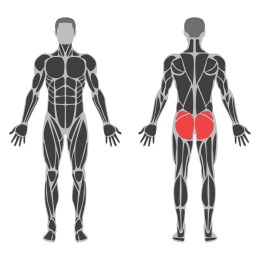
Cable Hip Abduction is an isolation exercise targeting the gluteus medius and minimus muscles. It involves moving the leg away from the body's midline using a cable machine, enhancing hip stability and strength.
Muscle focus
Step-by-step cues
- Attach an ankle strap to a low pulley on a cable machine.
- Secure the strap around your ankle.
- Stand sideways to the machine with your strapped leg farthest from it.
- Hold onto the machine or a stable surface for support.
- Keep your torso upright and engage your core.
- Slowly abduct your leg away from your body, keeping it straight.
- Pause briefly at the top of the movement for maximum contraction.
- Return to the starting position in a controlled manner.
- Repeat for the desired number of repetitions, then switch legs.
Technical tips
- Focus on maintaining a straight posture throughout the exercise.
- Engage your core to prevent any unnecessary movement of your torso.
- Control the movement both when lifting and lowering your leg.
- Avoid using momentum; keep the movement slow and deliberate.
- Ensure that your working leg remains straight without locking the knee.
- Start with a light weight to master the form before increasing resistance.
- Keep your foot flexed to maximize glute activation.
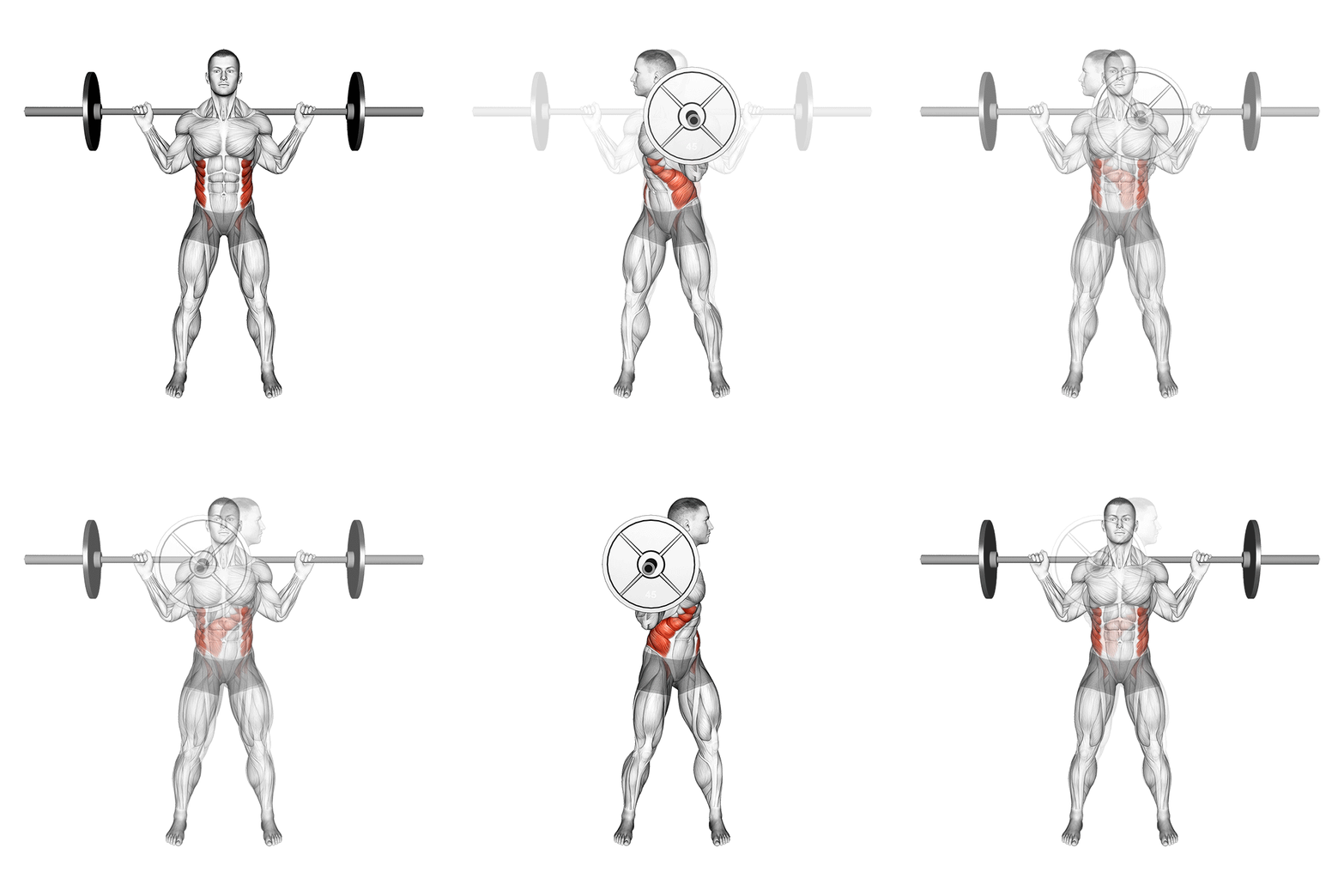
Barbell Standing Twist
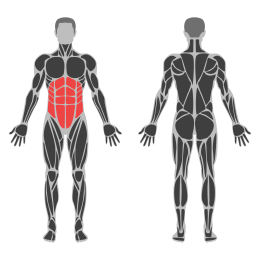
The Barbell Standing Twist is a core exercise that targets the oblique muscles, enhancing rotational strength and stability. It involves holding a barbell across the shoulders and rotating the torso from side to side while maintaining a stable lower body.
Muscle focus
Step-by-step cues
- Stand with your feet shoulder-width apart, knees slightly bent.
- Place a barbell across your upper back, gripping it with both hands slightly wider than shoulder-width.
- Engage your core and keep your chest up.
- Rotate your torso to the right, keeping your hips facing forward.
- Return to the starting position and then rotate to the left.
- Continue alternating sides for the desired number of repetitions.
Technical tips
- Keep your movements controlled to maximize muscle engagement and reduce injury risk.
- Focus on using your obliques to initiate the twist rather than swinging with your arms.
- Maintain a slight bend in your knees to stabilize your lower body.
- Ensure that your hips remain square and do not rotate with your torso.
- Breathe out as you twist and inhale as you return to the center position.
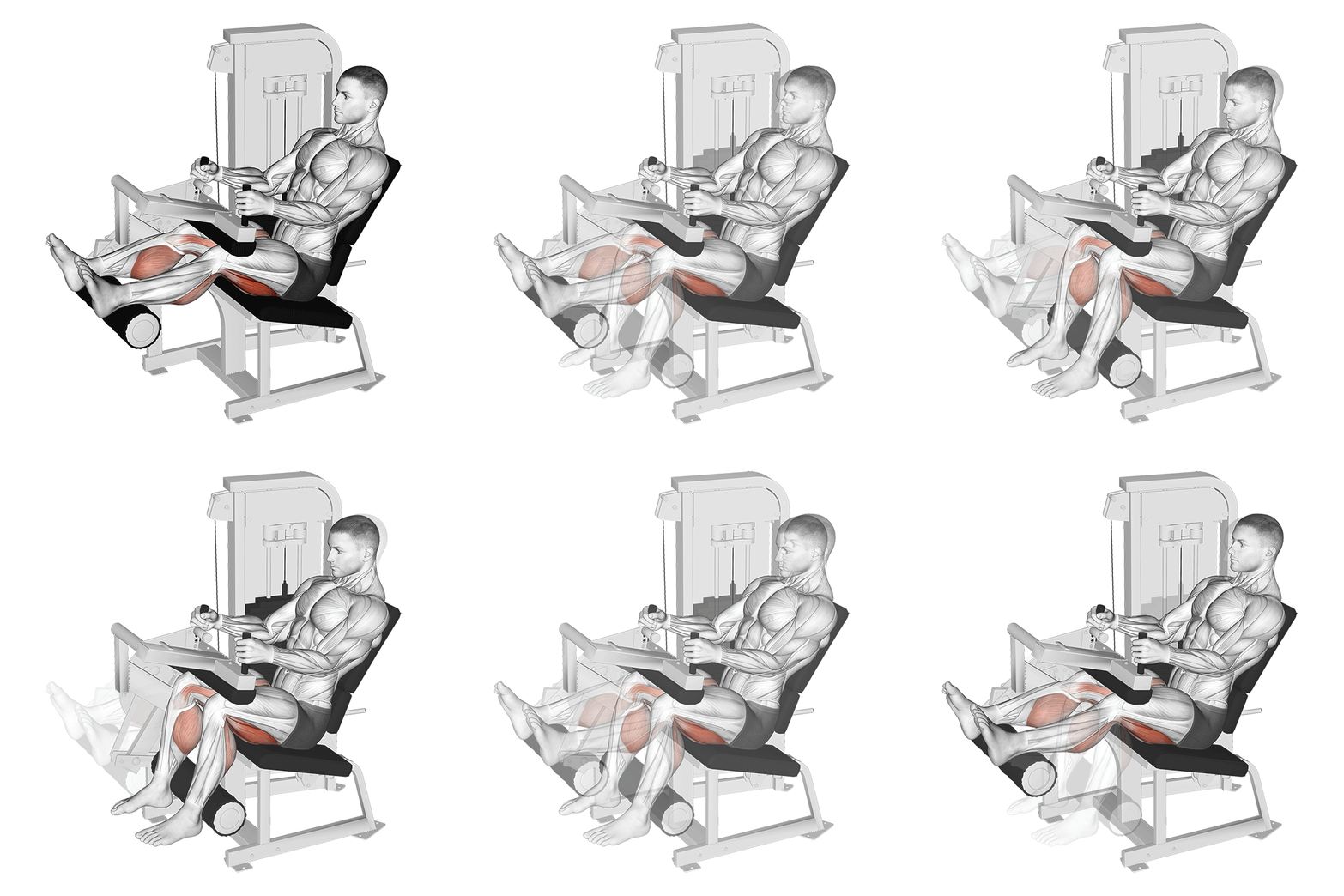
Seated Leg Curl
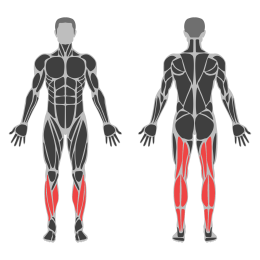
The Seated Leg Curl is an isolation exercise targeting the hamstring muscles located at the back of the thigh. It is performed using a leg curl machine where the user sits with their legs extended and curls them back towards the body against resistance. This exercise helps in strengthening and toning the hamstrings, improving knee stability and overall leg strength.
Muscle focus
Step-by-step cues
- Adjust the seat and backrest of the leg curl machine so that your knees align with the pivot point of the machine.
- Sit on the machine with your back firmly against the backrest and place your legs under the padded lever, securing it just above your ankles.
- Grip the handles or sides of the seat for stability.
- Begin with your legs fully extended in front of you.
- Exhale and slowly curl your legs back by bending your knees, bringing your heels as close to your buttocks as possible.
- Hold the contraction for a moment at the bottom of the movement.
- Inhale and slowly return to the starting position with controlled movement, extending your legs fully.
- Repeat for the desired number of repetitions.
Technical tips
- Ensure that your knees are aligned with the pivot point to prevent strain on your joints.
- Keep your movements slow and controlled to maximize muscle engagement and reduce risk of injury.
- Avoid locking your knees at the top of the movement to maintain tension on the hamstrings.
- Focus on squeezing your hamstrings at the bottom of each curl for maximum contraction.
- Adjust the weight so that you can perform all repetitions with proper form without compromising technique.
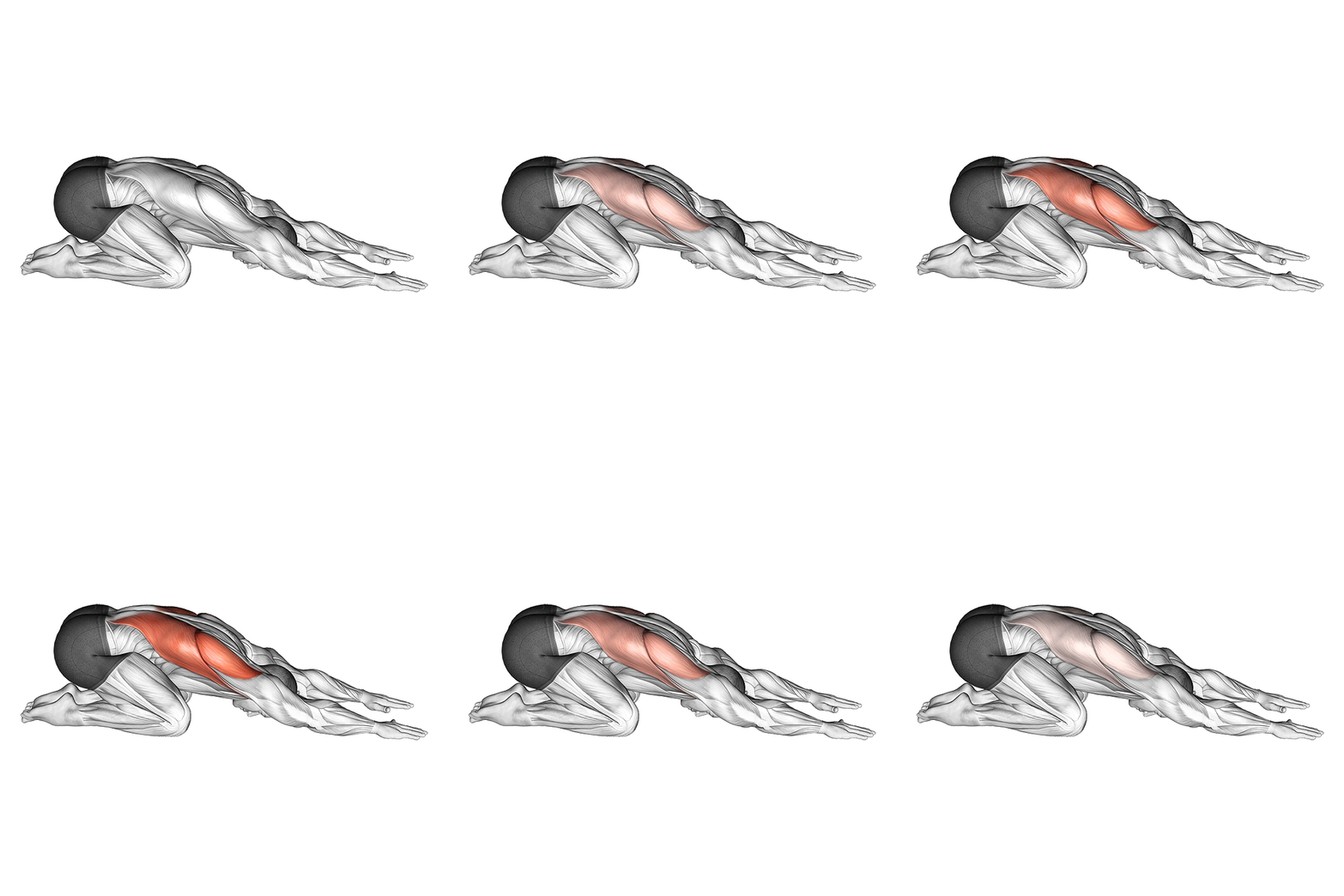
Child’s Pose
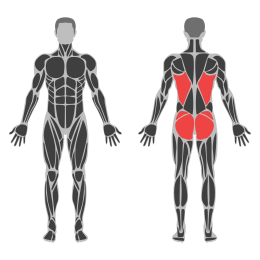
Child’s Pose, or Balasana, is a resting yoga posture that gently stretches the hips, thighs, and ankles while calming the mind and relieving stress. It is often used as a counterpose to more strenuous exercises or as a resting position during a workout.
Muscle focus
Step-by-step cues
- Begin by kneeling on the floor with your big toes touching and knees spread apart about hip-width.
- Sit back on your heels and slowly bend forward, extending your arms in front of you on the floor.
- Lower your torso between your thighs and rest your forehead on the mat.
- Keep your arms extended forward with palms facing down or alongside your body with palms facing up.
- Hold the position for several breaths, focusing on deep, even breathing.
Technical tips
- If you have tight hips, keep your knees closer together for comfort.
- To deepen the stretch in your shoulders, keep your arms extended forward.
- Use a cushion or folded blanket under your torso or forehead for added support if needed.
- Focus on relaxing your entire body and breathing deeply to enhance the calming effects of the pose.
- If you experience discomfort in your knees, place a rolled towel behind them for additional support.
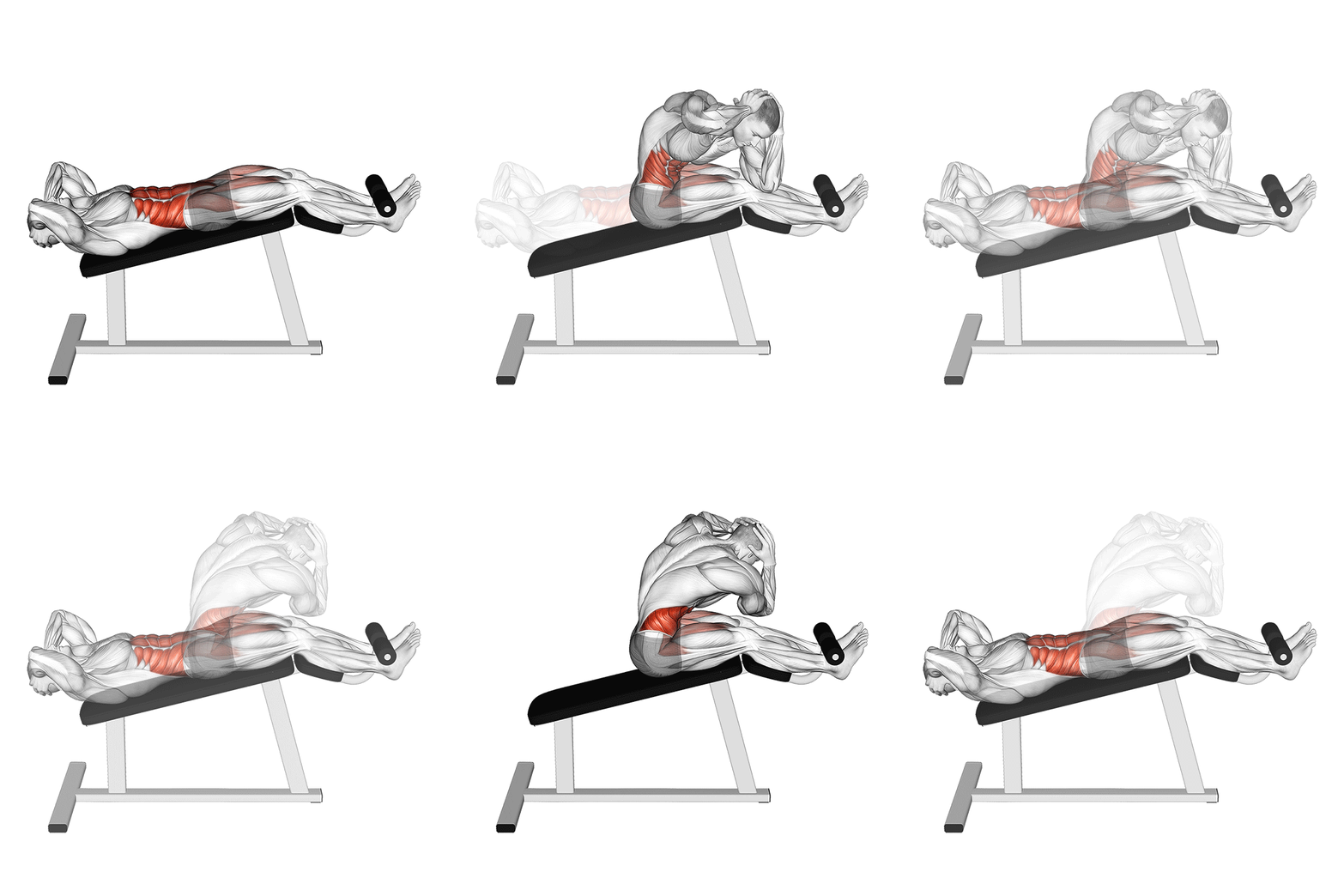
Incline Twisting Sit Up
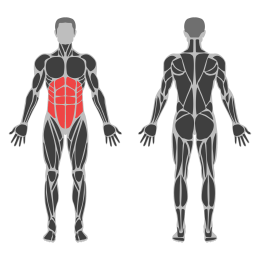
The Incline Twisting Sit Up is an advanced core exercise that targets the abdominal muscles, particularly the obliques. It involves performing a sit-up on an incline bench while incorporating a twisting motion to engage the side muscles of the abdomen.
Muscle focus
Step-by-step cues
- Set an incline bench to a moderate angle, typically between 30 to 45 degrees.
- Sit on the bench and secure your feet under the foot pads.
- Lie back with your hands placed behind your head or crossed over your chest.
- Engage your core and lift your upper body off the bench, twisting your torso to one side as you ascend.
- Reach the top of the movement with your elbow pointing towards the opposite knee.
- Slowly lower yourself back to the starting position in a controlled manner.
- Repeat the movement, alternating sides with each repetition.
Technical tips
- Focus on controlled movements to maximize muscle engagement and reduce injury risk.
- Keep your core tight throughout the exercise to maintain stability and effectiveness.
- Avoid pulling on your neck with your hands; instead, use your core muscles to lift.
- Exhale as you twist up and inhale as you return to the starting position.
- Start with a lower incline if you're new to this exercise and gradually increase as you build strength.
- Ensure your movements are smooth and deliberate, avoiding any jerking motions.
Thursday
Recovery and Mobility
Use easy cycling, mobility or relaxed swimming for 25-40 minutes.
Friday
Upper Body / Pull
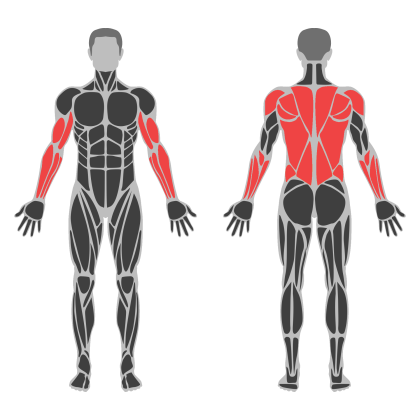
Upper Body / Pull muscle focus
Red marks the primary training focus. Orange marks supporting muscle groups used throughout this session.
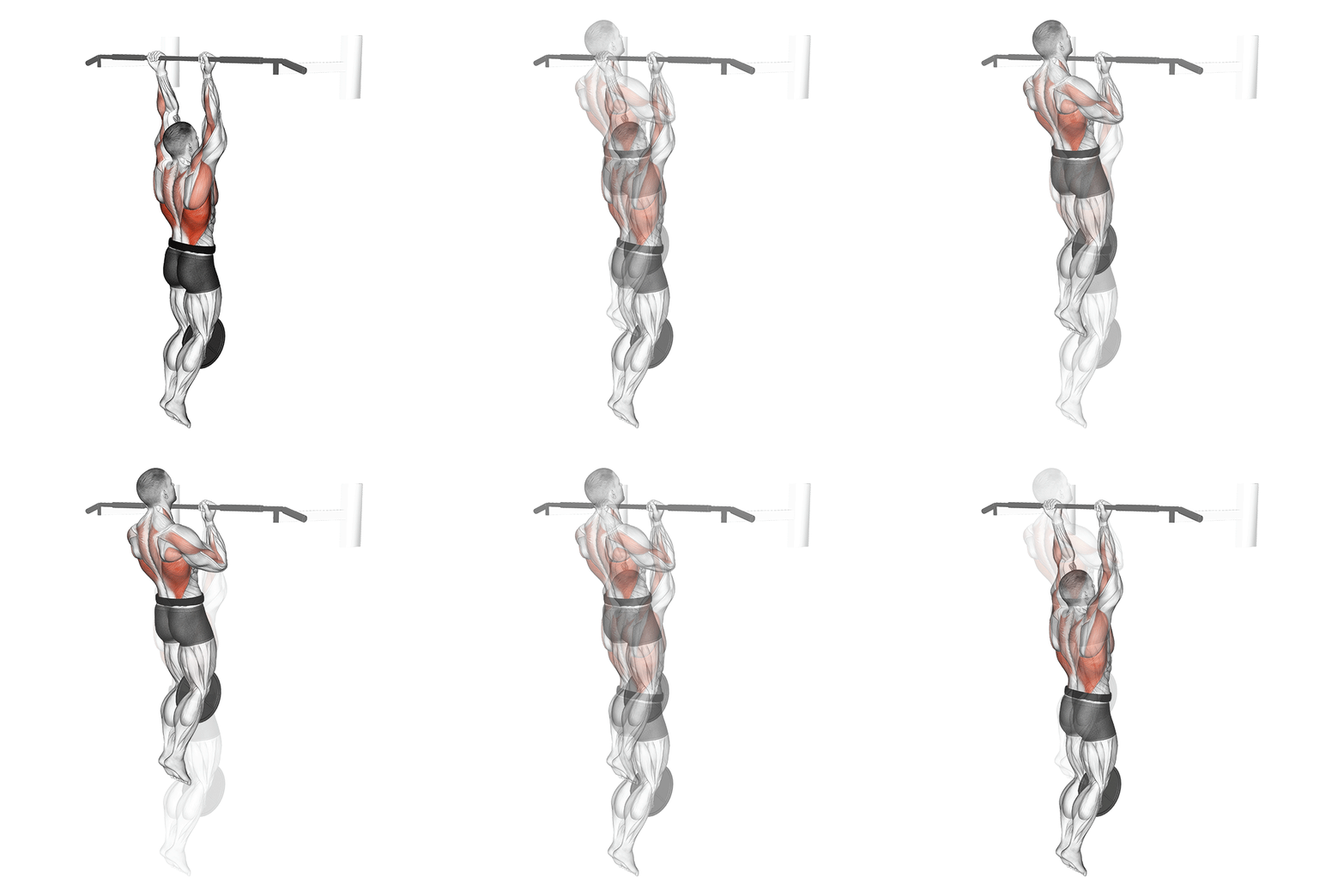
Weighted Chin Up
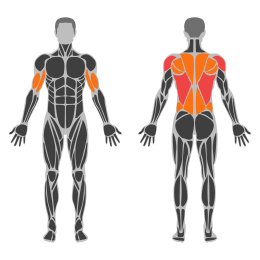
The Weighted Chin Up is an advanced upper body exercise that targets the latissimus dorsi, biceps, and upper back muscles. By adding weight, this exercise increases resistance, enhancing muscle strength and hypertrophy. It requires a chin-up bar and additional weight, typically attached via a dip belt.
Muscle focus
Step-by-step cues
- Attach the desired weight to a dip belt securely around your waist.
- Stand beneath a chin-up bar and grasp it with an underhand grip, palms facing you, shoulder-width apart.
- Engage your core and pull your shoulder blades down and back.
- Initiate the movement by pulling yourself up until your chin clears the bar.
- Pause briefly at the top of the movement, ensuring full contraction of the back muscles.
- Lower yourself in a controlled manner until your arms are fully extended.
- Repeat for the desired number of repetitions.
Technical tips
- Ensure your grip is firm to maintain control throughout the exercise.
- Focus on engaging your lats and biceps during the pull-up phase.
- Keep your core tight to prevent swinging or using momentum.
- Control the descent to maximize muscle engagement and prevent injury.
- Start with lighter weights to master form before progressing to heavier loads.
- Breath out as you pull up and inhale as you lower yourself down.
Close Grip Biceps Curl
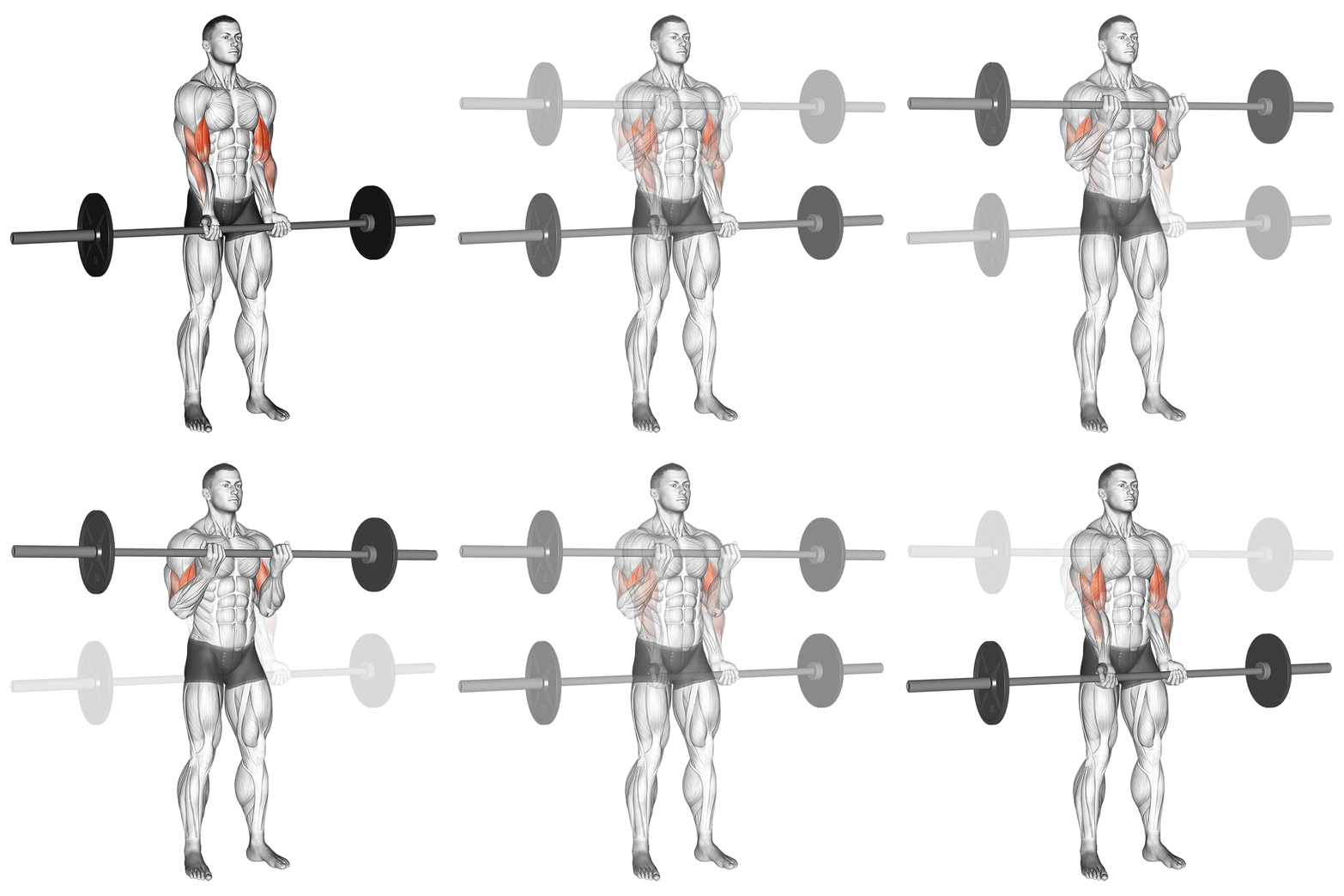
The Close Grip Biceps Curl is an isolation exercise targeting the biceps brachii, particularly emphasizing the short head of the biceps. This exercise involves using a barbell or an EZ curl bar with a narrow grip to maximize bicep engagement and minimize forearm involvement.
Muscle focus
Step-by-step cues
- Stand upright with your feet shoulder-width apart, holding a barbell or EZ curl bar with an underhand grip. Your hands should be positioned close together, about 6-8 inches apart.
- Keep your elbows close to your torso and maintain a slight bend in your knees for stability.
- Exhale as you curl the bar upwards by flexing your elbows, keeping your upper arms stationary. Focus on contracting your biceps throughout the movement.
- Continue lifting until your biceps are fully contracted and the bar is at shoulder level.
- Pause briefly at the top of the movement, then inhale as you slowly lower the bar back to the starting position, maintaining control.
- Repeat for the desired number of repetitions.
Technical tips
- Ensure that your grip is narrow but comfortable to avoid unnecessary wrist strain.
- Keep your elbows tucked in and stationary to isolate the biceps effectively.
- Focus on a slow and controlled movement to maximize muscle tension and avoid using momentum.
- Maintain a neutral spine and engage your core throughout the exercise to support proper posture.
- Avoid locking out your elbows at the bottom of the movement to keep constant tension on the biceps.
- Use a weight that allows you to perform the exercise with proper form for all repetitions.
Dumbbell Standing Reverse Wrist Curls
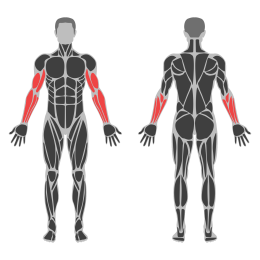
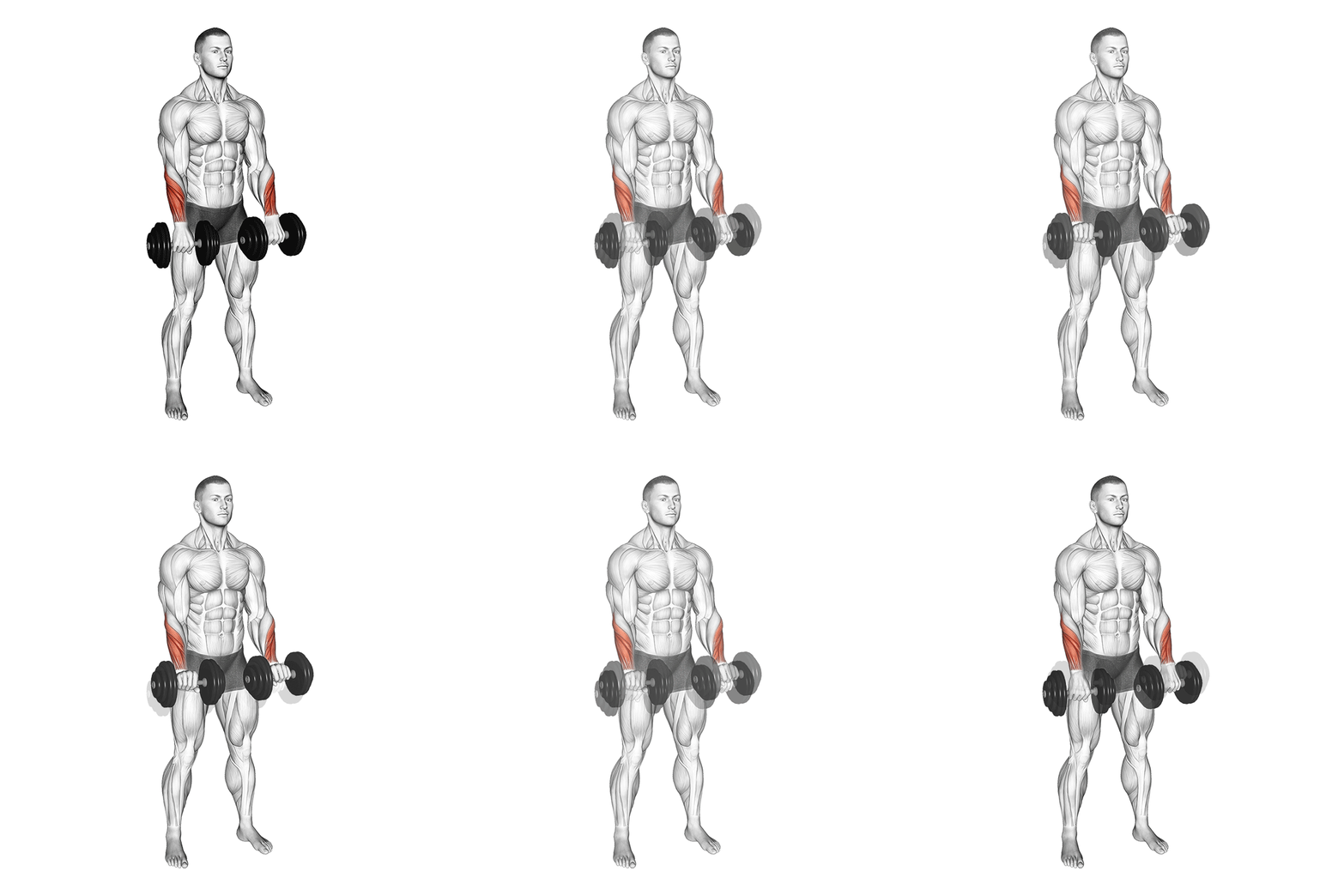
The Dumbbell Standing Reverse Wrist Curl is an isolation exercise targeting the forearm extensor muscles. This exercise helps in improving grip strength and wrist stability, which are crucial for various upper body movements.
Muscle focus
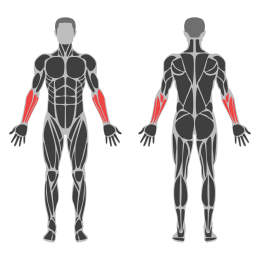
Step-by-step cues
- Stand upright with your feet shoulder-width apart, holding a dumbbell in each hand with an overhand grip.
- Keep your arms close to your body and extend them fully downward, with your palms facing your thighs.
- While keeping your elbows stationary, curl your wrists upwards by contracting your forearm extensors.
- Hold the top position for a brief moment, ensuring maximum contraction.
- Slowly lower the dumbbells back to the starting position by extending your wrists.
- Repeat for the desired number of repetitions.
Technical tips
- Start with a light weight to ensure proper form and avoid straining your wrists.
- Focus on moving only your wrists; keep the rest of your arms stationary.
- Maintain a controlled motion throughout the exercise to maximize muscle engagement.
- Breathe steadily, exhaling as you curl the wrists upwards and inhaling as you return to the starting position.
- Ensure that your grip on the dumbbells is firm but not overly tight to prevent unnecessary tension in the hands.
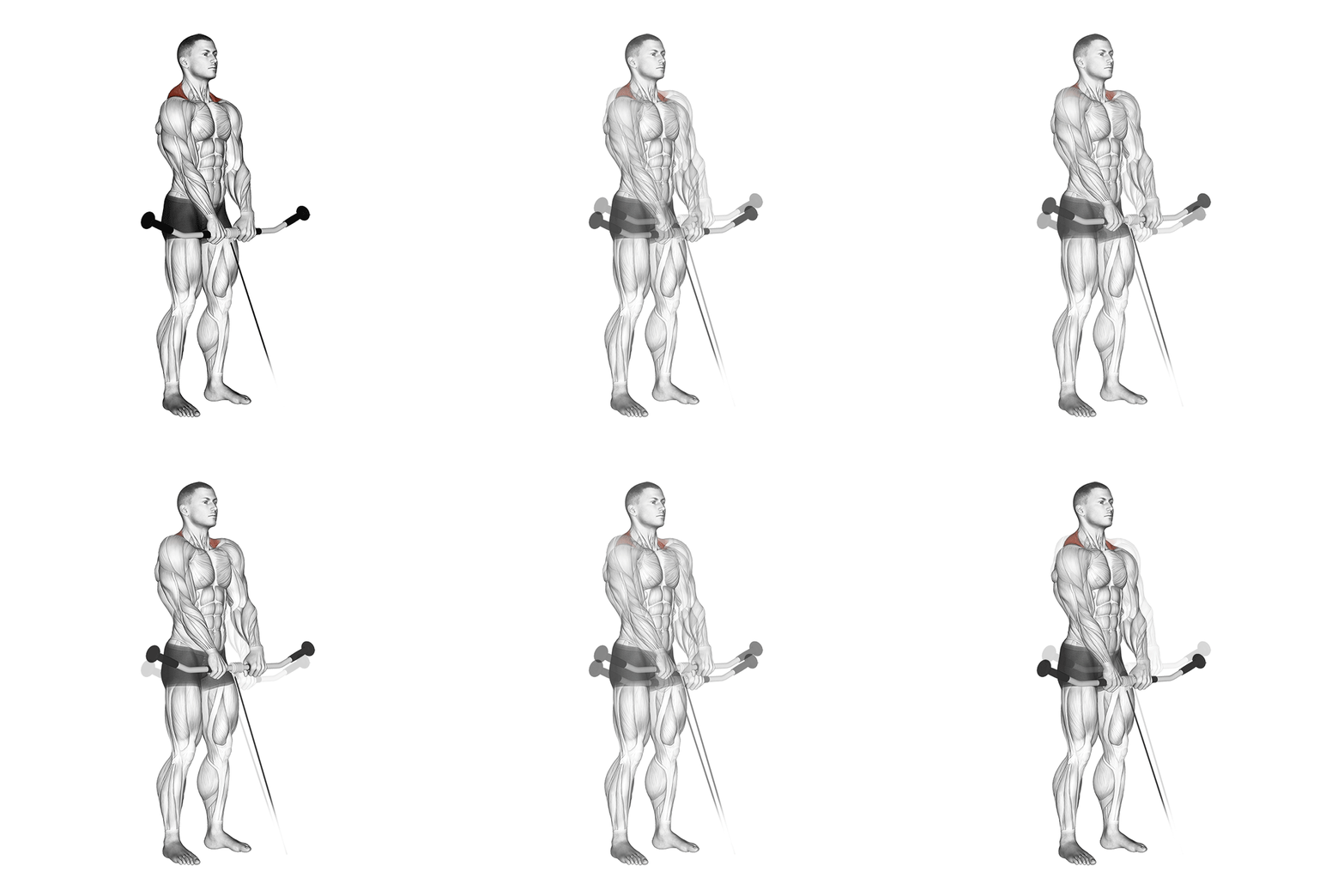
Cable Shrug
Cable shrugs are an isolation exercise targeting the trapezius muscles. This exercise uses a cable machine to provide constant tension throughout the movement, effectively engaging the upper back and shoulders. It is ideal for building strength and size in the trapezius muscles.
Muscle focus
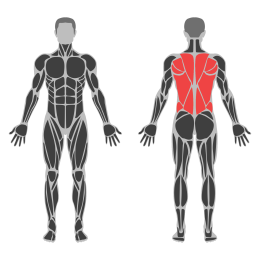
Step-by-step cues
- Stand facing a low pulley cable machine with your feet shoulder-width apart.
- Attach a straight bar or rope handle to the low pulley.
- Grasp the handle with both hands, using an overhand grip, and stand upright with your arms fully extended.
- Keep your back straight and core engaged throughout the exercise.
- Lift your shoulders towards your ears in a shrugging motion, squeezing your trapezius muscles at the top of the movement.
- Hold the contraction for a moment before slowly lowering your shoulders back to the starting position.
- Repeat for the desired number of repetitions.
Technical tips
- Focus on using your trapezius muscles to lift the weight, avoiding assistance from your arms.
- Keep your movements slow and controlled to maximize muscle engagement.
- Avoid rolling your shoulders forward or backward; move them straight up and down.
- Maintain a neutral head position, looking straight ahead throughout the exercise.
- Start with a lighter weight to ensure proper form and gradually increase as you become more comfortable.
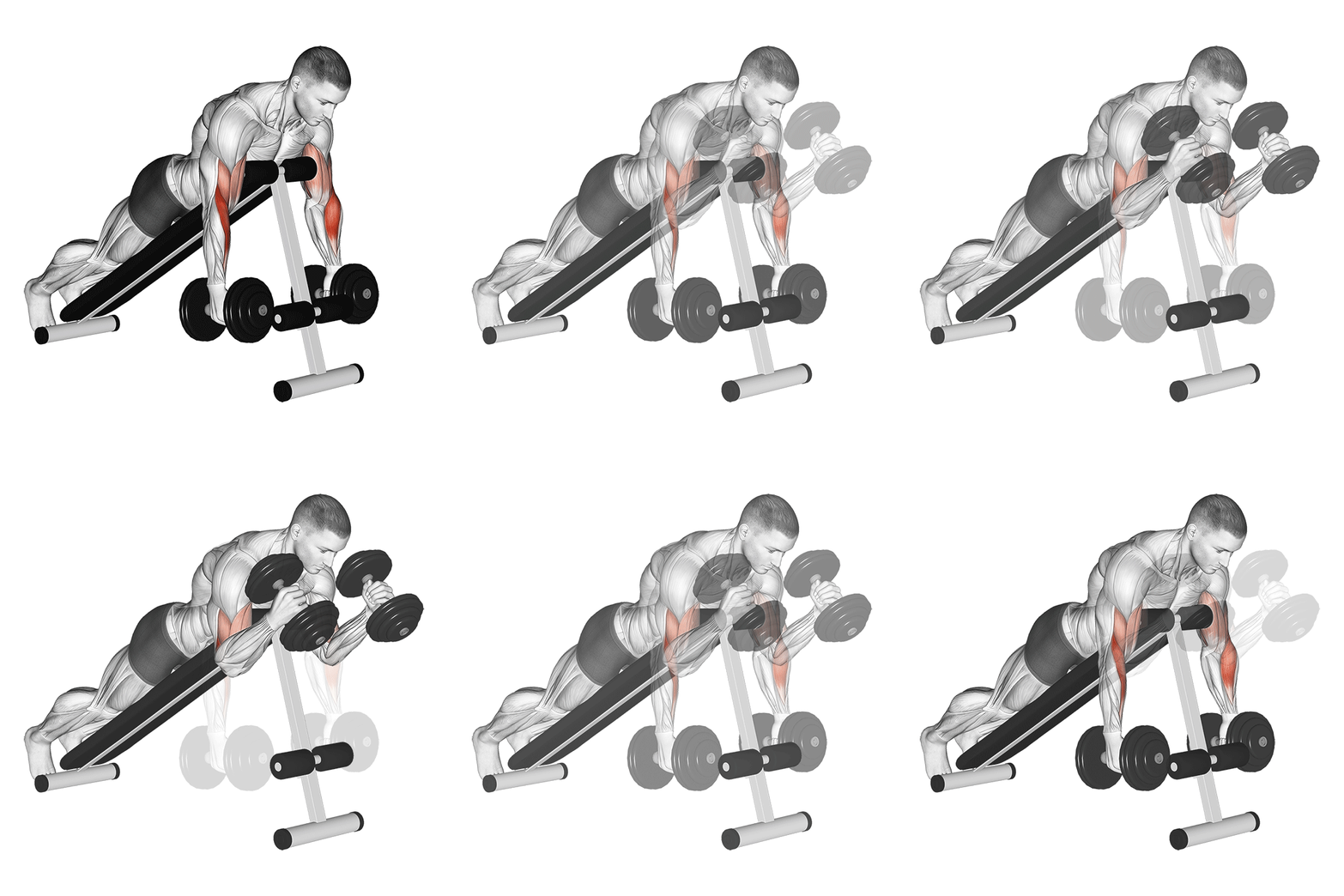
Spider Hammer Curl
The Spider Hammer Curl is an isolation exercise targeting the brachialis and brachioradialis muscles in the arms. It involves curling dumbbells with a neutral grip while leaning forward, typically performed on an incline bench. This exercise enhances arm thickness and forearm strength.
Muscle focus
Step-by-step cues
- Set an incline bench to a 45-degree angle.
- Lie face down on the bench, ensuring your chest is supported and your arms hang straight down.
- Hold a dumbbell in each hand with a neutral grip (palms facing each other).
- Keep your elbows slightly bent and stationary throughout the movement.
- Curl the dumbbells upward by flexing your elbows, keeping your wrists straight.
- Squeeze at the top of the movement, focusing on contracting the brachialis.
- Slowly lower the dumbbells back to the starting position.
- Repeat for the desired number of repetitions.
Technical tips
- Maintain a controlled motion to maximize muscle engagement.
- Avoid swinging your arms or using momentum to lift the weights.
- Focus on keeping your elbows stationary to isolate the target muscles effectively.
- Exhale as you curl the weights up and inhale as you lower them back down.
- Start with lighter weights to ensure proper form before progressing to heavier loads.
- Ensure your chest remains in contact with the bench to prevent unnecessary strain on your back.
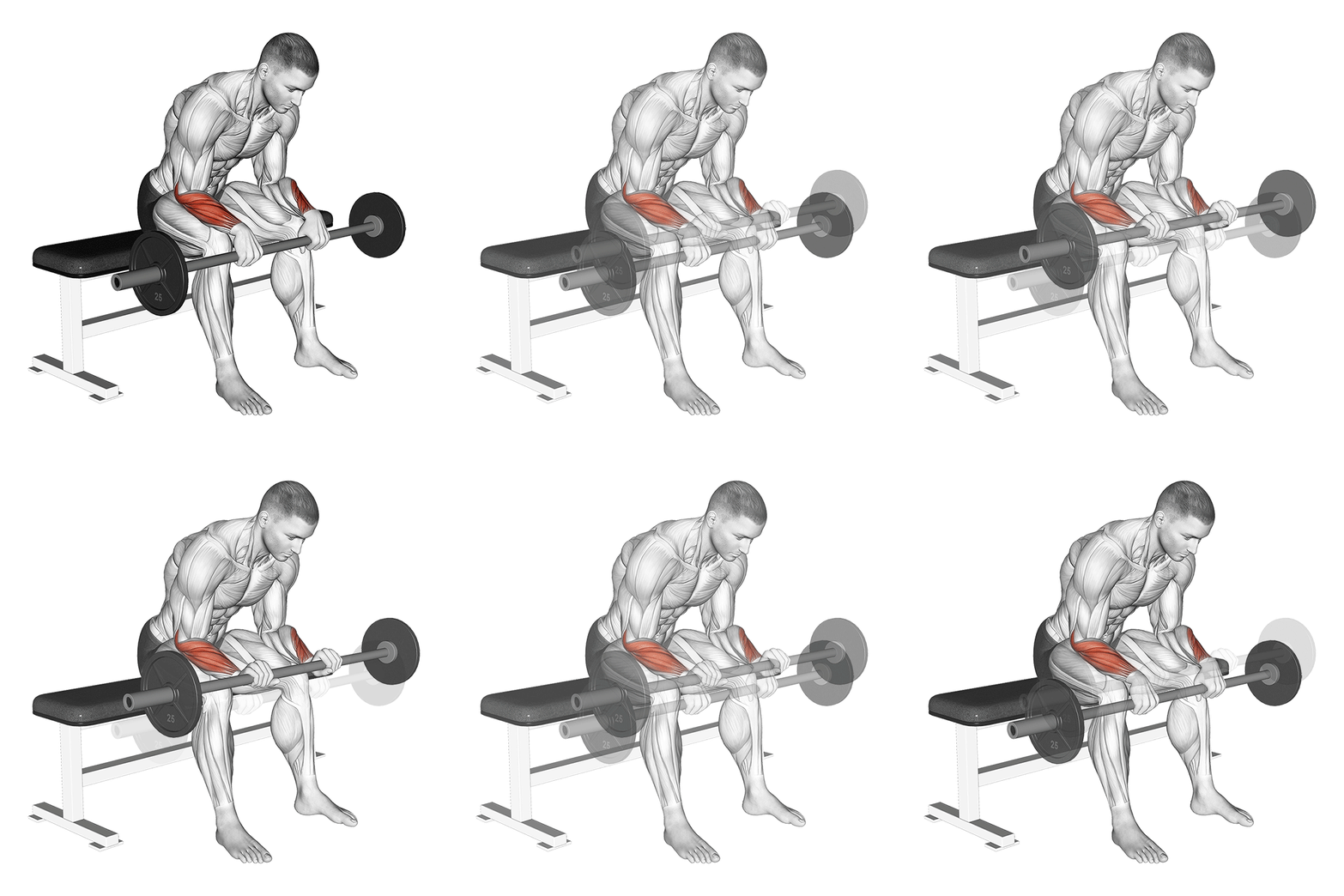
EZ-Bar Seated Reverse Wrist Curl
The EZ-Bar Seated Reverse Wrist Curl targets the forearm extensor muscles. This exercise is performed while seated, using an EZ-bar to provide a comfortable grip angle, minimizing wrist strain. It is effective for developing forearm strength and improving grip stability.
Muscle focus
Step-by-step cues
- Sit on a bench with your feet flat on the floor, shoulder-width apart.
- Hold an EZ-bar with an overhand grip (palms facing down), hands slightly wider than shoulder-width.
- Rest your forearms on your thighs, allowing your wrists to hang over the edge of your knees.
- Start with your wrists in a neutral position, then slowly curl the bar upwards by extending your wrists.
- Pause briefly at the top of the movement, ensuring maximum contraction of the forearm extensors.
- Lower the bar back to the starting position in a controlled manner.
- Repeat for the desired number of repetitions.
Technical tips
- Keep your elbows stationary and close to your body throughout the exercise.
- Focus on using only your wrists to move the bar; avoid using your shoulders or upper arms.
- Maintain a slow and controlled motion to maximize muscle engagement and reduce injury risk.
- Start with a lighter weight to ensure proper form before progressing to heavier loads.
- Breathe out as you curl the bar up and inhale as you return to the starting position.
Saturday
Optional Zone 2 Cardio
Choose walking, cycling or an easy hike for 40-60 minutes.
Sunday
Full Rest
Prioritize sleep, hydration and preparation for the next training week.
Progression for the next cycle
Repeat the week only when recovery is good. Add one repetition per set before increasing load by the smallest available increment.
Nutrition guidance

- Start near maintenance calories and adjust slowly using training performance, hunger and body-weight trends.
- Target roughly 1.6-2.0 g of protein per kg of body weight per day across three to five meals.
- Use carbohydrates around training and include vegetables, fruit and healthy fats every day.
- Hydrate consistently and avoid treating one meal or one day as success or failure.
Use these numbers as practical starting ranges, not medical prescriptions. Adjust for your health, body size and activity, and consult a qualified professional when needed.



