Back to workout plan
Exercise guide

Cable Bench Press

A complete movement guide from 7-Day Upper and Lower Split: Train 3 Times a Week: Progression Cycle 2

Chest Machine StrengthPush
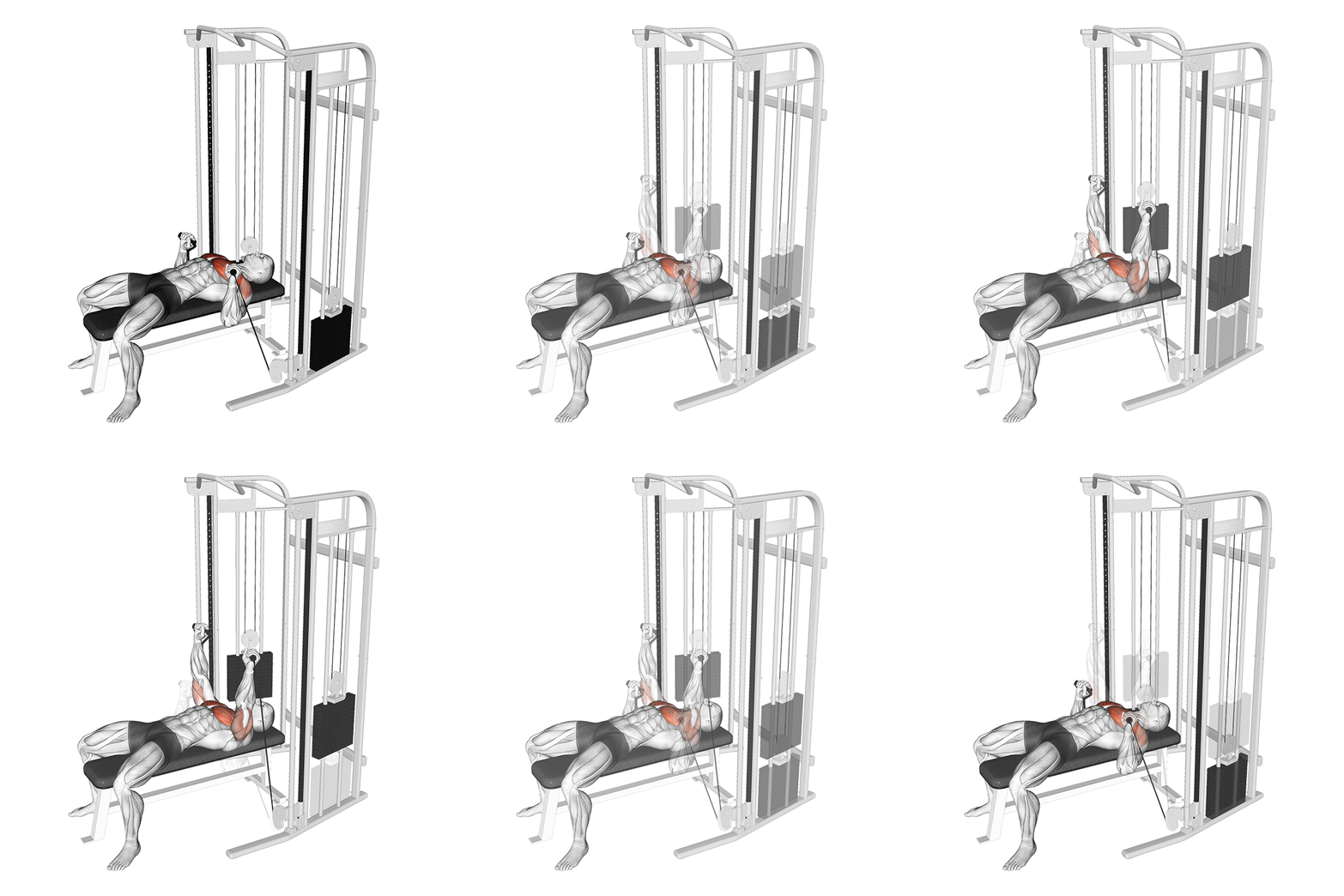
Cable Bench Press exercise animation
Purpose and technique

How this exercise works

The Cable Bench Press is a variation of the traditional bench press that utilizes a cable machine to provide constant tension throughout the movement. This exercise targets the pectoral muscles, triceps, and anterior deltoids. It is performed on a flat bench with cables attached to a low pulley system, allowing for a controlled and smooth range of motion.

ChestTriceps Shoulders Front
Watch exercise video
Description

Movement overview

The Cable Bench Press is a variation of the traditional bench press that utilizes a cable machine to provide constant tension throughout the movement. This exercise targets the pectoral muscles, triceps, and anterior deltoids. It is performed on a flat bench with cables attached to a low pulley system, allowing for a controlled and smooth range of motion.

Execution

Step-by-step cues

  1. Set up a flat bench between two low pulley machines. Attach D-handle attachments to each cable.
  2. Lie on the bench with your feet flat on the floor, ensuring your back is in contact with the bench.
  3. Grab each handle with an overhand grip and position your hands at chest level, elbows bent at approximately 90 degrees.
  4. Press the handles upward by extending your arms, keeping your wrists straight and aligned with your forearms.
  5. Pause briefly at the top of the movement, ensuring full contraction of the chest muscles.
  6. Slowly lower the handles back to the starting position, maintaining control and tension in the cables.
  7. Repeat for the desired number of repetitions.
Coach notes

Technical tips

  • Maintain a neutral spine throughout the exercise to prevent lower back strain.
  • Focus on squeezing your chest muscles as you press the handles upward for maximum engagement.
  • Keep your elbows slightly tucked in to reduce stress on the shoulder joints.
  • Control the movement both upwards and downwards to maximize muscle tension and effectiveness.
  • Avoid locking out your elbows completely at the top of the movement to maintain continuous tension on the muscles.
  • Ensure that your shoulder blades remain retracted and stable against the bench during the exercise.
Continue your session

Return to the complete workout plan

Back to workout plan