
4-Week Beginner Full-Body Foundation: Progression Cycle 2
A beginner-friendly four-week plan that builds technique, confidence and a repeatable three-day training habit.
How to use this plan
Follow the days in order, log every working set, and finish each set with one to three good repetitions still available. Use the exercise animations to learn the movement and open the video when you need a full demonstration.
Monday
Full Body Technique
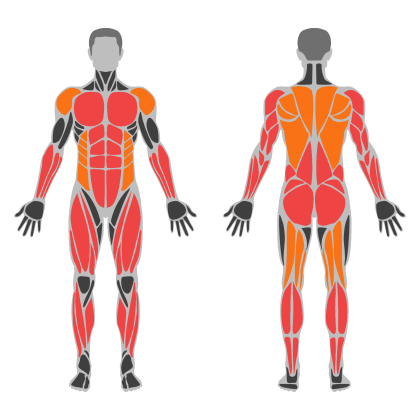
Full Body Technique muscle focus
Red marks the primary training focus. Orange marks supporting muscle groups used throughout this session.
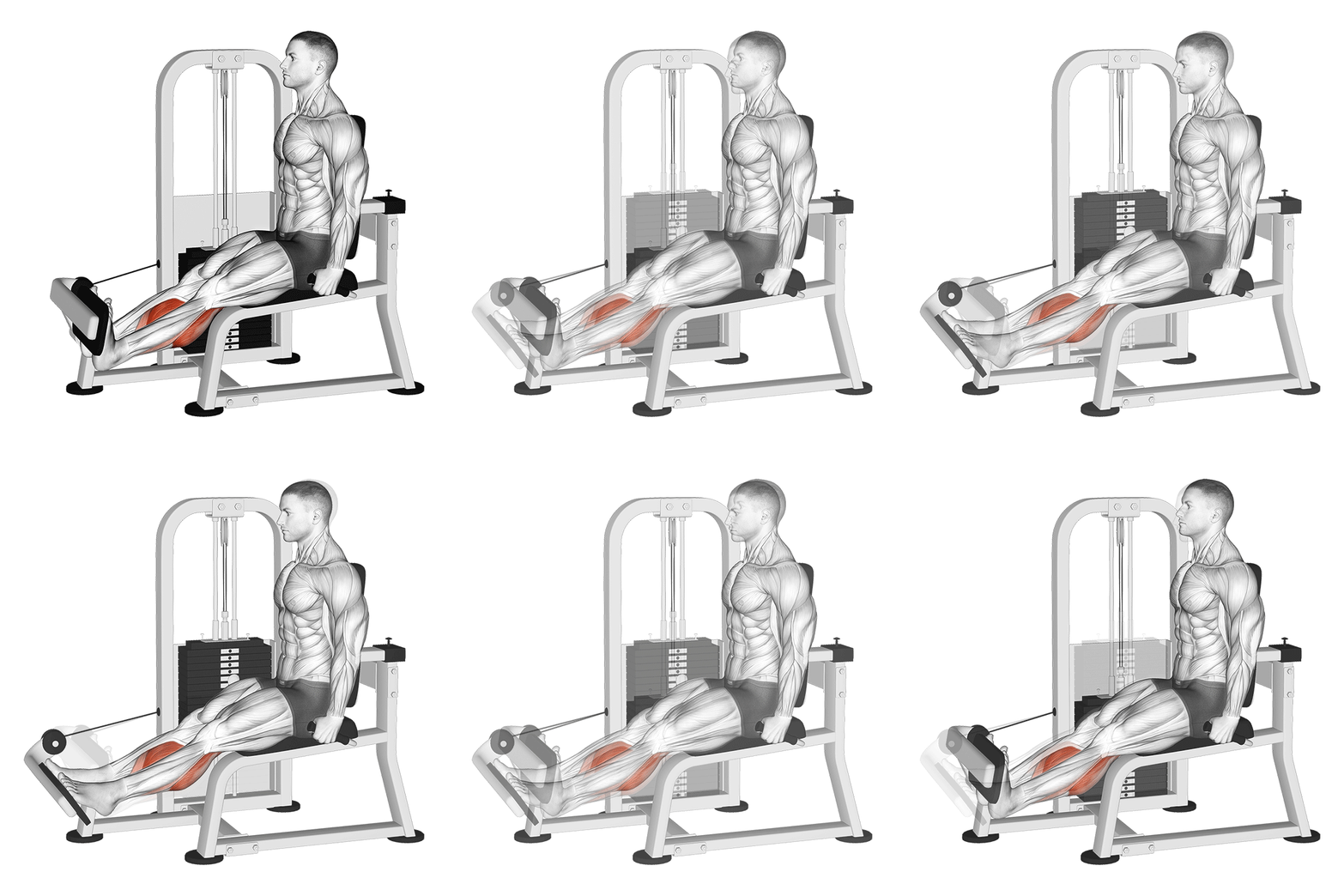
Rotary Calf Raise
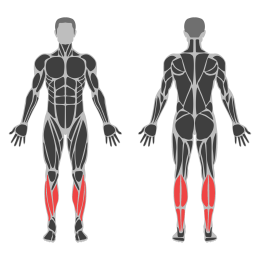
The Rotary Calf Raise is an exercise targeting the calf muscles, specifically the gastrocnemius and soleus. It involves a rotary motion that engages the calves through a full range of motion, enhancing muscle development and strength. This exercise is typically performed using a specialized machine that allows for controlled movement and resistance adjustment.
Muscle focus
Step-by-step cues
- Adjust the seat height on the rotary calf raise machine so that your knees are slightly bent when seated.
- Position your feet on the footplate with your toes pointing forward and heels hanging off the edge.
- Secure your thighs under the padded lever to ensure stability during the exercise.
- Begin by pushing through the balls of your feet to raise your heels as high as possible, engaging your calf muscles.
- Hold the top position for a moment, then slowly lower your heels back to the starting position.
- Repeat for the desired number of repetitions, maintaining control throughout the movement.
Technical tips
- Ensure your knees remain slightly bent throughout the exercise to avoid unnecessary strain on the joints.
- Focus on a slow and controlled movement to maximize muscle engagement and prevent injury.
- Keep your core engaged to maintain stability and prevent excessive movement in other parts of your body.
- Exhale as you lift your heels and inhale as you lower them back down.
- Start with a lighter weight to master proper form before increasing resistance.
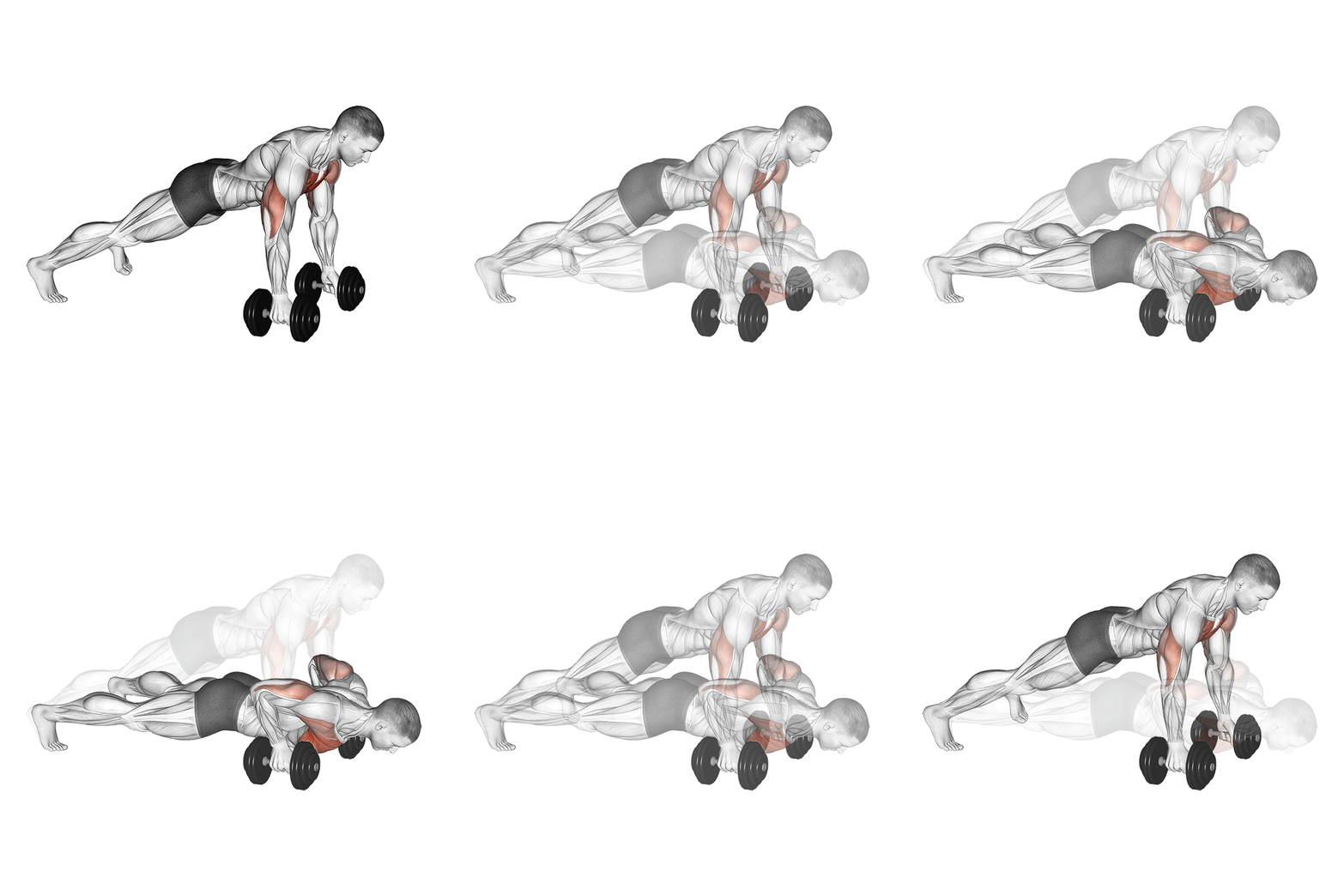
Dumbbell Deep Push Up
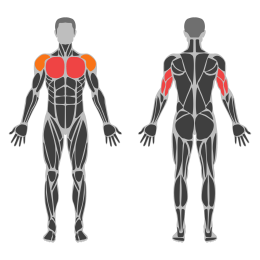
The Dumbbell Deep Push Up is an advanced variation of the traditional push-up that involves using dumbbells to increase the range of motion and engage the chest, shoulders, and triceps more intensely. This exercise enhances upper body strength, stability, and muscle definition.
Muscle focus
Step-by-step cues
- Begin by placing two dumbbells on the floor shoulder-width apart. Ensure they are stable and won't roll.
- Grip the dumbbells firmly and position yourself in a high plank position with your arms extended, keeping your body in a straight line from head to heels.
- Engage your core and lower your body by bending your elbows, allowing your chest to descend between the dumbbells.
- Lower yourself until your chest is slightly below the level of the dumbbells to maximize range of motion.
- Pause briefly at the bottom, then push through your palms to return to the starting position.
- Repeat for the desired number of repetitions, maintaining control throughout the movement.
Technical tips
- Keep your elbows at a 45-degree angle relative to your torso to protect your shoulders.
- Maintain a neutral spine by keeping your head aligned with your spine throughout the exercise.
- Focus on squeezing your chest muscles as you push back up to enhance muscle engagement.
- Ensure that the dumbbells are stable and placed on a non-slip surface to prevent injury.
- Start with lighter weights if you're new to this exercise to master the form before progressing.
Chest Supported Machine Row
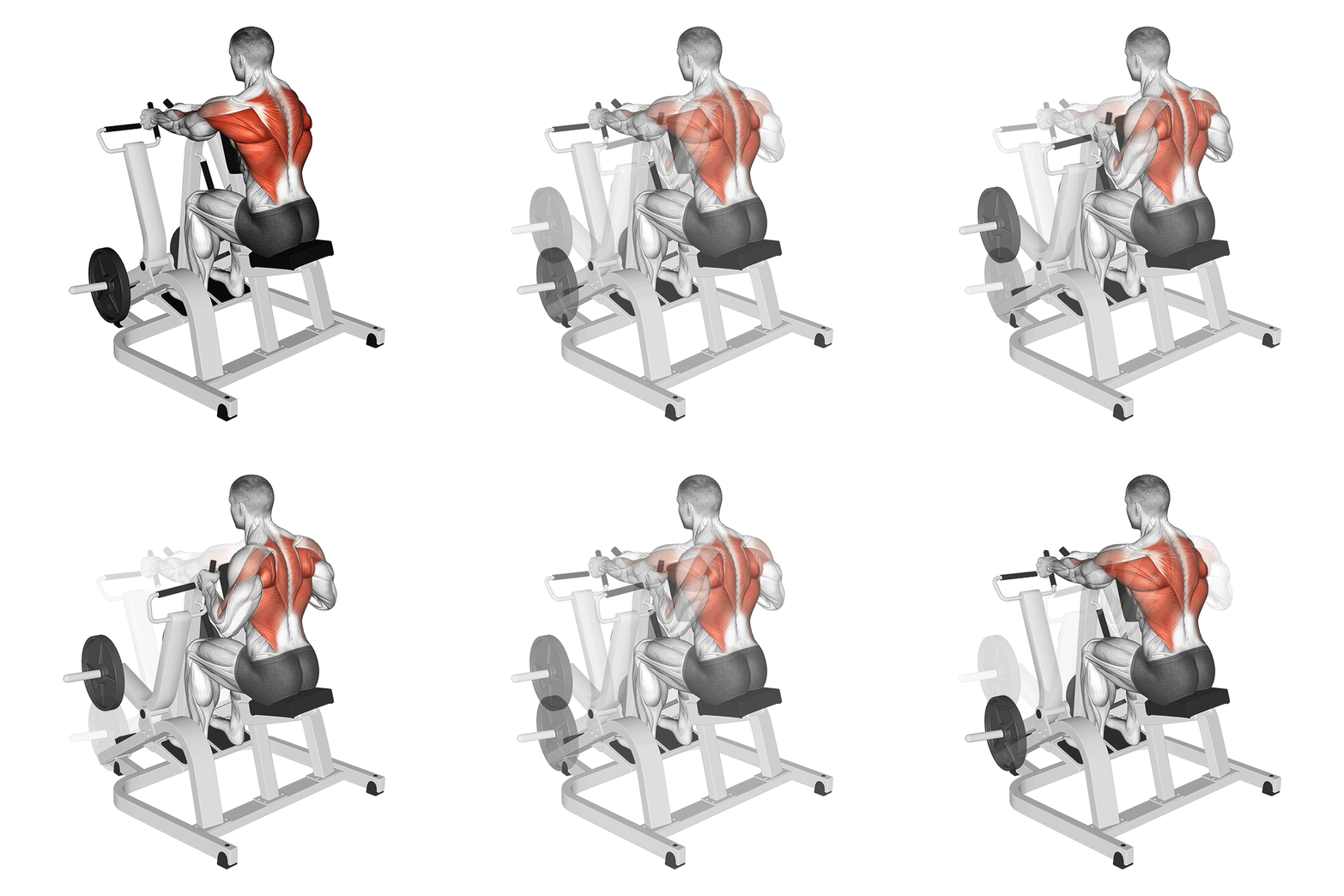
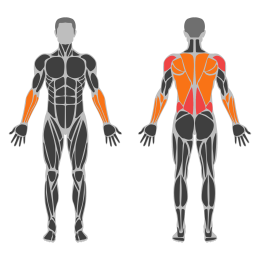
The Chest Supported Row Machine is designed to target the muscles of the upper back, including the rhomboids, trapezius, and latissimus dorsi, while minimizing strain on the lower back. This machine provides support for the chest, allowing for a more isolated and controlled rowing motion.
Muscle focus
Step-by-step cues
- Adjust the seat height so that your chest is comfortably supported against the pad and your feet are flat on the floor.
- Select an appropriate weight on the machine's weight stack.
- Grasp the handles with a neutral or overhand grip, depending on machine design.
- Keep your chest firmly against the pad and your back straight throughout the exercise.
- Pull the handles towards your torso by retracting your shoulder blades and bending your elbows.
- Pause briefly at the peak contraction, ensuring full engagement of your back muscles.
- Slowly extend your arms to return to the starting position, maintaining control of the weight.
- Repeat for the desired number of repetitions.
Technical tips
- Ensure that your chest remains in contact with the pad throughout the movement to prevent lower back strain.
- Focus on squeezing your shoulder blades together at the top of the movement for maximum muscle activation.
- Avoid using momentum; control both the concentric (pulling) and eccentric (releasing) phases of the exercise.
- Start with a lighter weight to perfect your form before progressing to heavier loads.
- Maintain a neutral spine position to avoid unnecessary stress on your lower back.
- Breathe out as you pull the handles towards you and inhale as you return to the starting position.
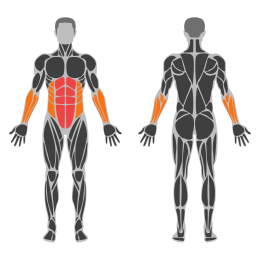
L-Sit
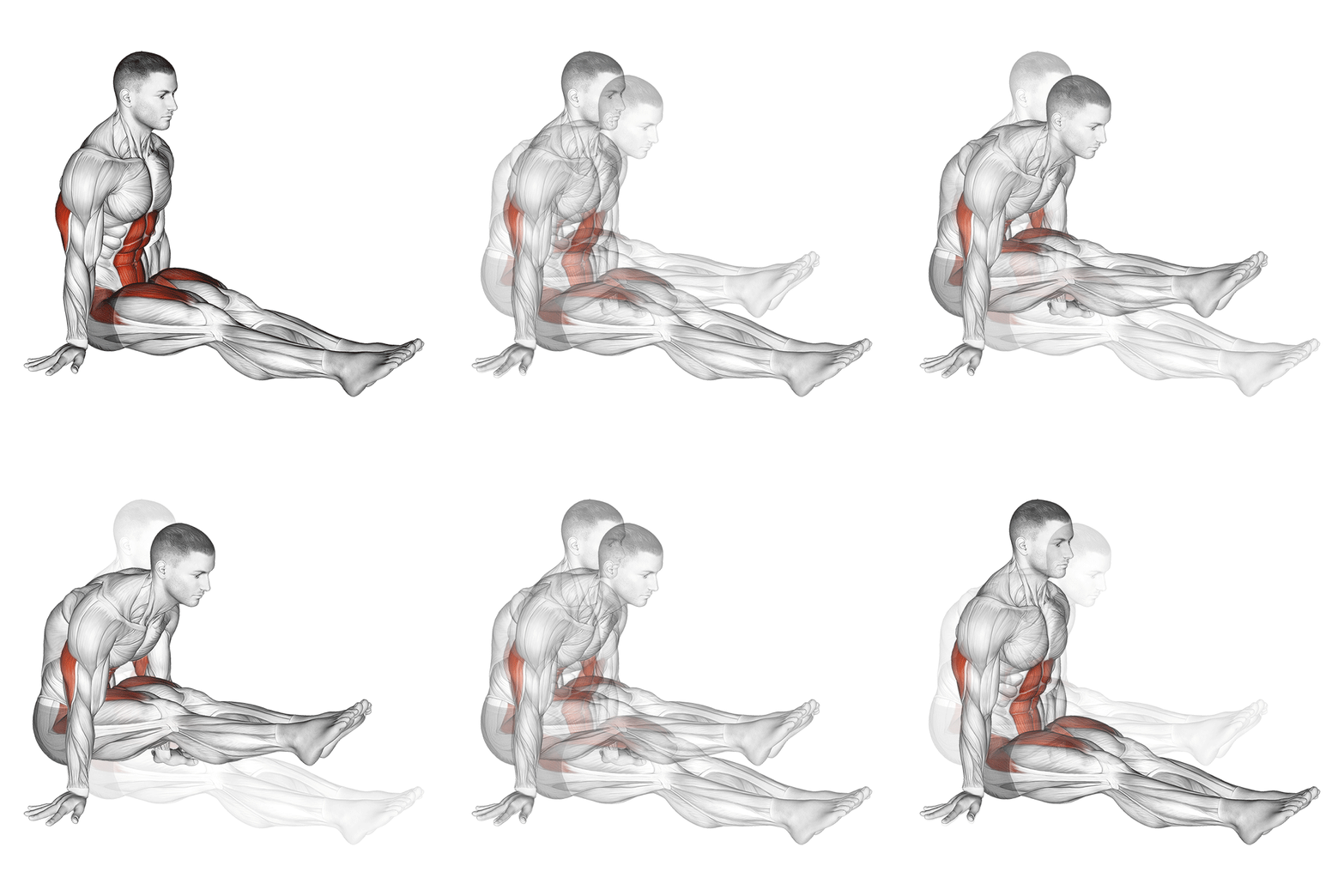
The L-Sit is a challenging isometric exercise that targets the core, hip flexors, and shoulders. It involves holding your body off the ground while maintaining a seated position with legs extended straight out in front of you. This exercise requires significant strength and stability, making it ideal for building core endurance and improving overall body control.
Muscle focus
Step-by-step cues
- Sit on the floor with your legs extended in front of you and your hands placed on the ground beside your hips.
- Engage your core muscles and press your hands firmly into the ground to lift your body off the floor.
- Keep your legs straight and parallel to the ground, forming an 'L' shape with your body.
- Hold this position for as long as possible, maintaining steady breathing throughout.
- Lower yourself back to the starting position with control.
Technical tips
- Ensure your hands are placed firmly on the ground for maximum stability.
- Focus on engaging your core and hip flexors to maintain leg elevation.
- Start by practicing with bent knees if full leg extension is too challenging.
- Gradually increase hold time as you build strength and endurance.
- Keep your shoulders down and away from your ears to prevent tension.
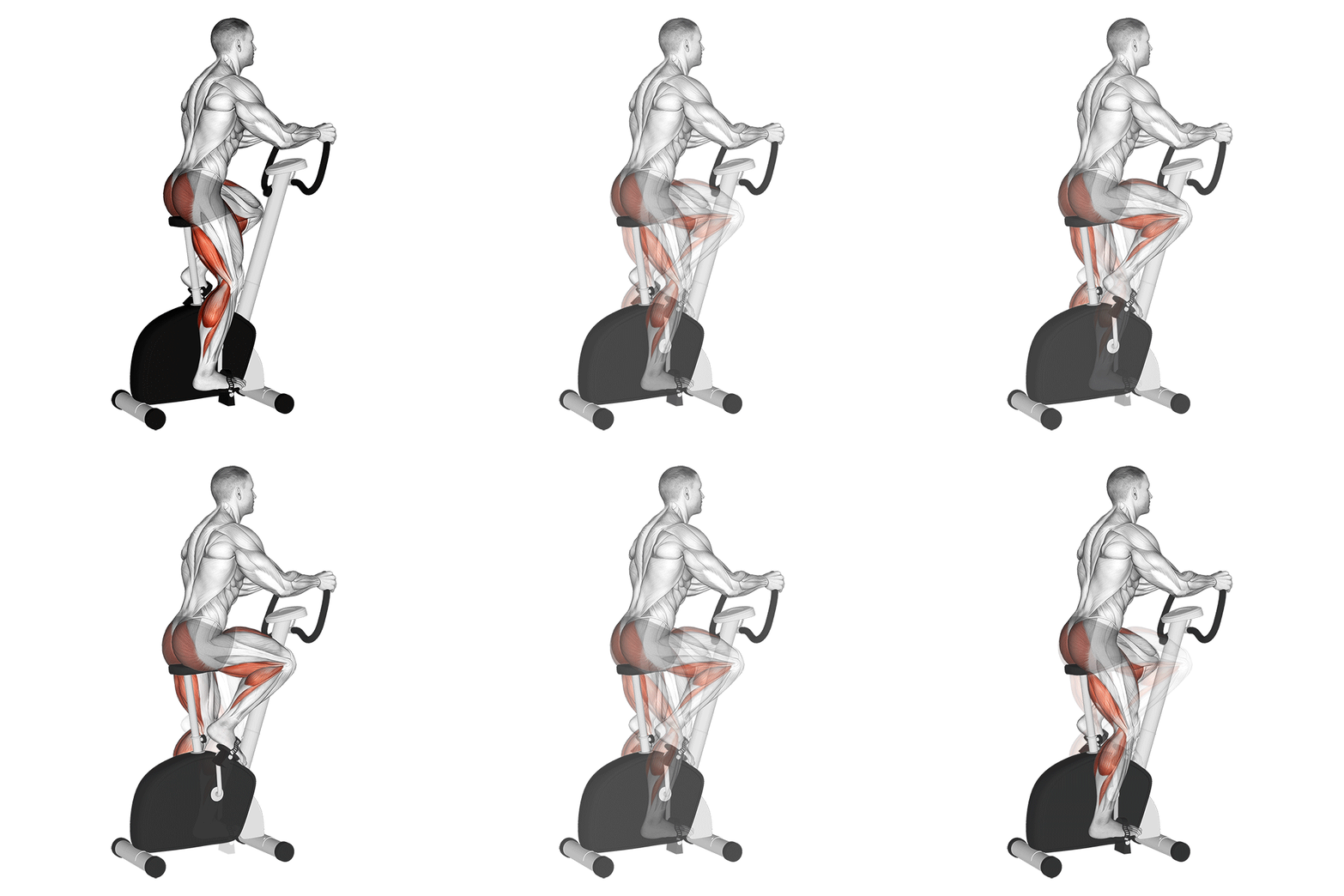
Stacionary Bike
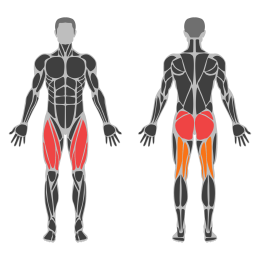
The stationary bike is a cardiovascular exercise machine that simulates cycling. It is designed to improve cardiovascular endurance, burn calories, and strengthen the lower body muscles, including the quadriceps, hamstrings, calves, and glutes. The resistance can be adjusted to increase or decrease the intensity of the workout.
Muscle focus
Step-by-step cues
- Adjust the seat height so that your legs are slightly bent at the bottom of the pedal stroke.
- Sit on the bike with your back straight and hands resting on the handlebars.
- Start pedaling slowly to warm up, gradually increasing your speed.
- Adjust the resistance level to a comfortable setting for your workout goals.
- Maintain a steady pace and keep your core engaged throughout the session.
- Cool down by gradually reducing your speed and resistance before stopping.
Technical tips
- Ensure the seat is at the correct height to avoid knee strain; your knees should be slightly bent when pedaling.
- Keep your back straight and shoulders relaxed to prevent tension in the upper body.
- Use a heart rate monitor to stay within your target heart rate zone for optimal cardiovascular benefits.
- Vary resistance levels and speed for interval training to enhance endurance and calorie burn.
- Stay hydrated by drinking water before, during, and after your workout.
- Focus on smooth pedal strokes to engage muscles effectively and reduce joint stress.
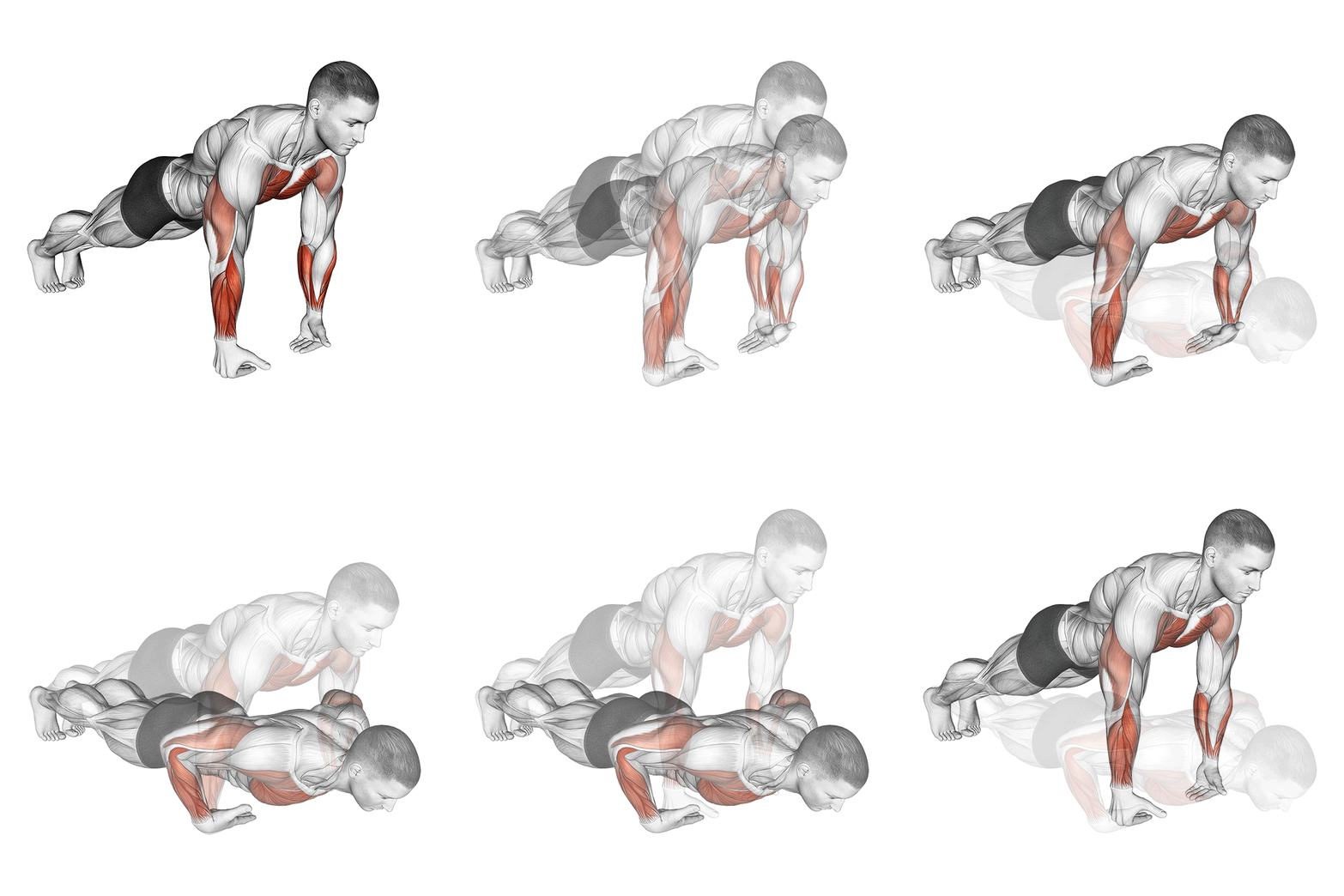
Reverse Wrist Push-Up
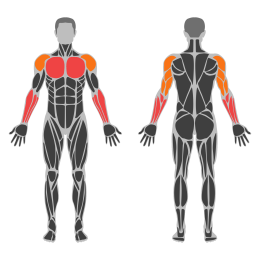
The Reverse Wrist Push-Up is an advanced bodyweight exercise targeting the forearms, wrists, and finger flexors. It involves performing a push-up with the wrists in a reversed position, which places significant stress on the wrist joints and forearm muscles. This exercise requires a high level of wrist flexibility and strength, making it suitable only for experienced individuals.
Muscle focus
Step-by-step cues
- Begin by kneeling on the floor with your hands placed shoulder-width apart, fingers pointing towards your knees.
- Slowly lean forward, placing your weight onto your hands while keeping your elbows slightly bent.
- Ensure your wrists are directly under your shoulders and maintain a straight line from your head to your knees.
- Lower your body by bending your elbows until your chest is close to the ground, keeping your core engaged.
- Push through your palms to return to the starting position, maintaining control throughout the movement.
- Repeat for the desired number of repetitions.
Technical tips
- Warm up thoroughly before attempting this exercise to prepare your wrists and forearms.
- Start with a limited range of motion and gradually increase as you build strength and flexibility.
- Focus on maintaining a neutral wrist position to minimize strain and reduce the risk of injury.
- If you experience any pain or discomfort, stop immediately and reassess your form or consult a professional.
- Incorporate wrist mobility exercises into your routine to improve flexibility over time.
- Consider using a padded surface or mat to reduce pressure on the wrists during the exercise.
Tuesday
Easy Walk
Walk for 30-45 minutes without chasing speed.
Wednesday
Full Body Strength
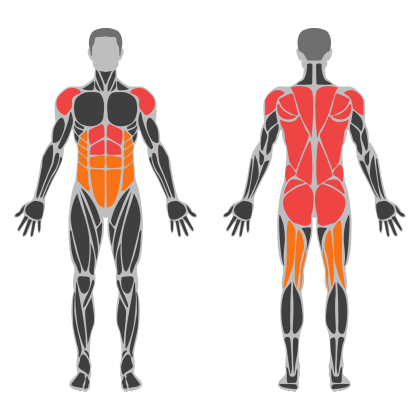
Full Body Strength muscle focus
Red marks the primary training focus. Orange marks supporting muscle groups used throughout this session.
Barbell Good Morning
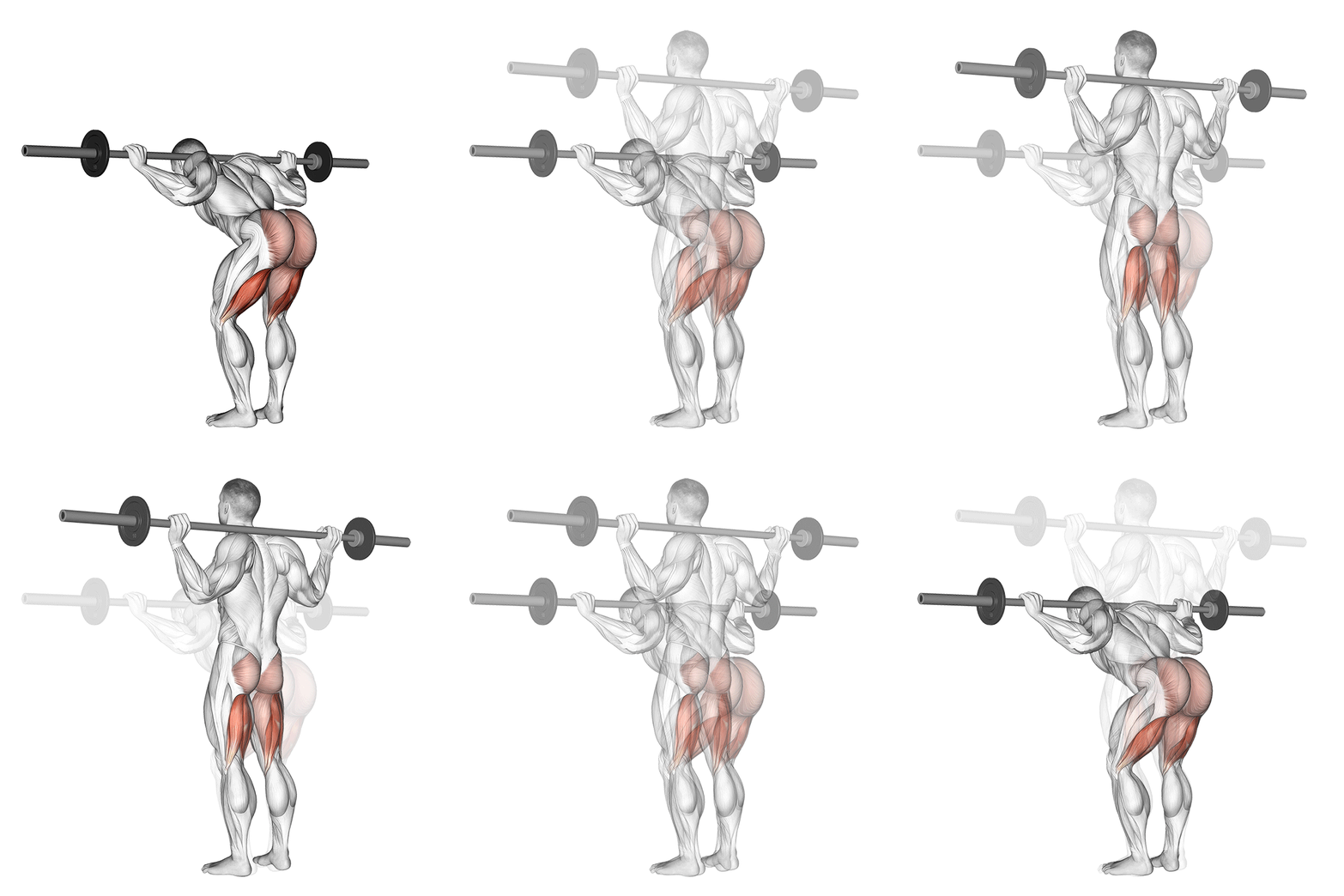
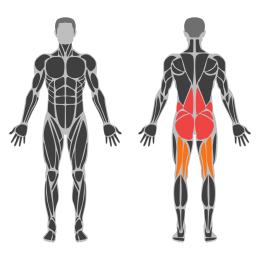
The Barbell Good Morning is a compound exercise that primarily targets the lower back, hamstrings, and glutes. It involves bending at the hips while maintaining a neutral spine, which helps in strengthening the posterior chain and improving hip hinge mechanics.
Muscle focus
Step-by-step cues
- Begin by setting up a barbell on a squat rack at shoulder height.
- Position yourself under the barbell, resting it across your upper back and shoulders. Grip the bar slightly wider than shoulder-width apart.
- Lift the bar off the rack by extending your legs and stepping back to clear the rack.
- Stand with your feet shoulder-width apart, toes pointing slightly outward.
- Engage your core and keep your chest up. Maintain a slight bend in your knees.
- Hinge at the hips by pushing them backward while keeping your back straight and chest up.
- Lower your torso until it is nearly parallel to the ground or as far as your flexibility allows without rounding your back.
- Reverse the movement by driving through your heels and extending your hips to return to the starting position.
Technical tips
- Keep your core tight throughout the movement to protect your lower back.
- Focus on hinging at the hips rather than bending at the waist to maintain proper form.
- Start with a light weight to master the technique before progressing to heavier loads.
- Ensure that your knees remain slightly bent throughout the exercise to avoid unnecessary strain.
- Maintain a neutral spine by keeping your head in line with your torso; avoid looking up or down excessively.
- Control the descent and ascent of the movement to maximize muscle engagement and minimize injury risk.
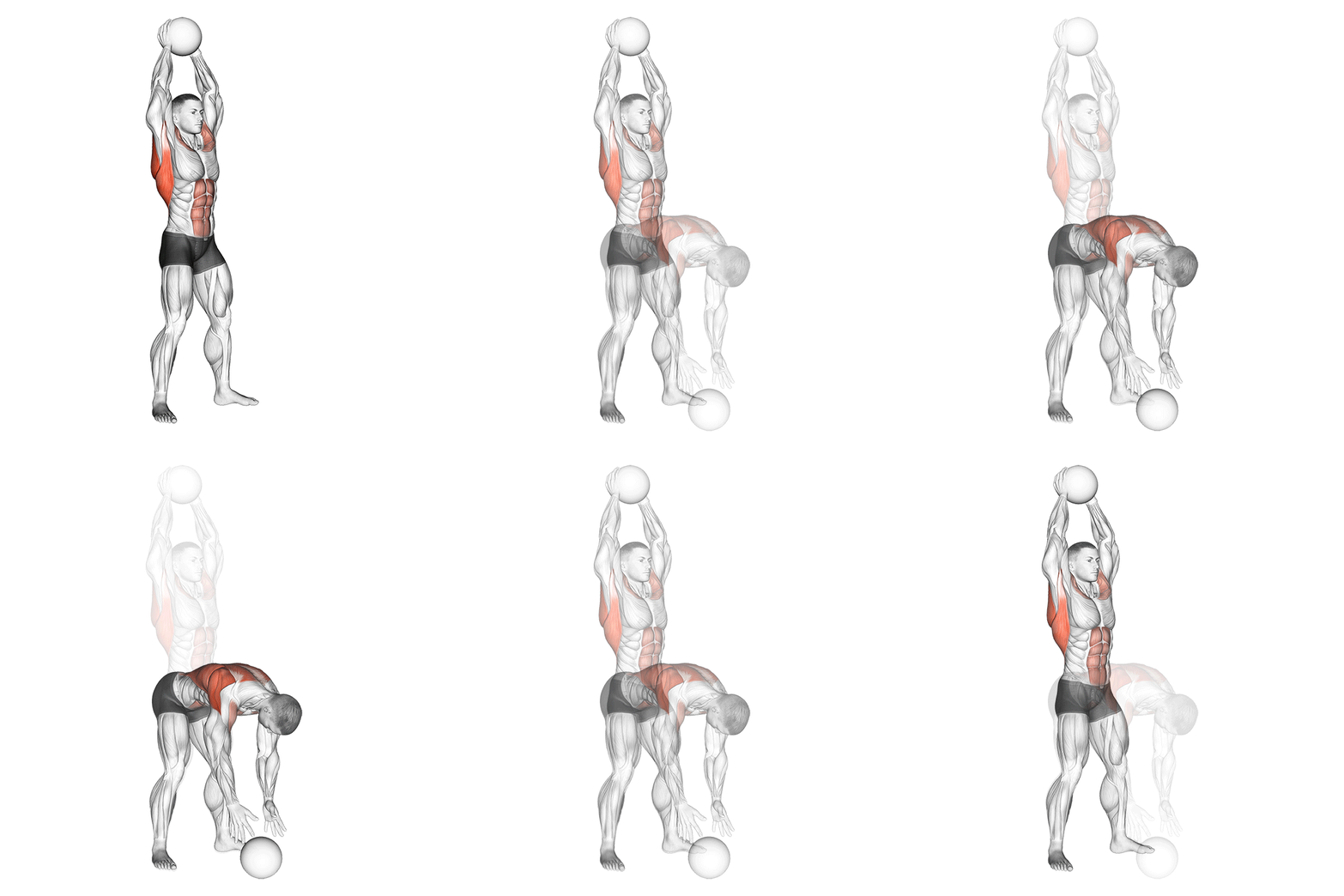
Medicine Ball Slam
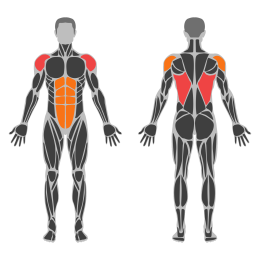
The slam ball exercise is a dynamic, full-body workout that primarily targets the core, shoulders, and legs. It involves lifting a weighted ball overhead and forcefully slamming it to the ground, engaging multiple muscle groups and enhancing power, coordination, and cardiovascular endurance.
Muscle focus
Step-by-step cues
- Stand with your feet shoulder-width apart, knees slightly bent.
- Hold a slam ball with both hands in front of you.
- Engage your core and lift the ball overhead by extending your arms fully.
- Rise onto the balls of your feet as you lift the ball for added power.
- Forcefully slam the ball down to the ground in front of you by using your core and arms.
- Catch the ball on the rebound or pick it up if it doesn't bounce.
- Return to the starting position and repeat for the desired number of repetitions.
Technical tips
- Ensure to keep your back straight and engage your core throughout the movement to prevent injury.
- Use a weight that challenges you but allows you to maintain proper form.
- Focus on using your entire body to generate power for the slam, not just your arms.
- Control your breathing; exhale as you slam the ball down and inhale as you lift it back up.
- Start with a moderate pace to master the technique before increasing speed or weight.
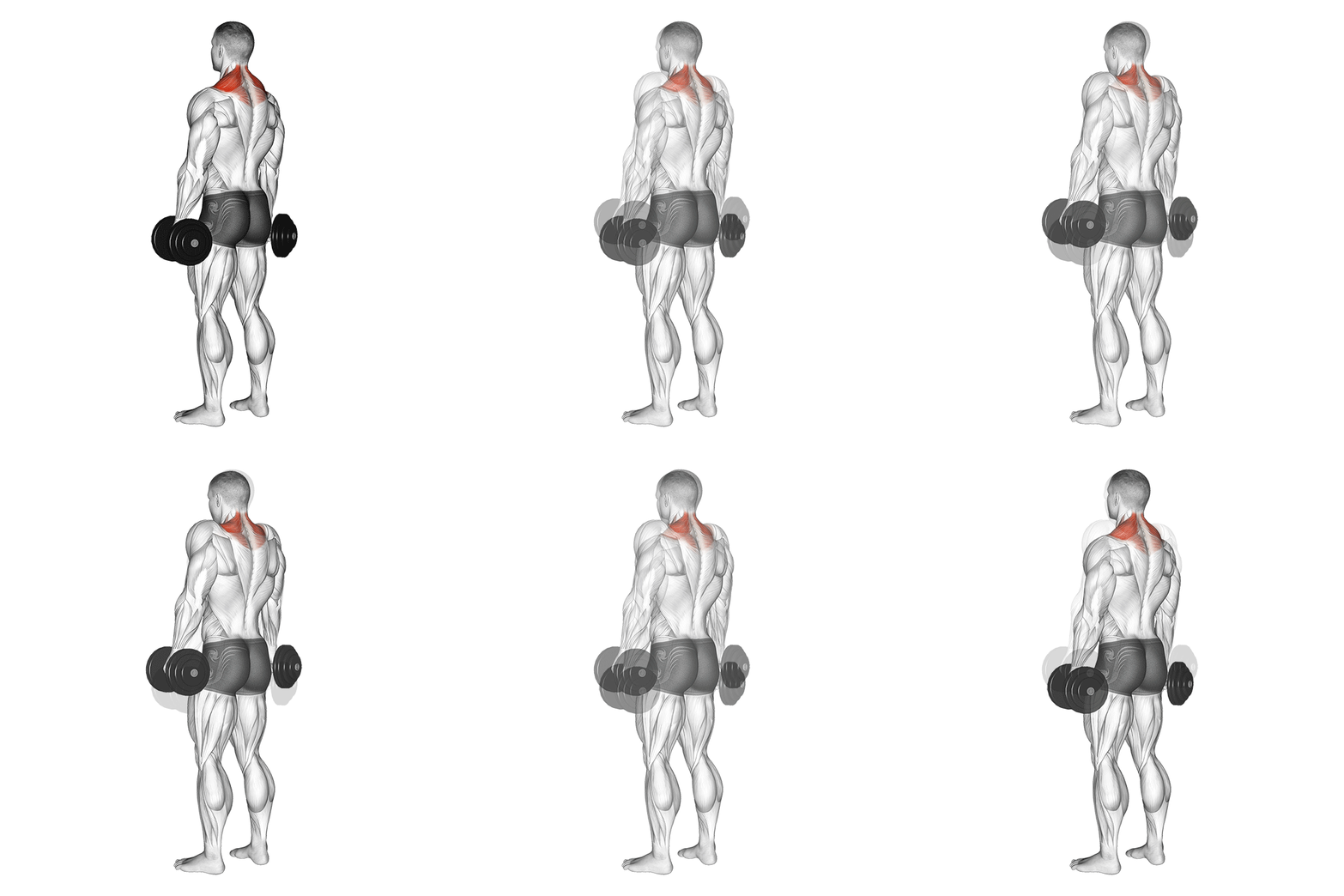
Dumbbell Shoulder Shrugs
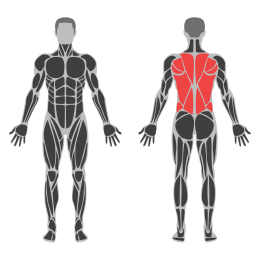
Dumbbell Shoulder Shrugs target the trapezius muscles, which are located at the upper back and neck. This exercise helps in building strength and mass in the upper trapezius, improving posture and shoulder stability.
Muscle focus
Step-by-step cues
- Stand upright with feet shoulder-width apart, holding a dumbbell in each hand at your sides.
- Keep your arms straight and let the dumbbells hang naturally.
- Inhale deeply, then exhale as you lift your shoulders straight up towards your ears.
- Hold the contraction at the top for a moment, ensuring you feel the tension in your trapezius muscles.
- Slowly lower your shoulders back to the starting position while inhaling.
- Repeat for the desired number of repetitions.
Technical tips
- Maintain a neutral spine throughout the exercise to avoid strain on your lower back.
- Avoid rolling your shoulders; focus on lifting them straight up and down.
- Use a controlled motion to maximize muscle engagement and minimize injury risk.
- Start with lighter weights to perfect form before progressing to heavier dumbbells.
- Keep your core engaged to help stabilize your body during the movement.
Saw Plank
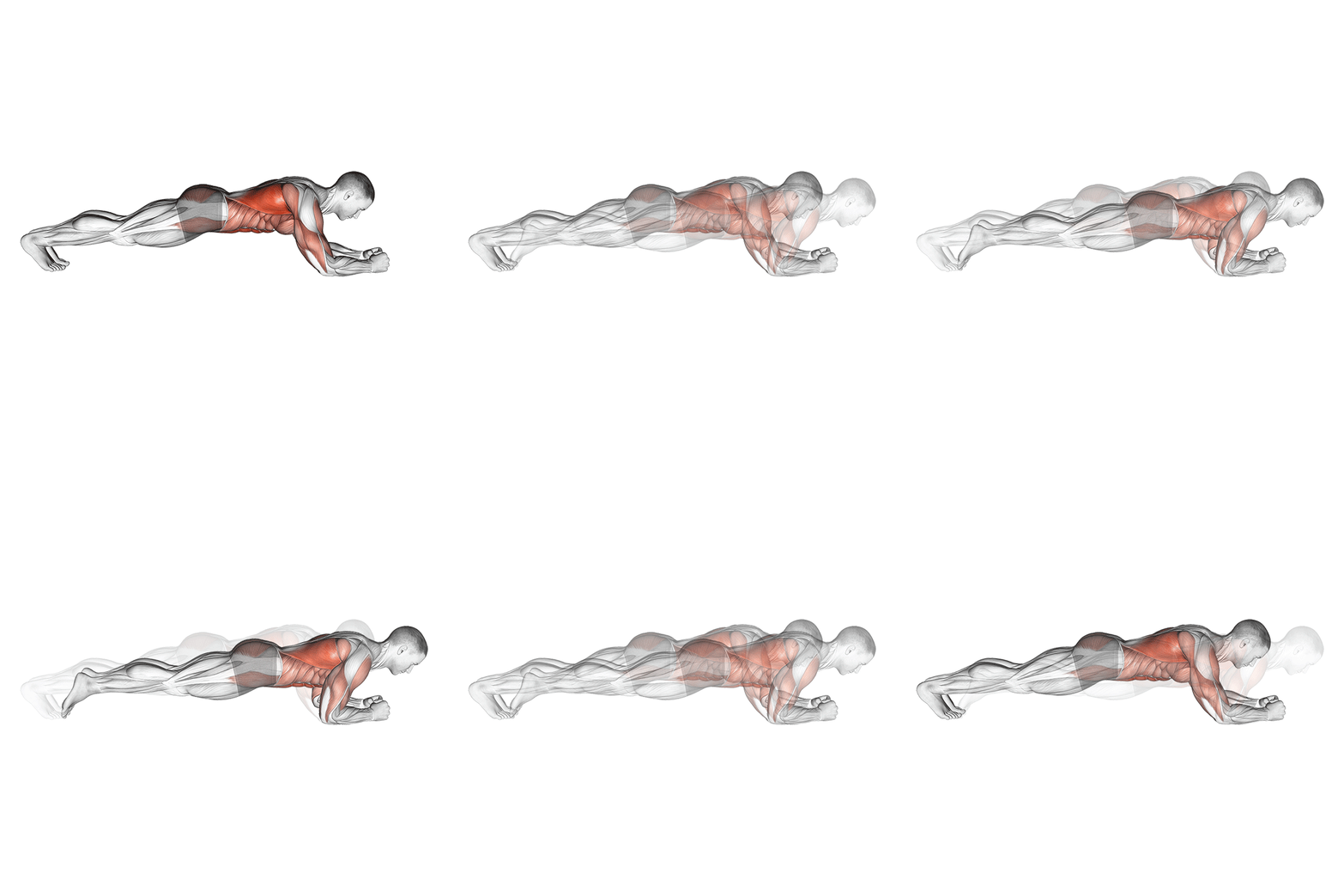
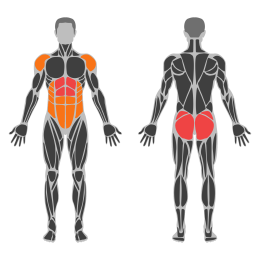
The Saw Plank is an advanced core exercise that targets the abdominal muscles, obliques, and shoulders. It involves a dynamic movement that enhances stability and strength by incorporating a forward and backward sawing motion while maintaining a plank position.
Muscle focus
Step-by-step cues
- Start in a forearm plank position with your elbows directly under your shoulders and your body in a straight line from head to heels.
- Engage your core and maintain a neutral spine throughout the exercise.
- Shift your body weight forward by pushing through your toes, moving your shoulders past your elbows.
- Reverse the motion by pulling back with your toes, bringing your shoulders behind your elbows.
- Continue this sawing motion for the desired number of repetitions or time.
Technical tips
- Keep your core tight to prevent sagging or arching of the lower back.
- Focus on controlled movements to maximize muscle engagement and avoid injury.
- Ensure your shoulders remain stable and do not collapse during the exercise.
- Breathe steadily throughout the movement to maintain endurance and control.
- If you feel strain in your lower back, adjust your form or reduce the range of motion.
Hip Hinge
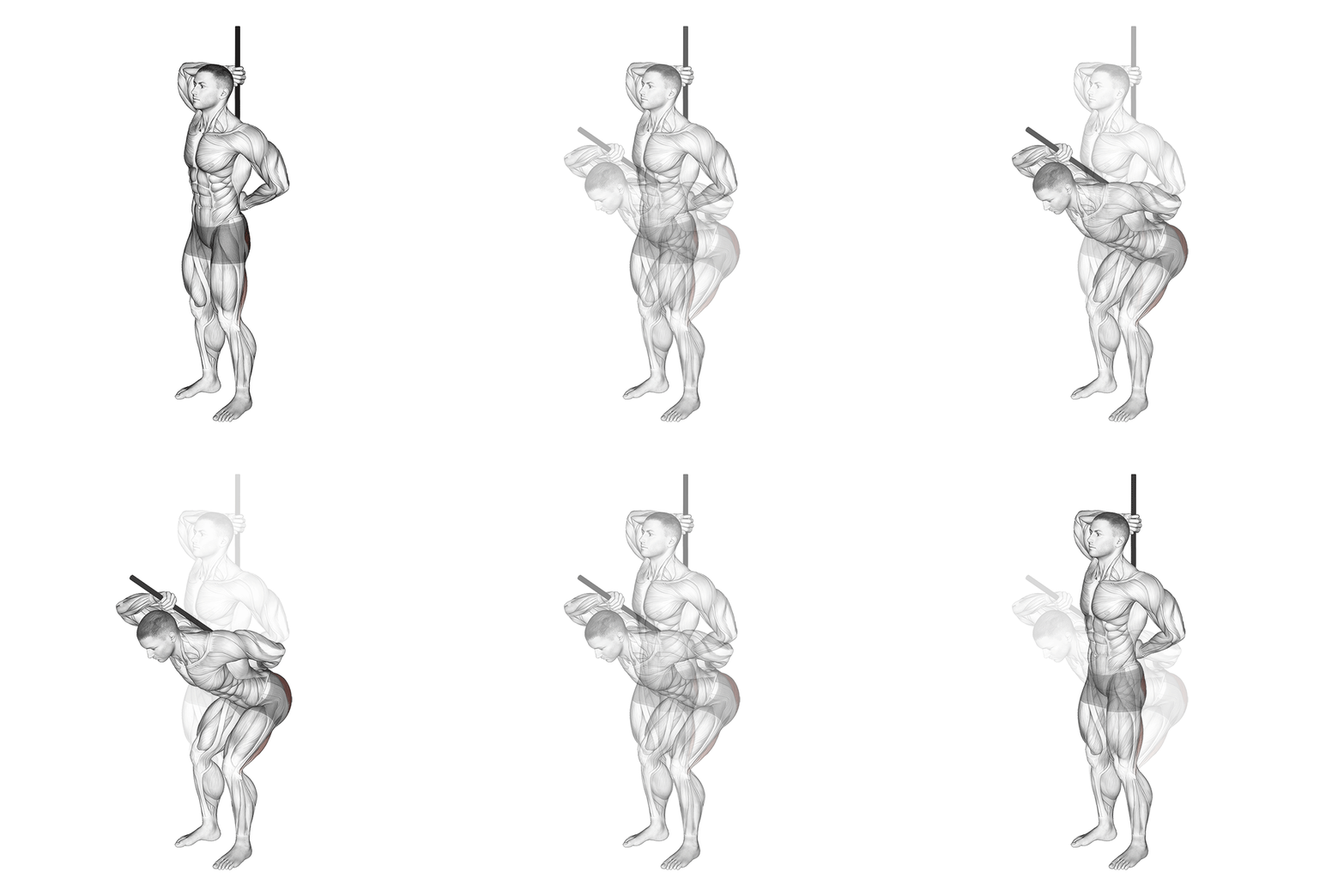
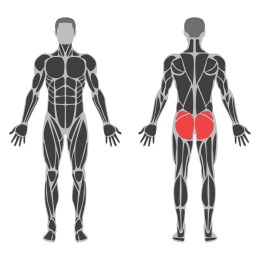
The hip hinge is a fundamental movement pattern essential for exercises like deadlifts and kettlebell swings. It involves bending at the hips while maintaining a neutral spine, allowing for efficient load transfer and minimizing stress on the lower back.
Muscle focus
Step-by-step cues
- Stand with feet hip-width apart, toes pointing forward.
- Engage your core to stabilize your spine.
- Begin the movement by pushing your hips back as if reaching them toward a wall behind you.
- Keep your knees slightly bent and maintain a neutral spine throughout the movement.
- Lower your torso until you feel a stretch in your hamstrings, keeping your chest open and shoulders back.
- Reverse the motion by driving through your heels and extending your hips to return to the starting position.
Technical tips
- Focus on moving from the hips rather than bending at the waist.
- Keep your weight balanced over your midfoot to heels to maintain stability.
- Ensure your back remains flat and avoid rounding your shoulders.
- Practice in front of a mirror to monitor form and alignment.
- Start with bodyweight to master the technique before adding resistance.
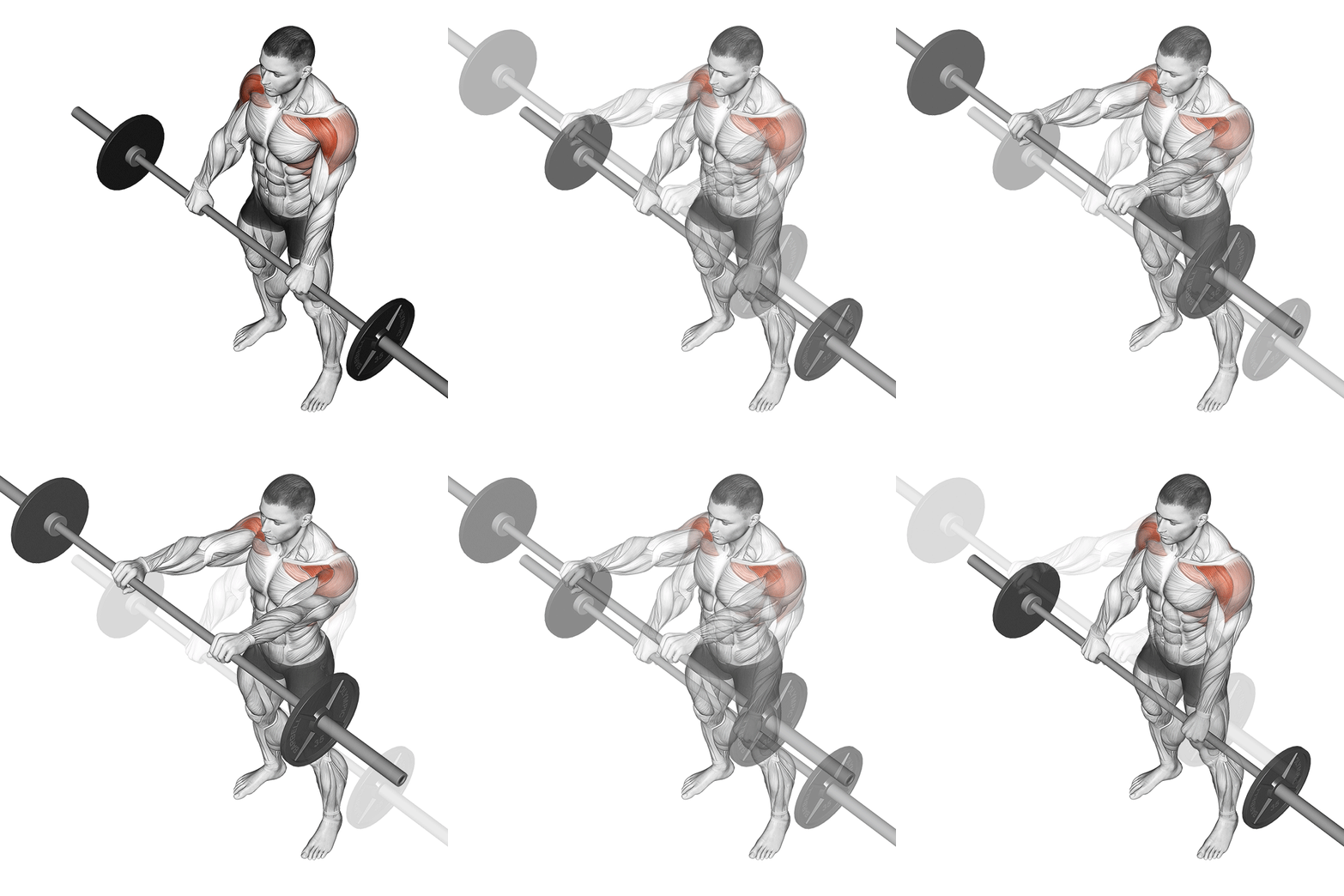
Barbell Front Raise
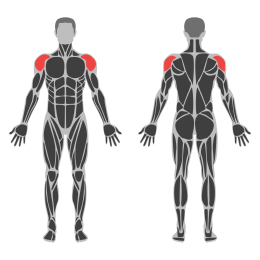
The Barbell Front Raise is an isolation exercise targeting the anterior deltoids. It involves lifting a barbell in front of the body to shoulder height, emphasizing shoulder strength and stability.
Muscle focus
Step-by-step cues
- Stand with your feet shoulder-width apart, holding a barbell with an overhand grip in front of your thighs.
- Keep your arms straight but not locked, and engage your core for stability.
- Inhale and lift the barbell forward and upward until your arms are parallel to the ground.
- Pause briefly at the top of the movement, ensuring control and stability.
- Exhale as you slowly lower the barbell back to the starting position.
Technical tips
- Start with a light weight to ensure proper form and avoid strain.
- Maintain a slight bend in your elbows to reduce joint stress.
- Keep your movements controlled; avoid using momentum to lift the barbell.
- Engage your core throughout the exercise to support your lower back.
- Focus on lifting with your shoulders, not your arms, to maximize deltoid engagement.
Thursday
Mobility and Rest
Complete 10-15 minutes of comfortable mobility.
Friday
Full Body Practice
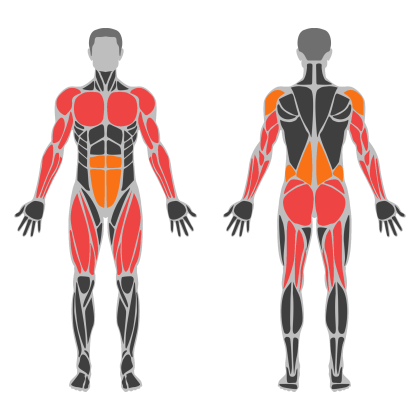
Full Body Practice muscle focus
Red marks the primary training focus. Orange marks supporting muscle groups used throughout this session.
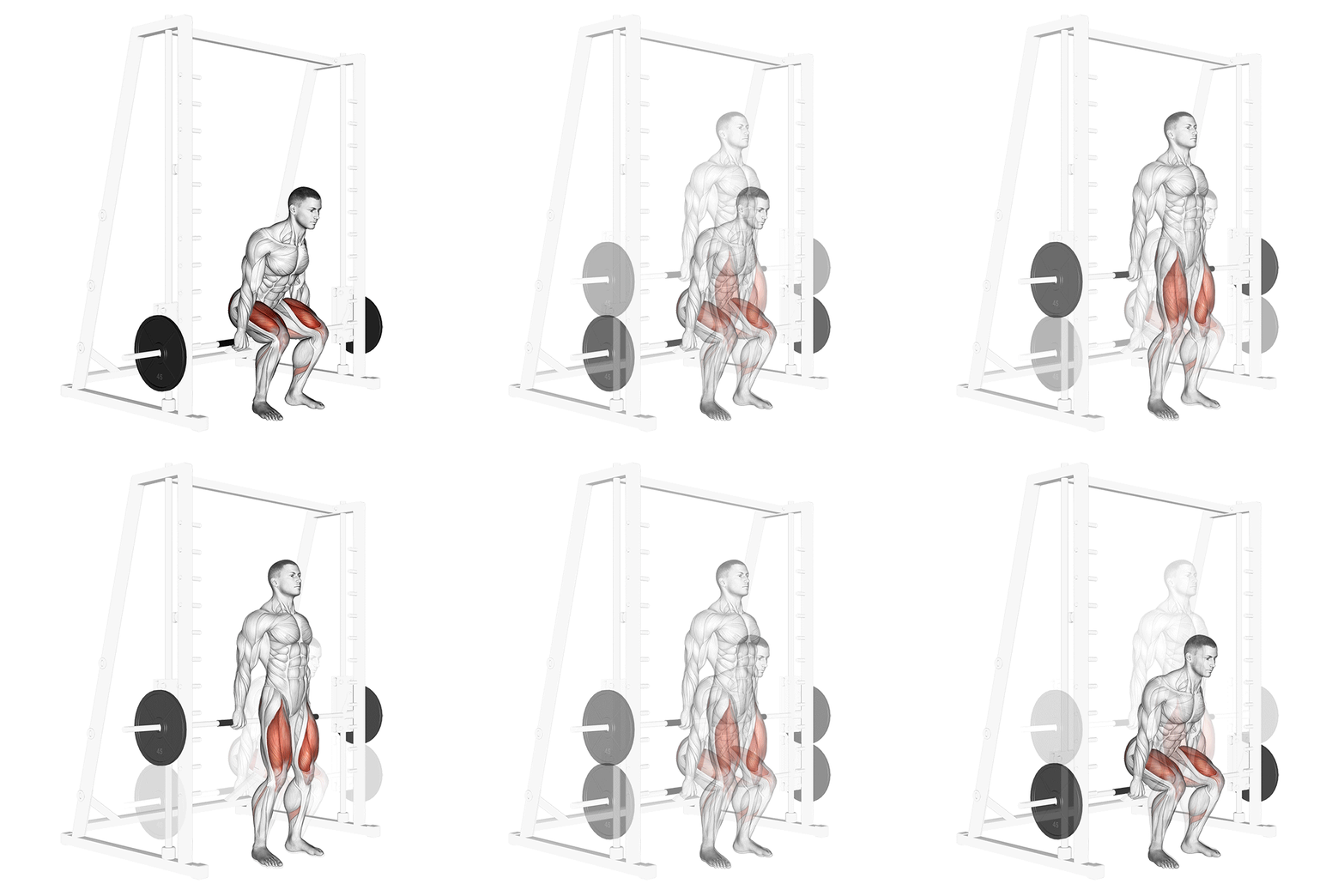
Smith Hack Squat
The Smith Hack Squat is a compound lower body exercise performed using a Smith machine. It primarily targets the quadriceps, with secondary engagement of the glutes, hamstrings, and calves. This exercise provides stability and control, making it suitable for lifters of varying experience levels.
Muscle focus
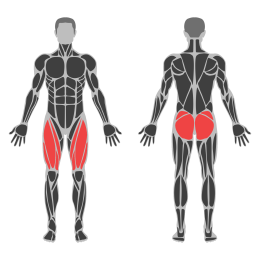
Step-by-step cues
- Position yourself under the Smith machine bar with your feet shoulder-width apart and slightly in front of you.
- Unrack the bar by rotating it forward and position it across your upper back, ensuring it's comfortable and secure.
- Keep your chest up, core engaged, and back straight throughout the movement.
- Lower your body by bending at the knees and hips, keeping your knees aligned with your toes.
- Descend until your thighs are parallel to the floor or slightly below, ensuring your heels remain flat on the ground.
- Push through your heels to return to the starting position, fully extending your legs without locking your knees.
- Repeat for the desired number of repetitions.
Technical tips
- Ensure proper alignment by keeping your knees in line with your toes to prevent injury.
- Maintain a controlled tempo throughout the exercise to maximize muscle engagement.
- Focus on pushing through your heels to effectively target the quadriceps and glutes.
- Keep your core tight to support your lower back and maintain balance.
- Adjust the foot positioning as needed to find a comfortable stance that allows full range of motion.
- Avoid locking out your knees at the top of the movement to maintain tension on the muscles.
Machine Chest Fly
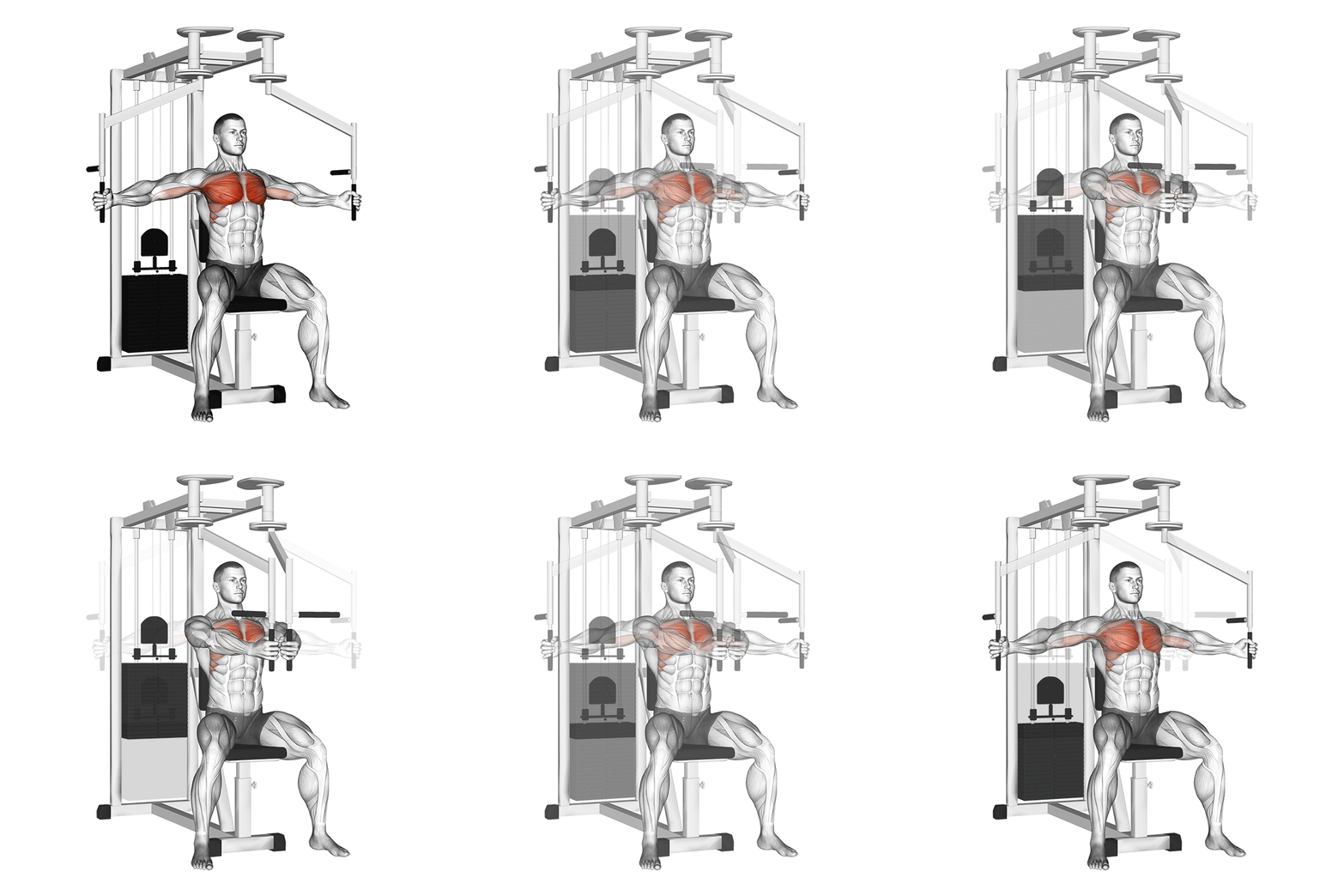
The machine chest fly is an isolation exercise targeting the pectoral muscles. It involves using a chest fly machine to perform a controlled movement that stretches and contracts the chest muscles, enhancing muscle definition and strength. This exercise is ideal for focusing on the chest without engaging other muscle groups significantly.
Muscle focus
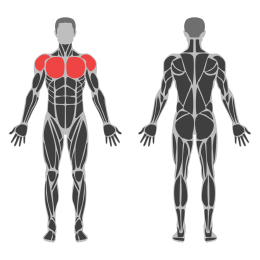
Step-by-step cues
- Adjust the seat height so that the handles are at chest level when you sit down.
- Sit on the machine with your back firmly against the pad and feet flat on the floor.
- Grasp the handles with a neutral grip, keeping your elbows slightly bent.
- Exhale and slowly bring the handles together in front of your chest by contracting your pectoral muscles.
- Pause briefly at the peak contraction, ensuring your arms are parallel to each other.
- Inhale and slowly return to the starting position, maintaining control throughout the movement.
- Repeat for the desired number of repetitions.
Technical tips
- Ensure your elbows remain slightly bent throughout the exercise to reduce joint strain.
- Focus on squeezing your chest muscles as you bring the handles together for maximum contraction.
- Maintain a slow and controlled motion to engage the muscles effectively and prevent injury.
- Avoid letting the weights touch down between repetitions to keep constant tension on the chest muscles.
- Keep your shoulders back and down to isolate the chest muscles and avoid shoulder involvement.
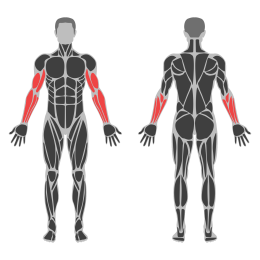
Double Dumbbell Preacher Curl
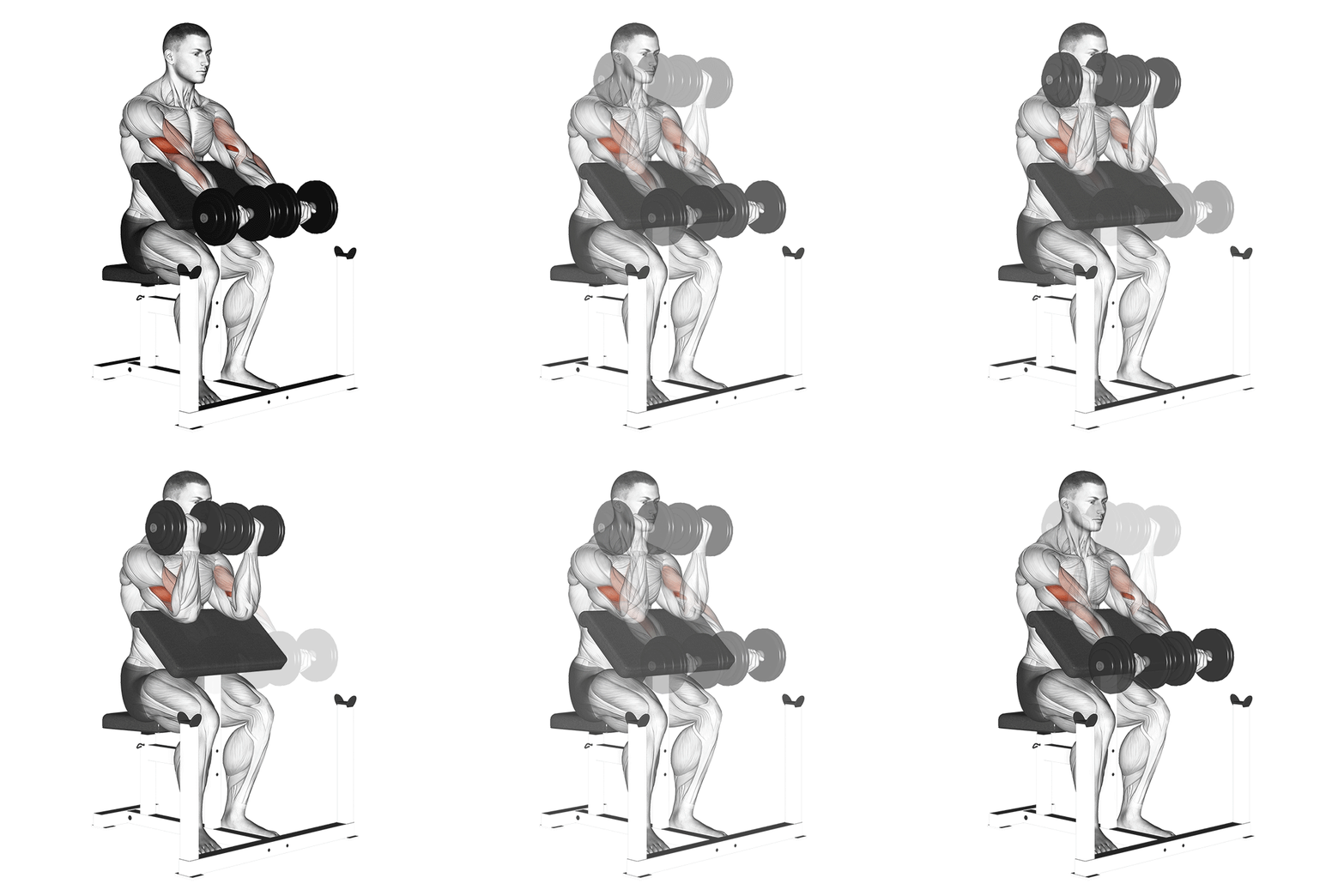
The Double Dumbbell Preacher Curl is an isolation exercise targeting the biceps brachii. It is performed using a preacher bench and two dumbbells, allowing for controlled movement and effective muscle engagement. This exercise emphasizes the peak contraction of the biceps and helps in developing the lower part of the muscle.
Muscle focus
Step-by-step cues
- Sit on a preacher bench with your chest pressed against the pad and your arms extended over it.
- Hold a dumbbell in each hand with an underhand grip, palms facing up.
- Start with your arms fully extended but not locked out.
- Curl the dumbbells upward by bending your elbows, keeping your upper arms stationary against the pad.
- Continue lifting until your biceps are fully contracted and the dumbbells are at shoulder level.
- Pause briefly at the top of the movement for maximum contraction.
- Slowly lower the dumbbells back to the starting position, maintaining control throughout.
- Repeat for the desired number of repetitions.
Technical tips
- Ensure your elbows remain fixed on the pad to isolate the biceps effectively.
- Focus on a slow and controlled movement to maximize muscle tension.
- Avoid swinging or using momentum to lift the weights.
- Keep a slight bend in your elbows at the bottom to maintain tension on the biceps.
- Exhale as you lift the weights and inhale as you lower them.
- Adjust the seat height so that your armpits are comfortably resting at the top of the pad.
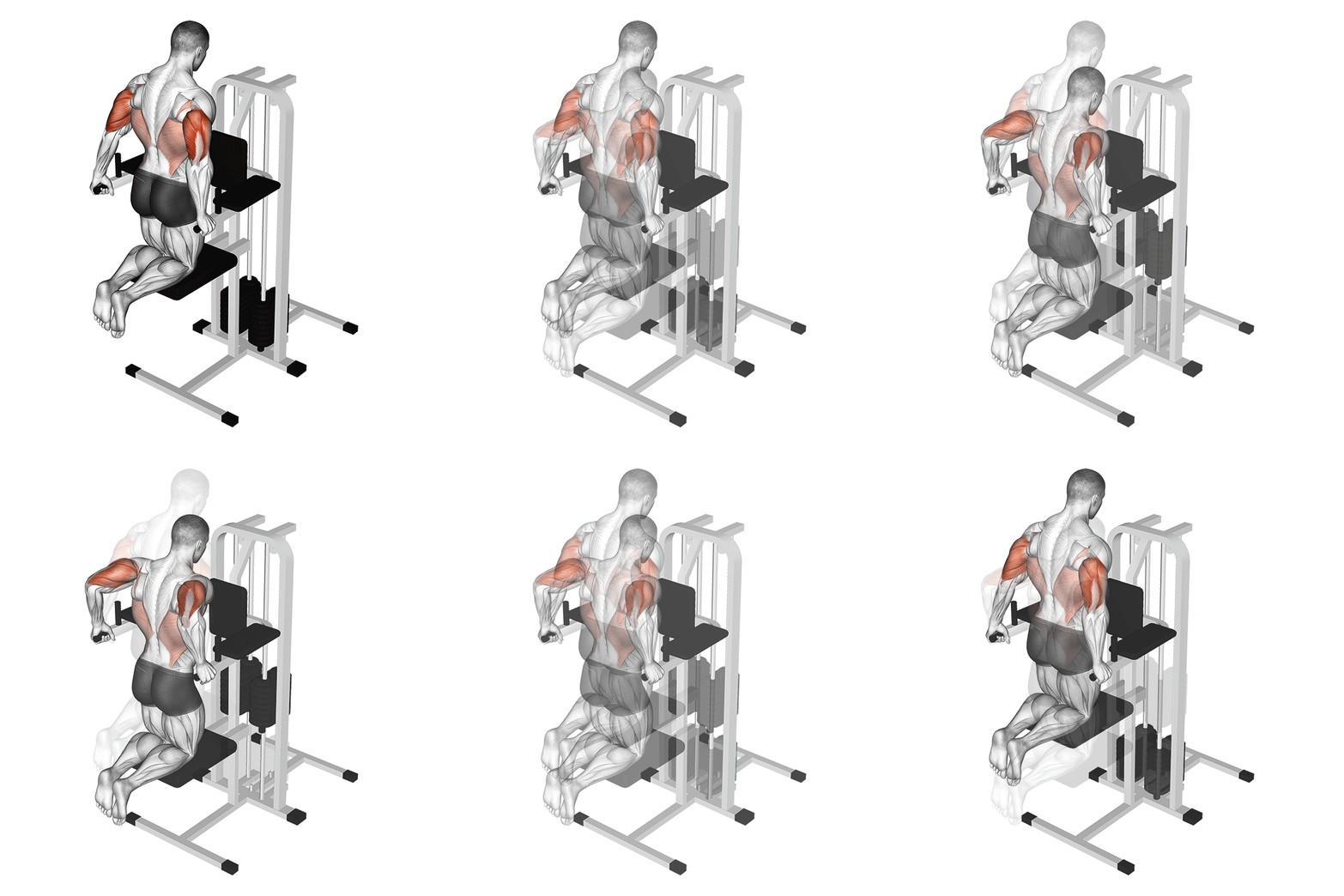
Assisted Machine Dips
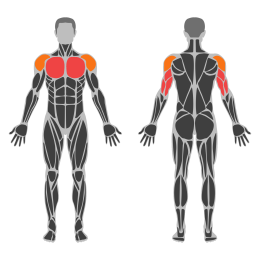
Assisted Machine Dips target the triceps, chest, and shoulders. This exercise is performed on a dip machine with adjustable weight assistance, allowing for controlled movement and gradual strength development. It is suitable for beginners who may not yet have the strength to perform unassisted dips.
Muscle focus
Step-by-step cues
- Adjust the weight stack to provide the desired level of assistance.
- Step onto the machine platform and grip the handles firmly.
- Position your knees on the knee pad or foot platform, ensuring your body is upright.
- Lower your body by bending your elbows until your upper arms are parallel to the floor.
- Press through your palms to extend your arms and return to the starting position.
- Repeat for the desired number of repetitions, maintaining control throughout.
Technical tips
- Ensure a full range of motion by lowering until your upper arms are parallel to the ground.
- Keep your core engaged to maintain stability and prevent swinging.
- Focus on a slow, controlled descent and ascent to maximize muscle engagement.
- Adjust the assistance level as you gain strength to continue challenging your muscles.
- Avoid locking out your elbows at the top of the movement to keep tension on the muscles.
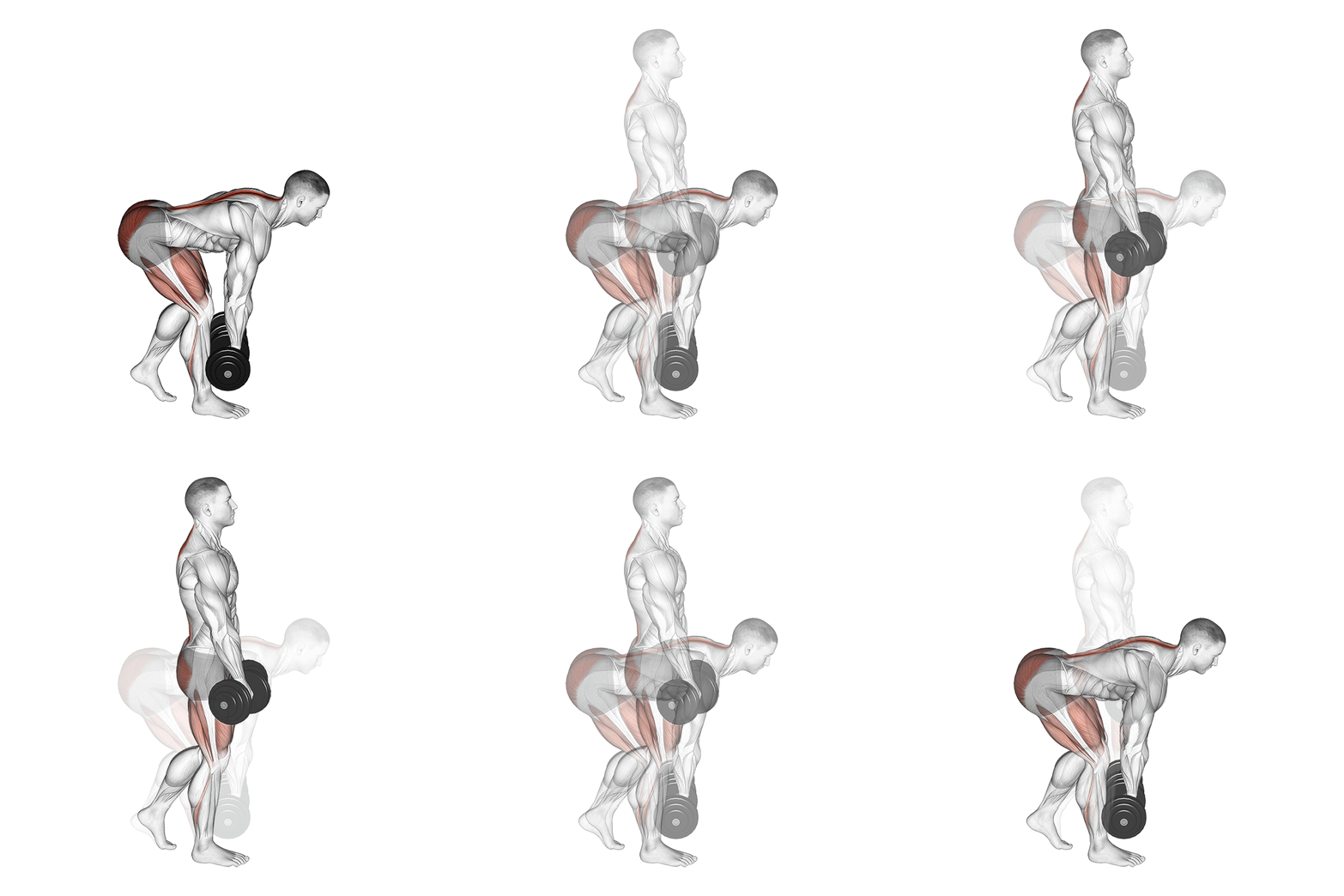
B Stance Romanian Deadlift
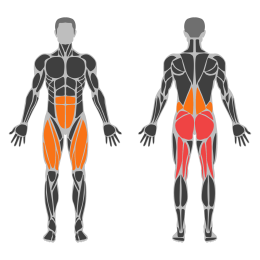
The B Stance Romanian Deadlift is a unilateral variation of the traditional Romanian Deadlift, designed to target the hamstrings, glutes, and lower back. This exercise involves a staggered stance where one foot is positioned slightly behind the other, allowing for greater emphasis on the front leg while maintaining balance and stability.
Muscle focus
Step-by-step cues
- Stand with your feet hip-width apart. Shift your weight onto your right foot and place your left foot slightly behind you, toes touching the ground for balance.
- Hold a dumbbell or barbell in front of your thighs with an overhand grip, keeping your arms straight.
- Engage your core and keep your back straight as you hinge at the hips, lowering the weight towards the floor. Your right knee should have a slight bend.
- Lower the weight until you feel a stretch in your right hamstring, ensuring your back remains flat and your shoulders are pulled back.
- Push through your right heel to return to the starting position, keeping the movement controlled.
- Complete the desired number of repetitions on one side before switching to the other leg.
Technical tips
- Focus on maintaining a neutral spine throughout the movement to prevent lower back strain.
- Keep your core engaged to help stabilize your body and maintain balance.
- Ensure that most of your weight is on the front leg to maximize muscle engagement.
- Move slowly and with control to fully engage the hamstrings and glutes.
- Avoid rounding your back as you lower the weight; keep your chest open and shoulders back.
- Start with lighter weights to master form before progressing to heavier loads.
Barbell Bench Press
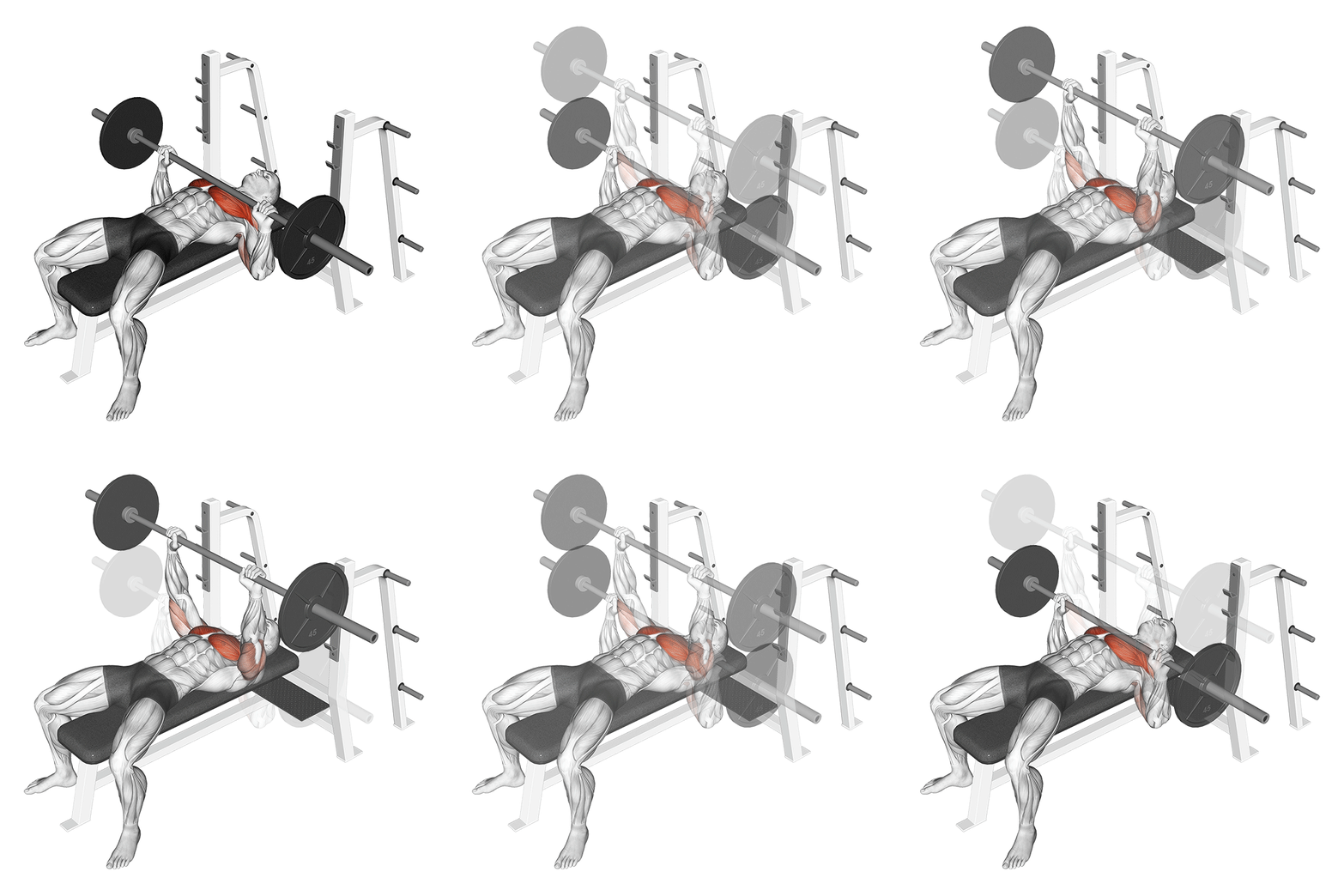
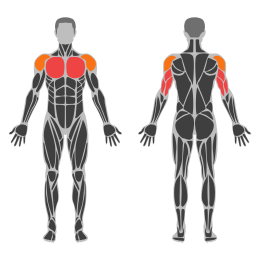
The Barbell Bench Press is a compound exercise targeting the chest, triceps, and shoulders. It is performed lying on a flat bench while pressing a barbell upwards from chest level until the arms are fully extended.
Muscle focus
Step-by-step cues
- Lie flat on a bench with your feet firmly planted on the ground.
- Grip the barbell with hands slightly wider than shoulder-width apart.
- Unrack the barbell and hold it directly above your chest with arms fully extended.
- Lower the barbell slowly to your chest, keeping elbows at about a 45-degree angle to your body.
- Pause briefly when the barbell touches your chest.
- Press the barbell back up to the starting position by extending your arms, ensuring they are fully locked out at the top.
- Repeat for the desired number of repetitions.
Technical tips
- Ensure your back remains flat against the bench throughout the exercise.
- Keep your core engaged to maintain stability and support during the lift.
- Avoid flaring your elbows too wide to reduce shoulder strain.
- Focus on controlled movements, both when lowering and pressing the barbell.
- Use a spotter for safety, especially when lifting heavy weights.
- Warm up properly before performing heavy sets to prevent injury.
Saturday
Recreation
Choose an easy activity you enjoy for 30-60 minutes.
Sunday
Full Rest
Review exercise form notes before starting the next week.
Four-week progression
Nutrition guidance

- Start near maintenance calories and adjust slowly using training performance, hunger and body-weight trends.
- Target roughly 1.6-2.0 g of protein per kg of body weight per day across three to five meals.
- Use carbohydrates around training and include vegetables, fruit and healthy fats every day.
- Hydrate consistently and avoid treating one meal or one day as success or failure.
Use these numbers as practical starting ranges, not medical prescriptions. Adjust for your health, body size and activity, and consult a qualified professional when needed.



