
4-Week Slim and Strong Body Program: Progression Cycle 5
A sustainable strength and conditioning program combining full-body training, walking and recovery without crash-diet tactics.
How to use this plan
Follow the days in order, log every working set, and finish each set with one to three good repetitions still available. Use the exercise animations to learn the movement and open the video when you need a full demonstration.
Monday
Lower Body and Glutes
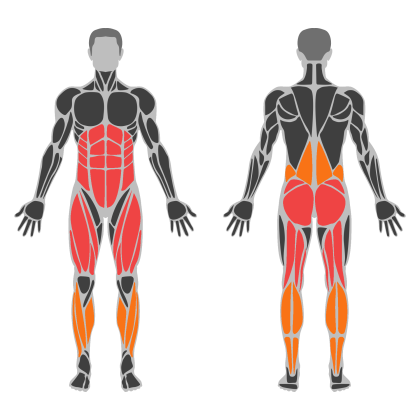
Lower Body and Glutes muscle focus
Red marks the primary training focus. Orange marks supporting muscle groups used throughout this session.
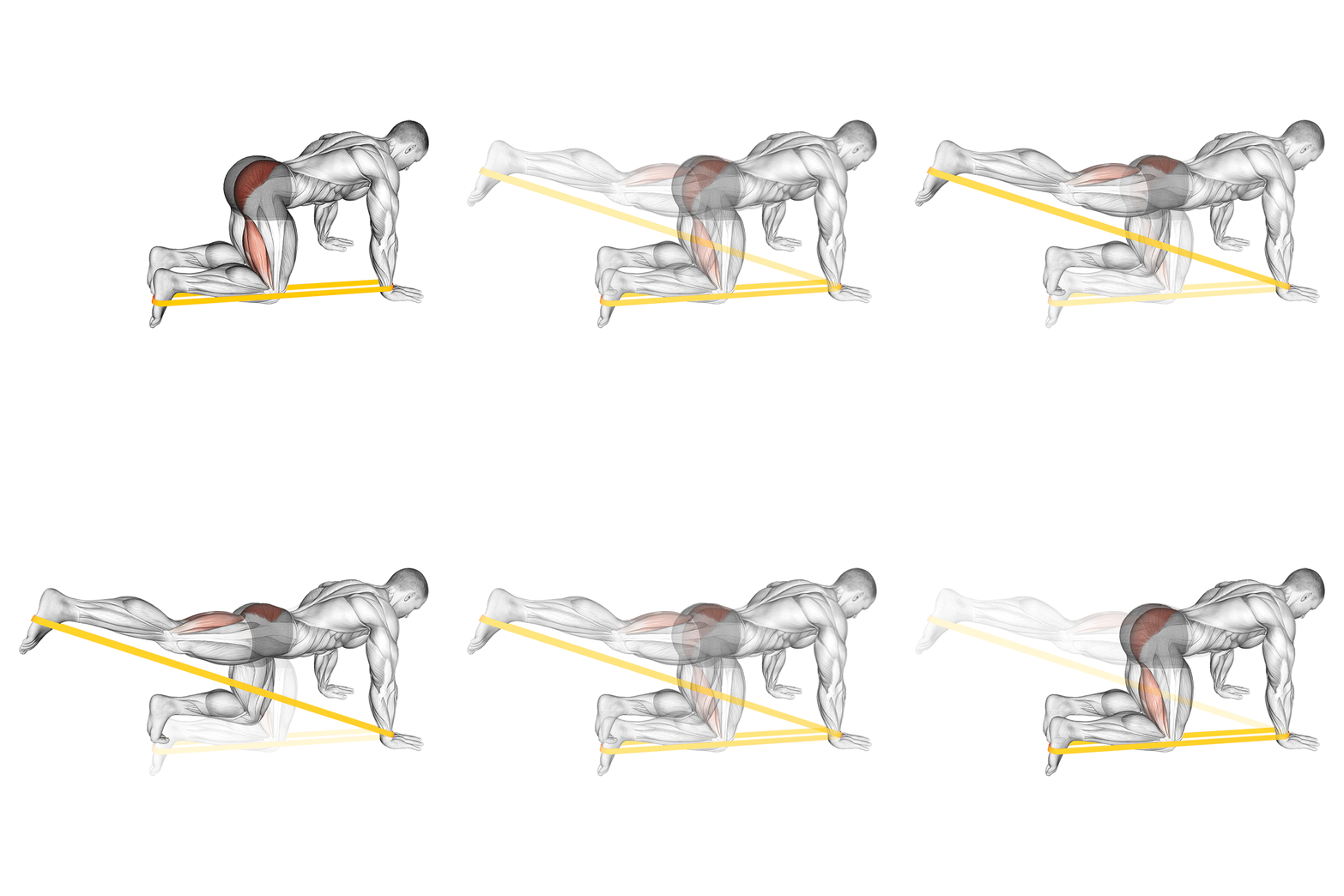
Kneeling Resistance Band Glute Kickback
The Kneeling Resistance Band Glute Kickback is an isolation exercise targeting the gluteus maximus. It involves extending the leg backward against the resistance of a band, focusing on glute activation and strength. This exercise is performed on all fours, using a resistance band looped around one foot and anchored under the opposite knee.
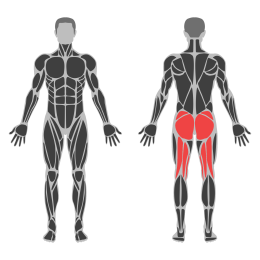
Muscle focus
Step-by-step cues
- Begin on all fours with your hands directly under your shoulders and knees under your hips.
- Loop a resistance band around the arch of your right foot and anchor it under your left knee.
- Engage your core to maintain a neutral spine throughout the movement.
- Extend your right leg straight back, keeping your foot flexed and driving through the heel.
- Squeeze your glutes at the top of the movement, ensuring full extension without arching your lower back.
- Slowly return to the starting position, keeping tension in the band.
- Complete the desired number of repetitions before switching to the other leg.
Technical tips
- Focus on squeezing your glutes at the top of each kickback for maximum activation.
- Keep your core engaged to prevent lower back strain and maintain stability.
- Ensure that your movements are controlled; avoid using momentum to swing the leg.
- Adjust the resistance band tension by selecting a band with appropriate resistance or changing its position.
- Maintain a steady breathing pattern; exhale as you extend your leg and inhale as you return to start.
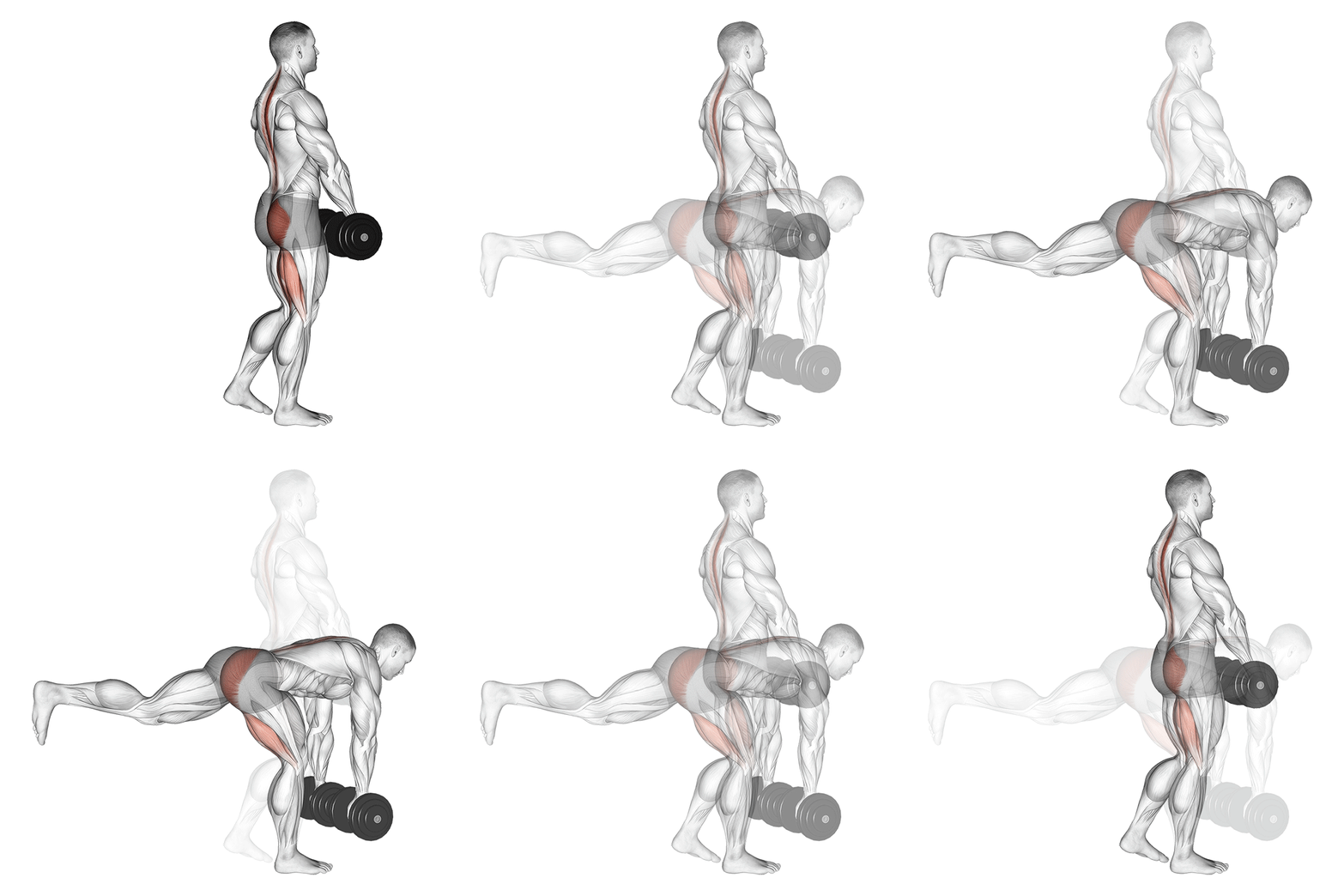
Single Leg Romanian Deadlift
The Single Leg Romanian Deadlift is a unilateral exercise targeting the hamstrings, glutes, and lower back. It enhances balance, stability, and strength by engaging the posterior chain muscles while requiring core activation for stabilization.
Muscle focus
Step-by-step cues
- Stand upright with feet hip-width apart, holding a dumbbell in your right hand.
- Shift your weight onto your left leg and slightly bend the knee.
- Hinge at the hips, extending your right leg straight behind you while lowering the dumbbell towards the ground.
- Keep your back straight and shoulders retracted as you lower the weight.
- Lower until your torso is parallel to the ground or you feel a stretch in your hamstrings.
- Return to the starting position by driving through your left heel and bringing your right leg forward.
- Repeat for the desired number of repetitions before switching to the other leg.
Technical tips
- Maintain a neutral spine throughout the movement to avoid lower back strain.
- Focus on hinging at the hips rather than bending at the waist.
- Engage your core to help maintain balance and stability.
- Keep a slight bend in the standing knee to reduce stress on the joint.
- Use a mirror or record yourself to ensure proper form and alignment.
- Start with lighter weights to master technique before progressing to heavier loads.
- Perform the exercise slowly and with control to maximize muscle engagement.
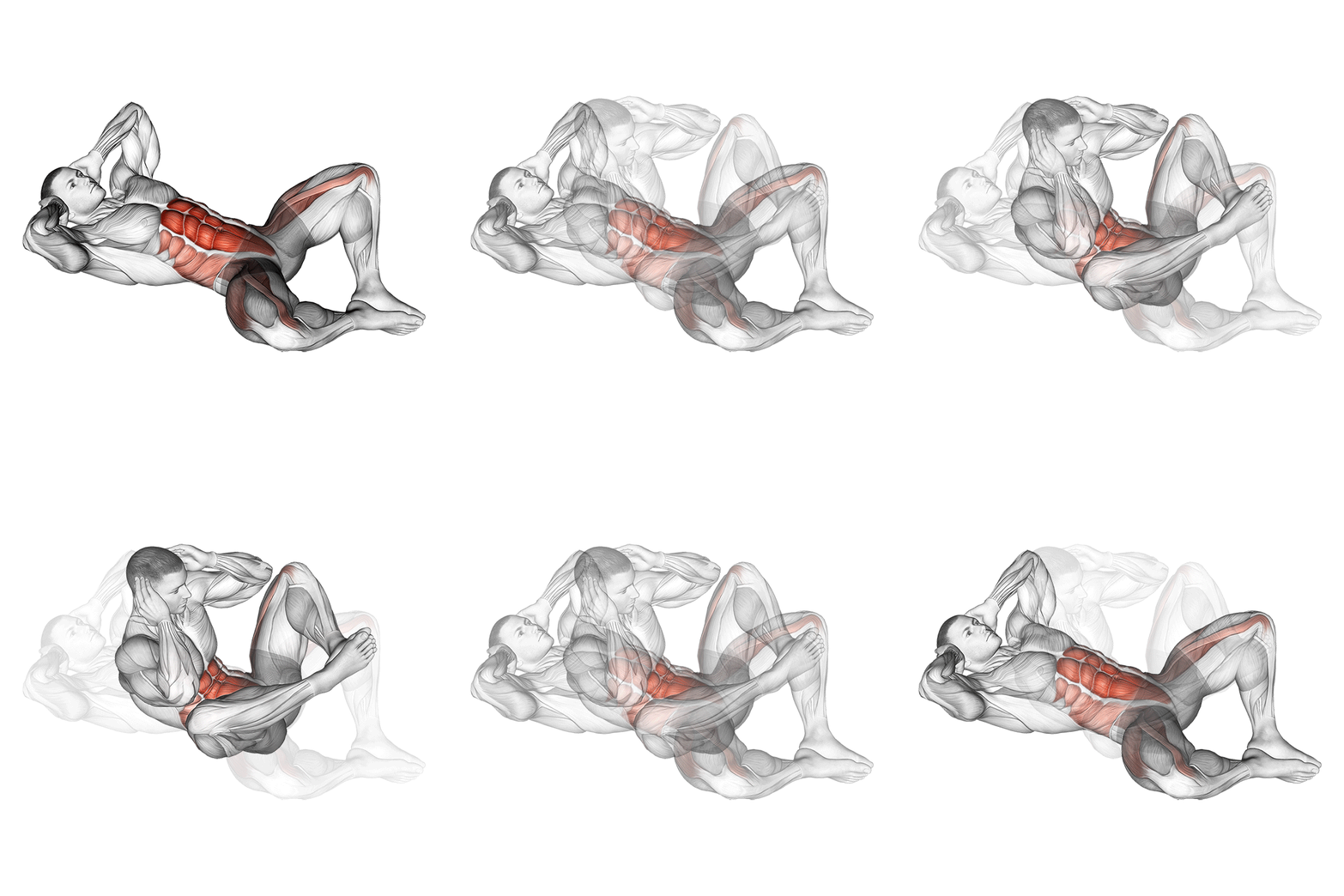
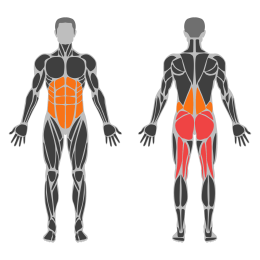
Frog Crunch
The Frog Crunch is an abdominal exercise that targets the rectus abdominis and obliques. It involves a crunching motion while maintaining a frog-like leg position, which increases core engagement and challenges stability.
Muscle focus
Step-by-step cues
- Lie flat on your back with your knees bent and feet flat on the floor.
- Bring the soles of your feet together and let your knees fall outward, forming a diamond shape with your legs.
- Place your hands behind your head with elbows wide, or cross them over your chest.
- Engage your core by drawing your navel towards your spine.
- Exhale as you lift your head, shoulders, and upper back off the ground in a controlled crunching motion.
- Pause briefly at the top of the movement, squeezing your abdominal muscles.
- Inhale as you slowly lower back to the starting position without letting your head touch the ground.
- Repeat for the desired number of repetitions.
Technical tips
- Keep your chin slightly tucked to avoid straining your neck during the crunch.
- Focus on using your abdominal muscles to lift rather than pulling on your neck or head.
- Ensure that your lower back remains in contact with the floor throughout the exercise.
- Control the movement both on the way up and down to maximize muscle engagement.
- Breathe out as you crunch up and inhale as you return to the starting position.
- If you feel discomfort in your neck, try placing a small towel under it for support.
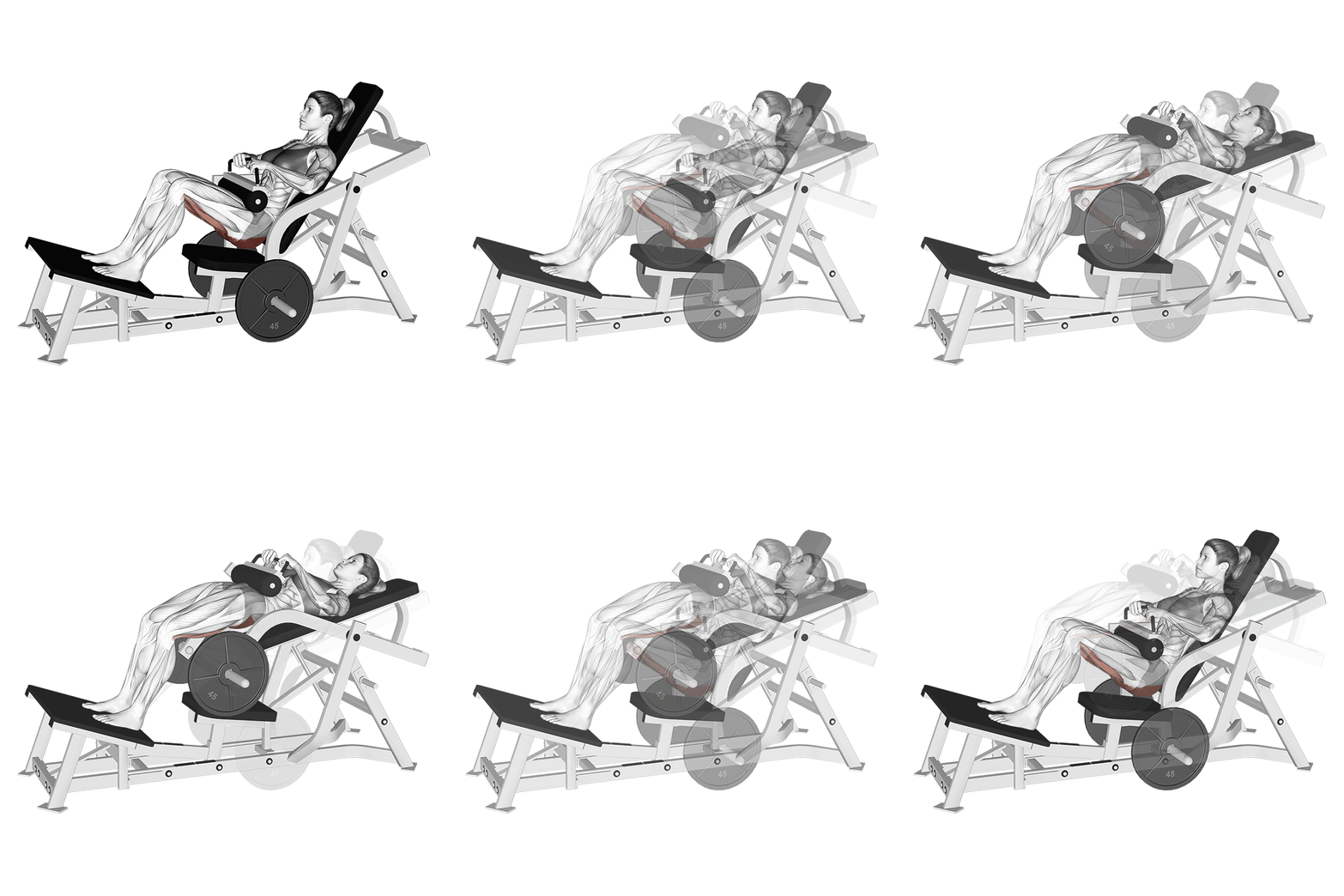
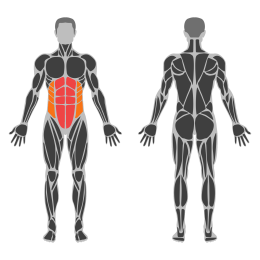
Machine Hip Thrust
The Machine Hip Thrust is a lower body exercise primarily targeting the gluteus maximus. It involves using a specialized machine to perform hip extension movements while seated or lying down, providing resistance to enhance glute strength and hypertrophy. This exercise is effective for building power and improving athletic performance.
Muscle focus
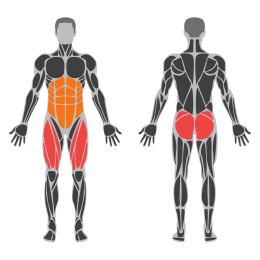
Step-by-step cues
- Adjust the machine seat and backrest to fit your body size, ensuring that your shoulders are comfortably supported.
- Sit on the machine with your back against the pad and position your feet flat on the platform, shoulder-width apart.
- Secure the lap pad across your hips, ensuring it is snug but not too tight.
- Engage your core and drive through your heels to lift your hips until your thighs are parallel to the floor, squeezing your glutes at the top of the movement.
- Slowly lower your hips back to the starting position, maintaining control throughout the movement.
- Repeat for the desired number of repetitions.
Technical tips
- Focus on maintaining a neutral spine throughout the exercise to avoid lower back strain.
- Ensure that your knees remain aligned with your toes during the thrust to prevent knee injuries.
- Control the movement both on the way up and down to maximize muscle engagement.
- Experiment with foot placement to target different areas of the glutes; wider stances can engage more of the glute medius.
- Keep your chin slightly tucked and gaze forward to maintain proper neck alignment.
Stair Climber
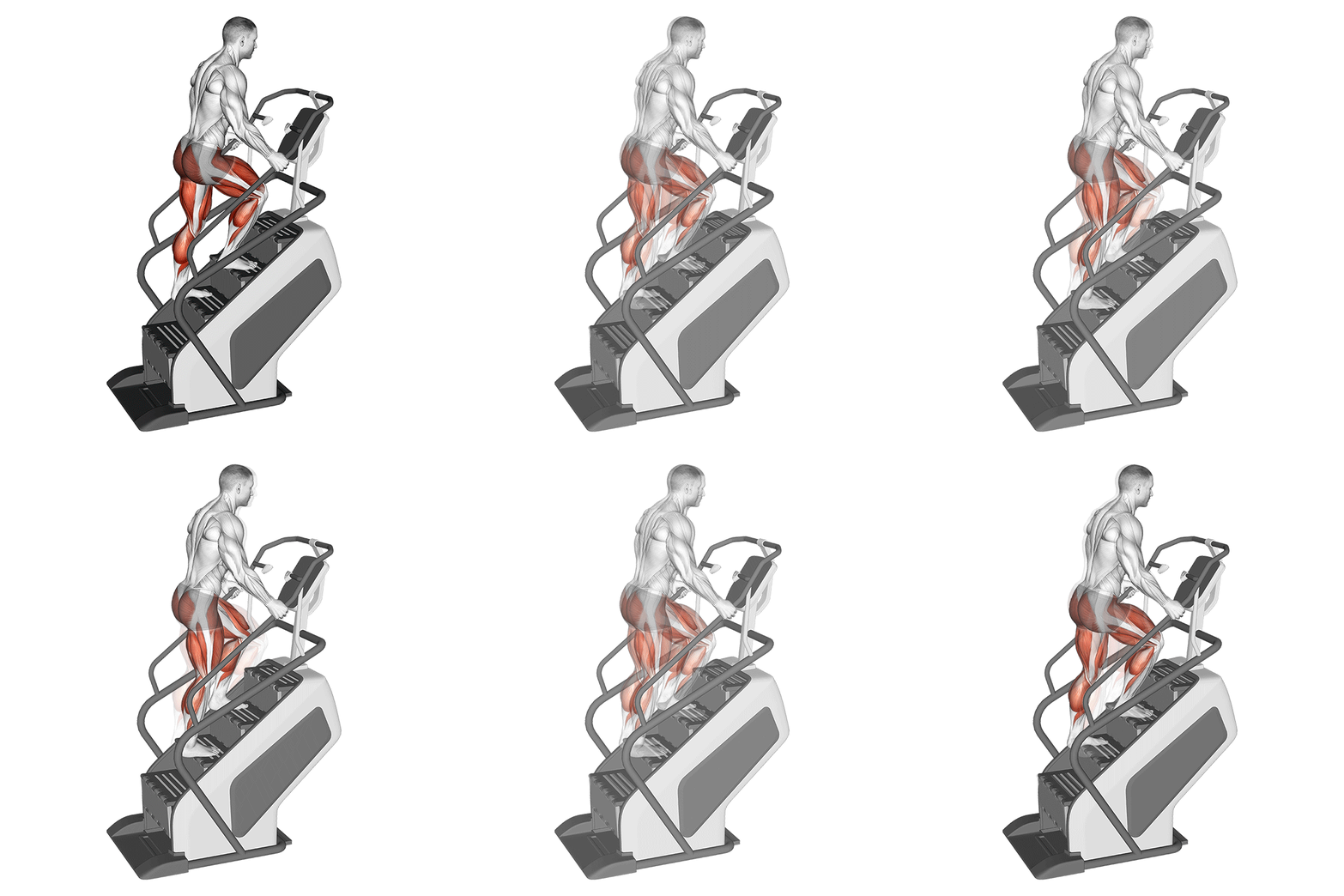
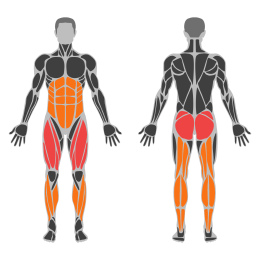
The Stair Climber is a cardio exercise machine that simulates the action of climbing stairs. It primarily targets the lower body muscles, including the quadriceps, hamstrings, glutes, and calves, while also providing cardiovascular benefits. This exercise helps improve endurance, strength, and overall fitness levels.
Muscle focus
Step-by-step cues
- Start by stepping onto the machine and securely holding the handrails.
- Select your desired workout program or manually adjust the speed and resistance to your fitness level.
- Begin stepping by alternately pressing down on each pedal, simulating a stair-climbing motion.
- Maintain an upright posture with your core engaged and avoid leaning heavily on the handrails.
- Continue the motion for your desired duration or until you reach your fitness goal.
Technical tips
- Keep your movements smooth and controlled to avoid unnecessary strain on your joints.
- Focus on using your legs to power the motion rather than relying on the handrails for support.
- Adjust the resistance level to challenge yourself as you build strength and endurance over time.
- Ensure you are wearing appropriate footwear with good grip to prevent slipping.
- Stay hydrated before and after using the Stair Climber to maintain optimal performance.
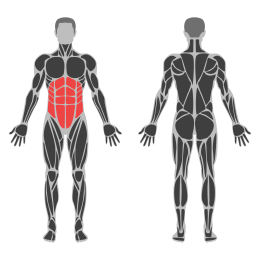
Rotary Torso
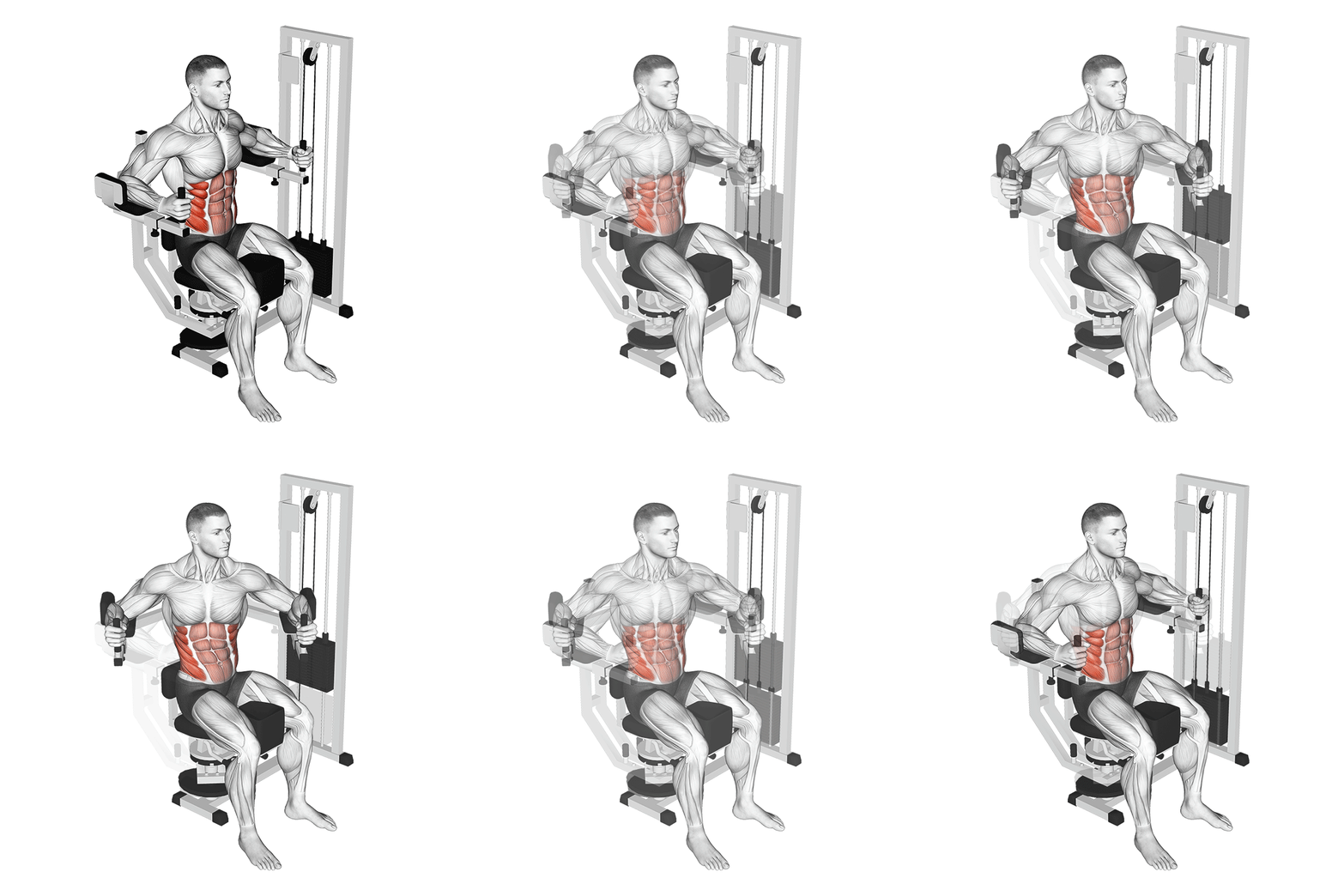
The Lever Trunk Rotation is an exercise targeting the oblique muscles and core stability. It involves rotating the torso against resistance, typically using a lever machine, to enhance rotational strength and improve core engagement.
Muscle focus
Step-by-step cues
- Adjust the seat height on the lever machine so that the pivot point aligns with your midsection.
- Sit down and secure your feet under the foot pads, ensuring your knees are slightly bent.
- Grasp the handles firmly with both hands, keeping your elbows slightly bent.
- Engage your core muscles and maintain an upright posture throughout the movement.
- Slowly rotate your torso to one side, using your oblique muscles to control the motion.
- Pause briefly at the end of the rotation to maximize muscle engagement.
- Return to the starting position in a controlled manner.
- Repeat the movement on the opposite side to complete one full repetition.
Technical tips
- Focus on using your oblique muscles rather than relying on momentum to perform the rotation.
- Maintain a slow and controlled pace to ensure maximum muscle activation and reduce injury risk.
- Keep your shoulders relaxed and avoid shrugging them during the exercise.
- Exhale as you rotate your torso and inhale as you return to the starting position.
- Ensure that your hips remain stable and do not sway during the movement.
- Start with a lighter weight to master proper form before increasing resistance.
Tuesday
Brisk Walk
Complete 45-60 minutes of brisk walking and five minutes of relaxed breathing.
Wednesday
Upper Body and Core
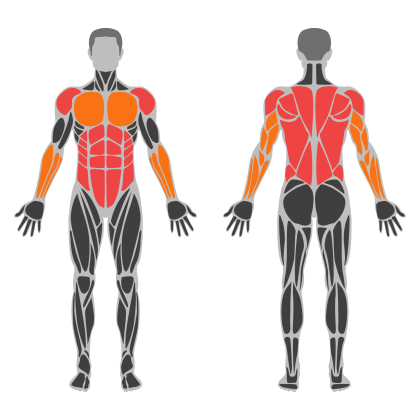
Upper Body and Core muscle focus
Red marks the primary training focus. Orange marks supporting muscle groups used throughout this session.
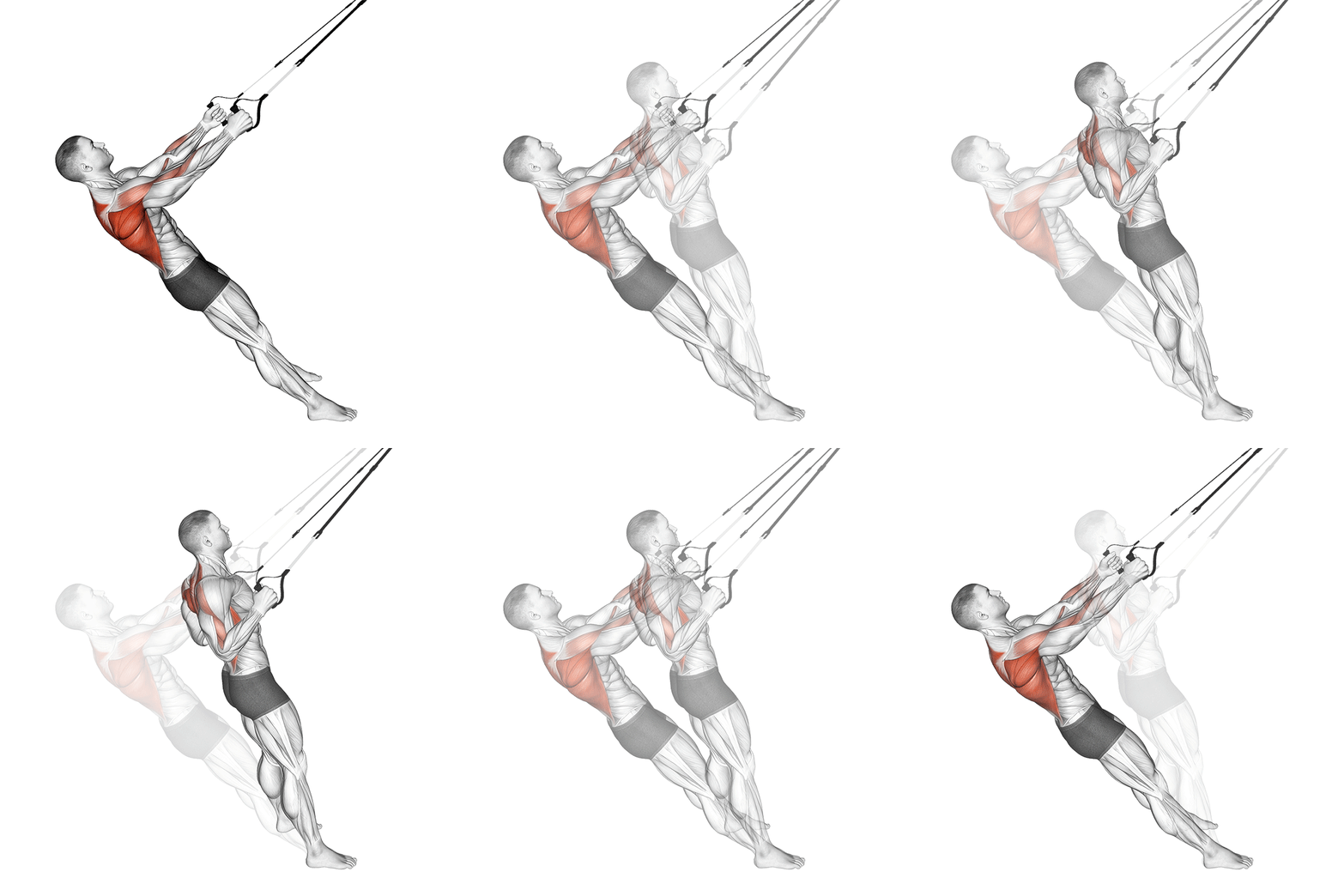
Suspension Row
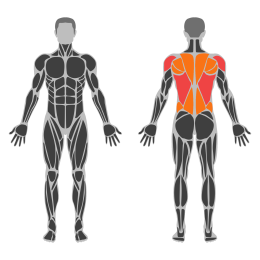
The Suspension Row is a bodyweight exercise performed using suspension straps. It targets the muscles of the upper back, including the rhomboids, trapezius, and latissimus dorsi, as well as the biceps and core. This exercise enhances upper body strength, stability, and posture.
Muscle focus
Step-by-step cues
- Adjust the suspension straps to hang at waist height.
- Stand facing the anchor point and grasp the handles with an overhand grip.
- Lean back until your body is at an angle, keeping your feet shoulder-width apart.
- Engage your core and maintain a straight line from head to heels.
- Pull your chest towards the handles by retracting your shoulder blades and bending your elbows.
- Pause briefly at the top of the movement, squeezing your shoulder blades together.
- Slowly extend your arms to return to the starting position.
- Repeat for the desired number of repetitions.
Technical tips
- Ensure that the straps are securely anchored before starting.
- Keep your body in a straight line throughout the movement to engage your core effectively.
- Focus on pulling with your back muscles rather than relying solely on your arms.
- Control the movement both on the way up and down to maximize muscle engagement.
- Adjust your foot position to increase or decrease difficulty; stepping further away from the anchor point increases resistance.
- Maintain a neutral neck position by looking slightly ahead rather than up or down.
- Breathe out as you pull yourself up and inhale as you lower back down.
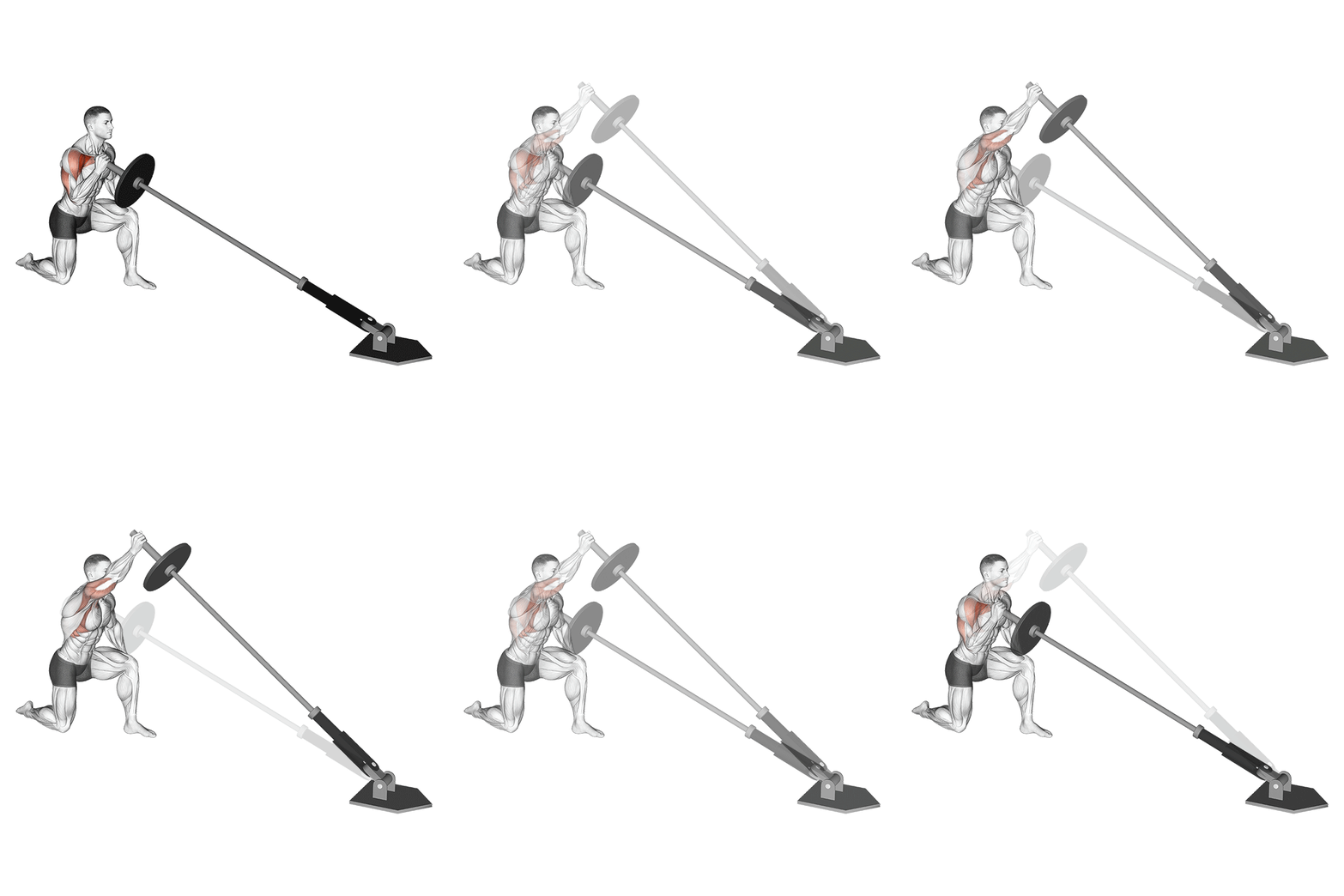
One-Arm Landmine Half Kneeling Shoulder Press
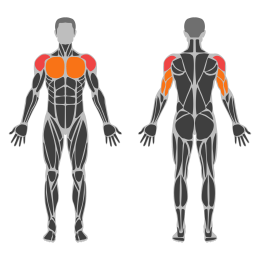
The Landmine Half Kneeling One Arm Shoulder Press is an exercise that targets the shoulder muscles, particularly the deltoids, while also engaging the core for stability. This exercise utilizes a landmine setup, which is a barbell anchored at one end, allowing for a unique pressing angle that can reduce strain on the shoulder joint.
Muscle focus
Step-by-step cues
- Begin by setting up a barbell in a landmine attachment or securely in a corner.
- Kneel on one knee with the opposite foot flat on the ground in front of you, forming a 90-degree angle at both knees.
- Hold the end of the barbell with the hand on the same side as your kneeling leg, keeping your core engaged and torso upright.
- Press the barbell upward and slightly forward until your arm is fully extended, keeping your wrist straight and elbow slightly bent at the top.
- Slowly lower the barbell back to the starting position with control.
- Complete the desired number of repetitions before switching sides.
Technical tips
- Keep your core tight throughout the movement to maintain balance and stability.
- Focus on pressing through your shoulder rather than using momentum from your legs or torso.
- Ensure your elbow stays under your wrist during the press to maintain proper alignment.
- Breathe out as you press the barbell up and inhale as you lower it back down.
- Start with a lighter weight to master form before progressing to heavier loads.
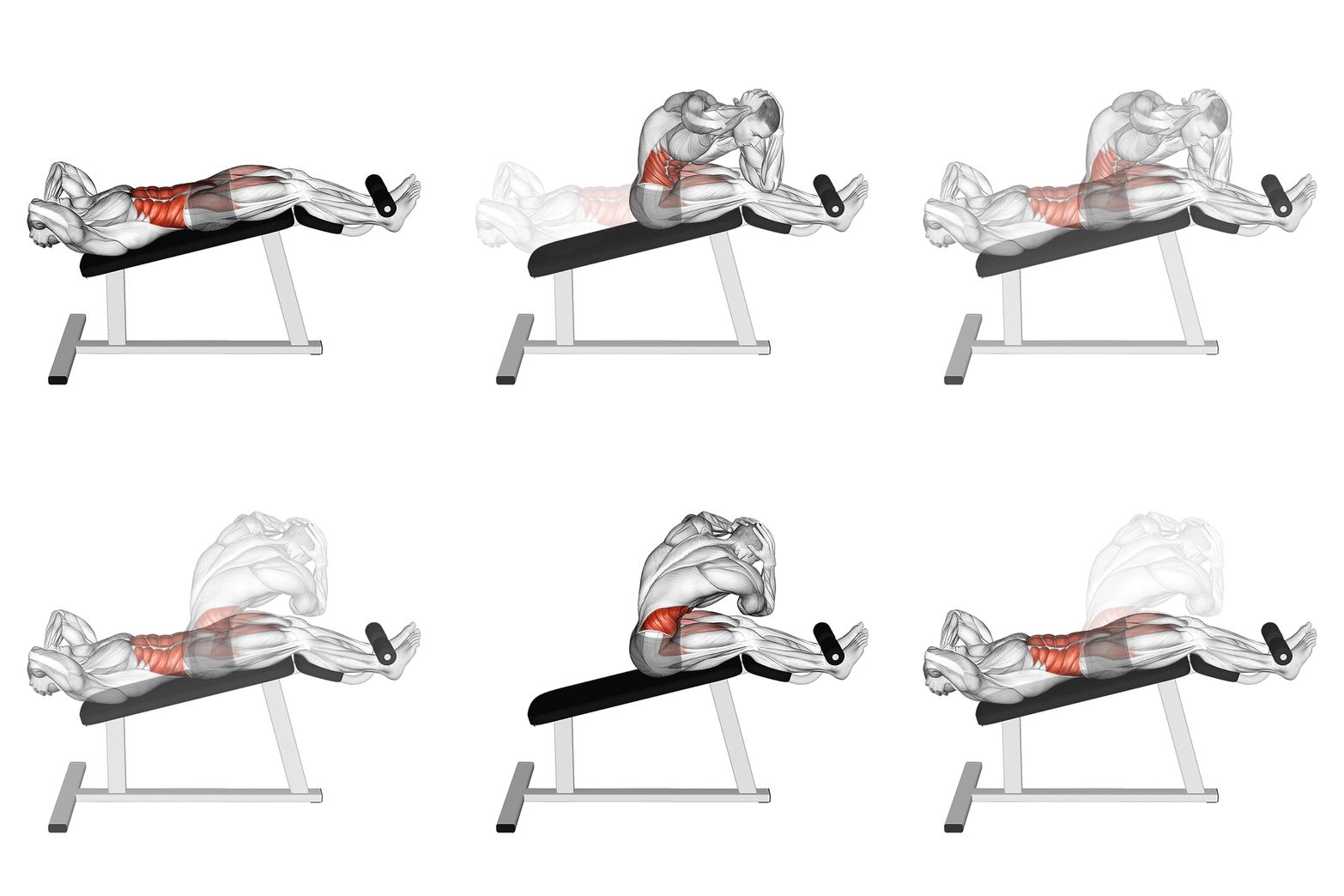
Incline Twisting Sit Up
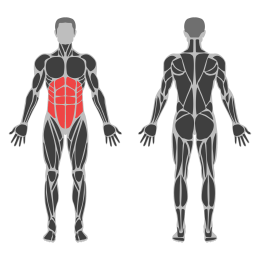
The Incline Twisting Sit Up is an advanced core exercise that targets the abdominal muscles, particularly the obliques. It involves performing a sit-up on an incline bench while incorporating a twisting motion to engage the side muscles of the abdomen.
Muscle focus
Step-by-step cues
- Set an incline bench to a moderate angle, typically between 30 to 45 degrees.
- Sit on the bench and secure your feet under the foot pads.
- Lie back with your hands placed behind your head or crossed over your chest.
- Engage your core and lift your upper body off the bench, twisting your torso to one side as you ascend.
- Reach the top of the movement with your elbow pointing towards the opposite knee.
- Slowly lower yourself back to the starting position in a controlled manner.
- Repeat the movement, alternating sides with each repetition.
Technical tips
- Focus on controlled movements to maximize muscle engagement and reduce injury risk.
- Keep your core tight throughout the exercise to maintain stability and effectiveness.
- Avoid pulling on your neck with your hands; instead, use your core muscles to lift.
- Exhale as you twist up and inhale as you return to the starting position.
- Start with a lower incline if you're new to this exercise and gradually increase as you build strength.
- Ensure your movements are smooth and deliberate, avoiding any jerking motions.
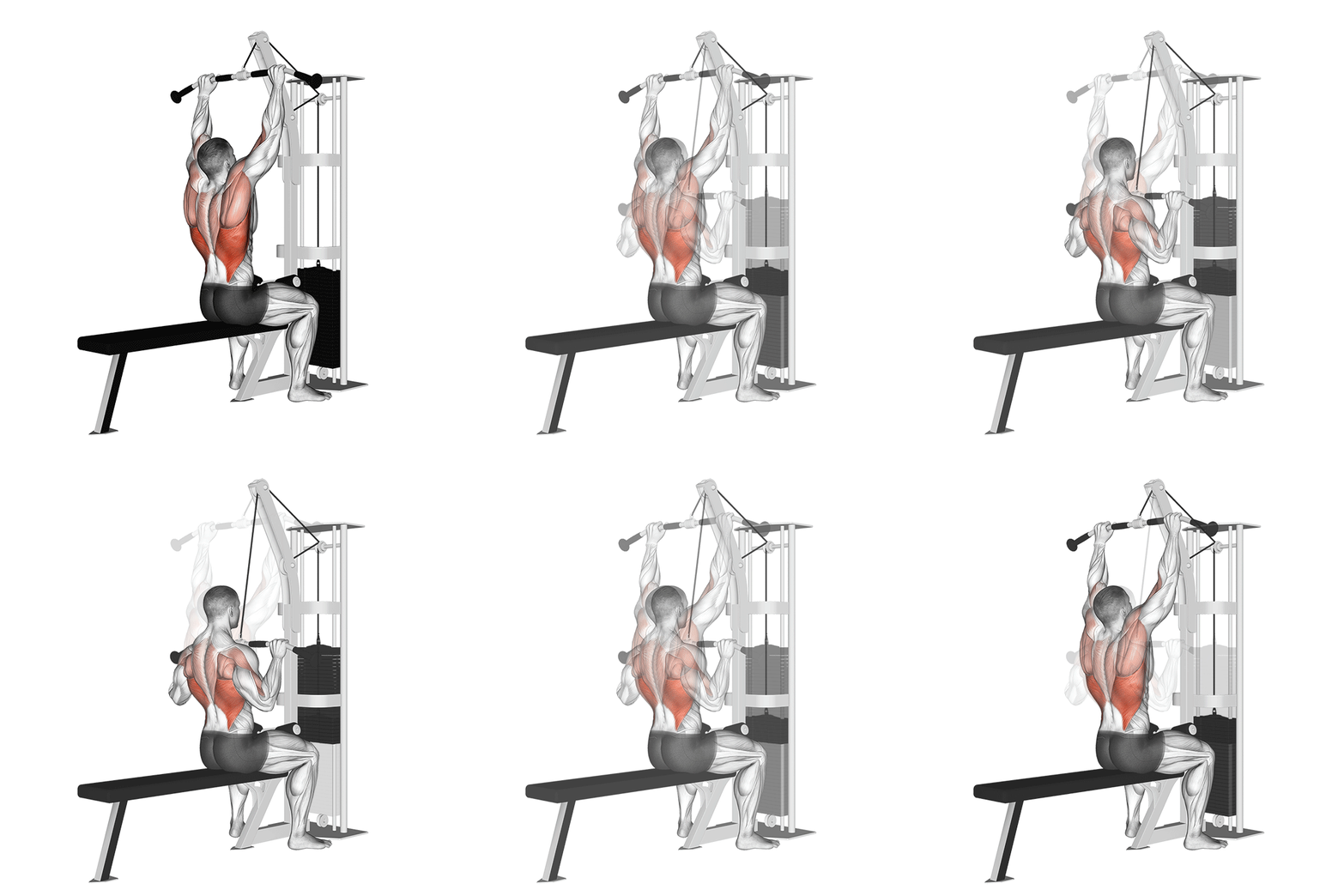
Cable Lat Pulldown
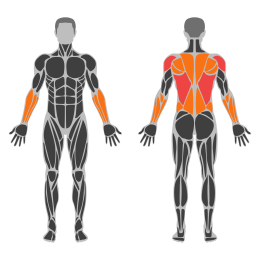
The Cable Lat Pulldown is a compound exercise targeting the latissimus dorsi muscles, along with secondary engagement of the biceps, rhomboids, and trapezius. It is performed using a cable machine with an overhead pulley and a wide bar attachment, primarily focusing on developing upper back strength and width.
Muscle focus
Step-by-step cues
- Sit down at the lat pulldown machine and adjust the knee pad to secure your legs.
- Grasp the bar with a wide overhand grip, slightly wider than shoulder-width.
- Lean back slightly at the hips, keeping your chest up and core engaged.
- Pull the bar down towards your upper chest by driving your elbows down and back.
- Squeeze your shoulder blades together at the bottom of the movement.
- Slowly extend your arms back to the starting position in a controlled manner.
- Repeat for the desired number of repetitions.
Technical tips
- Ensure a full range of motion by fully extending your arms at the top of each rep.
- Avoid using momentum; focus on controlled movements to maximize muscle engagement.
- Keep your wrists straight and avoid pulling with your hands; instead, drive with your elbows.
- Maintain a slight arch in your lower back to stabilize your torso during the exercise.
- Exhale as you pull the bar down and inhale as you return to the starting position.
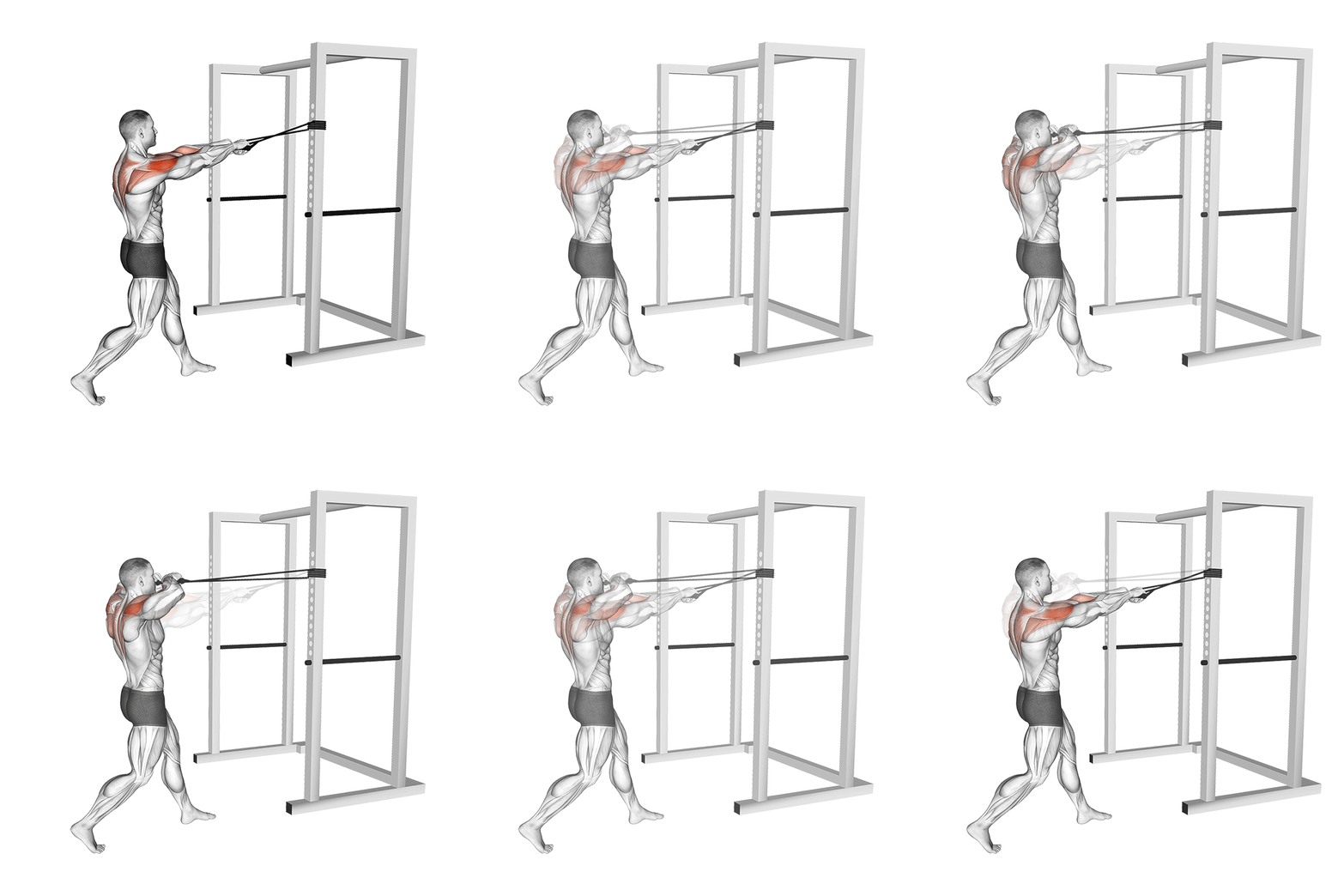
Banded Face Pull
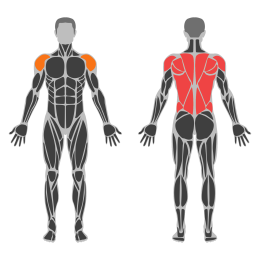
The Banded Face Pull is an upper body exercise targeting the rear deltoids, trapezius, and rotator cuff muscles. It helps improve shoulder stability and posture by strengthening the upper back and shoulder girdle. This exercise is performed using a resistance band, making it accessible and effective for various fitness levels.
Muscle focus
Step-by-step cues
- Attach a resistance band to a stable anchor point at chest height.
- Stand facing the anchor point with feet shoulder-width apart.
- Grasp the ends of the band with an overhand grip, palms facing down.
- Step back until there is tension in the band, arms extended in front of you.
- Engage your core and keep your back straight.
- Pull the band towards your face, leading with your elbows and keeping them high.
- Squeeze your shoulder blades together at the end of the movement.
- Slowly return to the starting position, maintaining tension in the band.
- Repeat for the desired number of repetitions.
Technical tips
- Ensure that your elbows stay above your wrists throughout the movement to effectively target the rear deltoids.
- Maintain a neutral spine and avoid arching your lower back to prevent strain.
- Focus on squeezing your shoulder blades together at the peak of each repetition for maximum engagement.
- Control the movement both on the pull and release to maintain constant tension on the muscles.
- Start with a lighter resistance band to master form before progressing to heavier resistance.
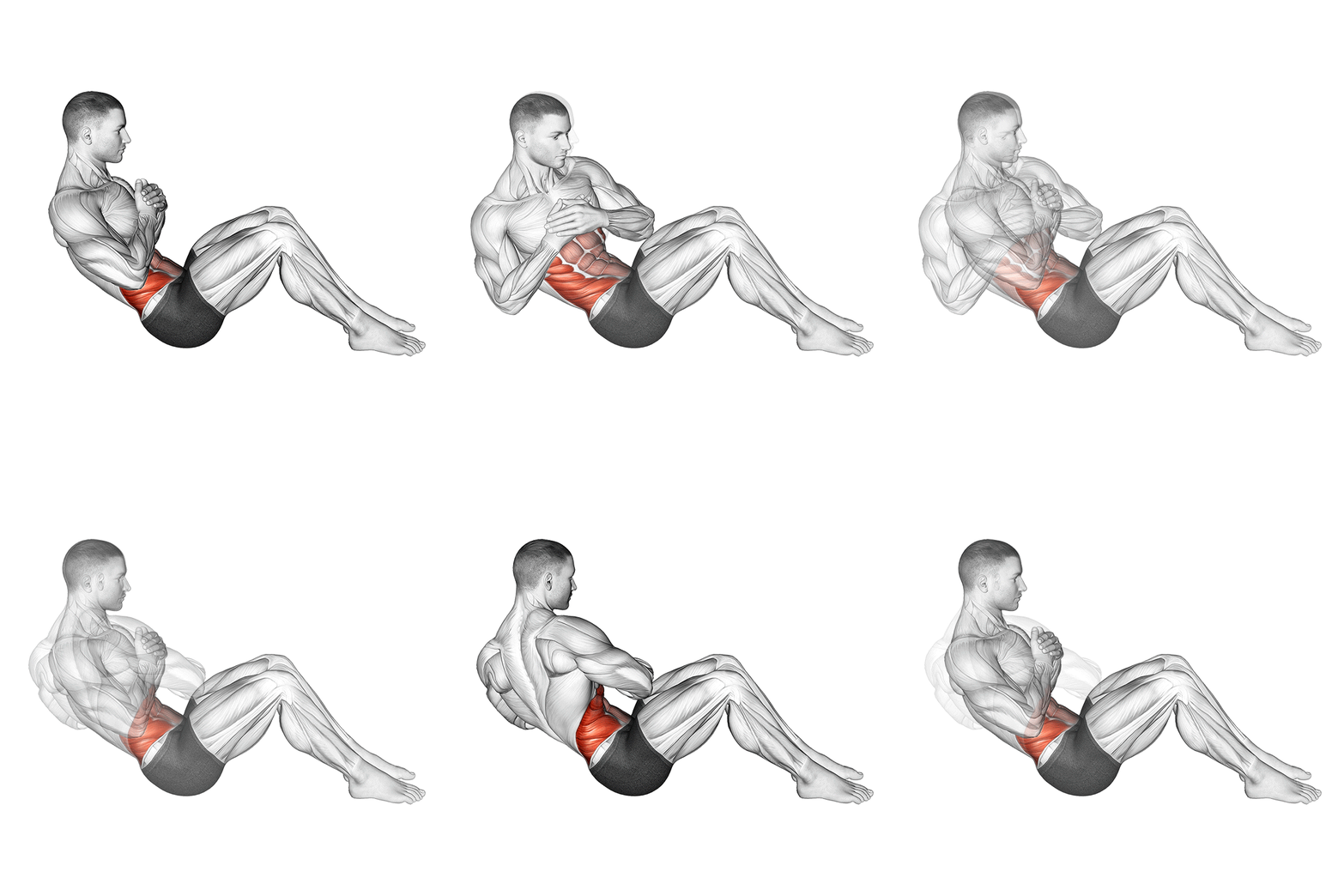
Sitting Twist
The Sitting Twist is an effective core exercise targeting the oblique muscles. It involves rotating the torso while seated, engaging the abdominal muscles for stability and control. This exercise can be performed with or without added resistance, such as a medicine ball or dumbbell, to increase intensity.
Muscle focus
Step-by-step cues
- Sit on the floor with your knees bent and feet flat on the ground. Lean back slightly to engage your core.
- Hold your hands together in front of your chest or grasp a weight if using resistance.
- Keep your back straight and rotate your torso to the right, bringing your hands or weight beside your hip.
- Return to the center and then rotate to the left, repeating the movement.
- Continue alternating sides for the desired number of repetitions.
Technical tips
- Maintain a straight back throughout the exercise to avoid strain on the lower back.
- Engage your core muscles by pulling your navel towards your spine for better stability.
- Control the movement speed; avoid using momentum to twist.
- If using a weight, start with a lighter one to ensure proper form before increasing resistance.
- Breathe steadily, exhaling as you twist and inhaling as you return to center.
Thursday
Mobility
Use 20-30 minutes of mobility, yoga or light cycling.
Friday
Full Body Circuit
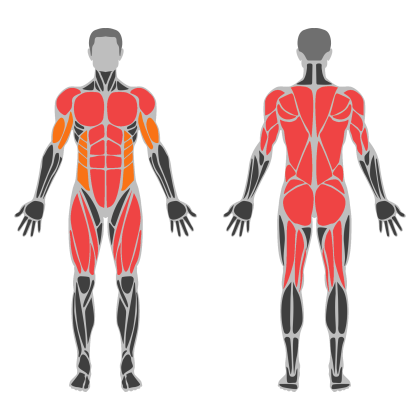
Full Body Circuit muscle focus
Red marks the primary training focus. Orange marks supporting muscle groups used throughout this session.
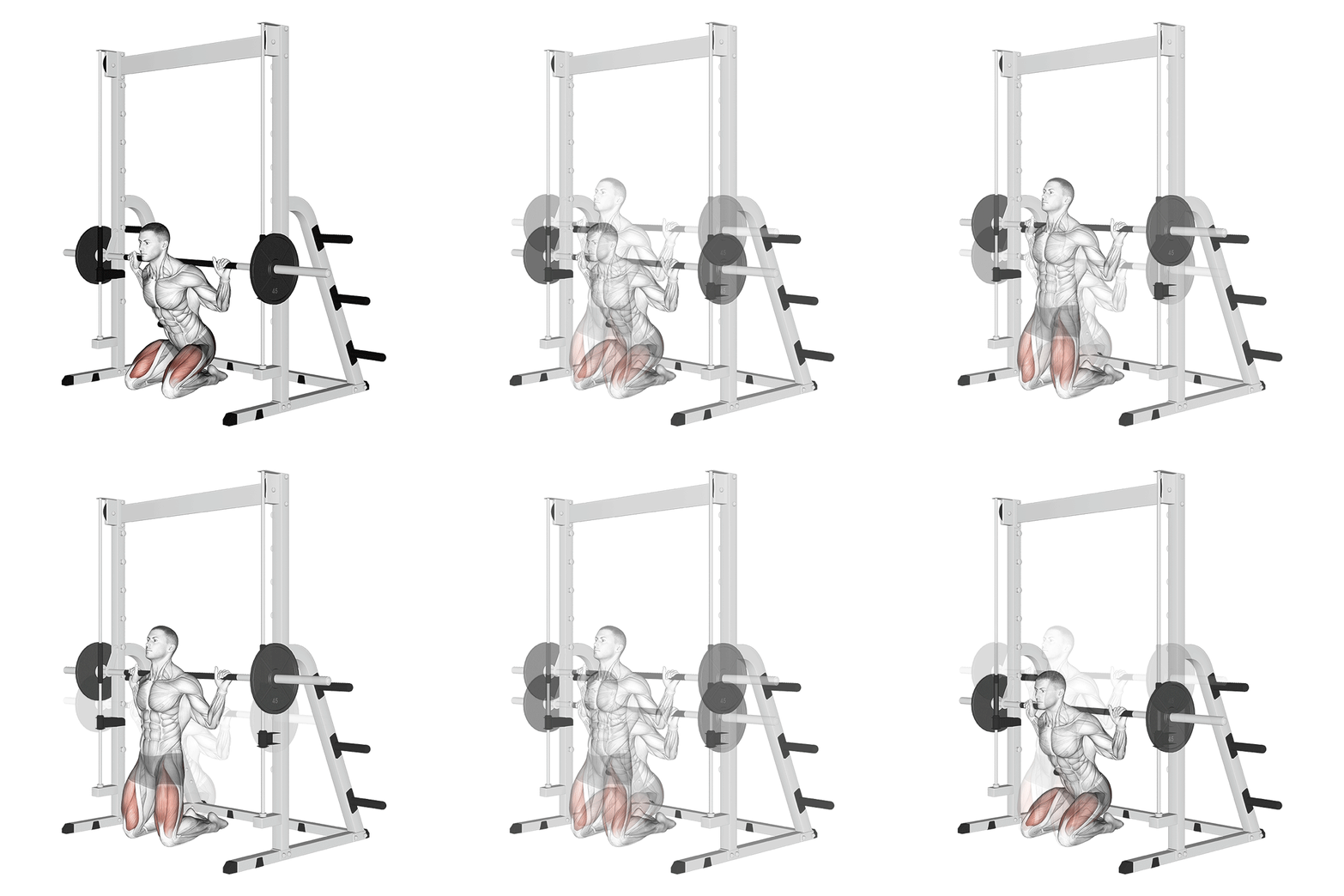
Smith Kneeling Hip Thrust
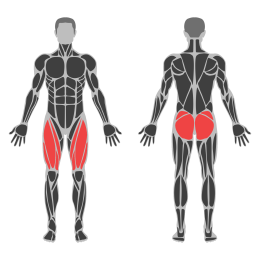
The Smith Kneeling Hip Thrust is a lower body exercise that primarily targets the gluteus maximus, with secondary emphasis on the hamstrings and core. It is performed using a Smith machine, which provides stability and control, allowing for focused muscle engagement. This exercise is ideal for building strength and size in the glutes while minimizing lower back strain.
Muscle focus
Step-by-step cues
- Position a bench or padded surface behind the Smith machine bar at knee height.
- Kneel on the floor with your back facing the bench, and position your shoulders against it.
- Place the Smith machine bar across your hips, ensuring it is securely locked in place.
- Grip the bar with both hands for stability.
- Engage your core and glutes, then thrust your hips upward until your thighs are parallel to the floor.
- Hold the top position for a moment, squeezing your glutes tightly.
- Slowly lower your hips back to the starting position without resting them on the ground.
- Repeat for the desired number of repetitions.
Technical tips
- Ensure that your knees are directly below your hips at the starting position to maximize glute engagement.
- Keep your chin tucked and gaze forward throughout the movement to maintain a neutral spine.
- Focus on squeezing your glutes at the top of each repetition to enhance muscle activation.
- Avoid hyperextending your lower back by controlling the movement and maintaining core engagement.
- Start with lighter weights to perfect your form before progressing to heavier loads.
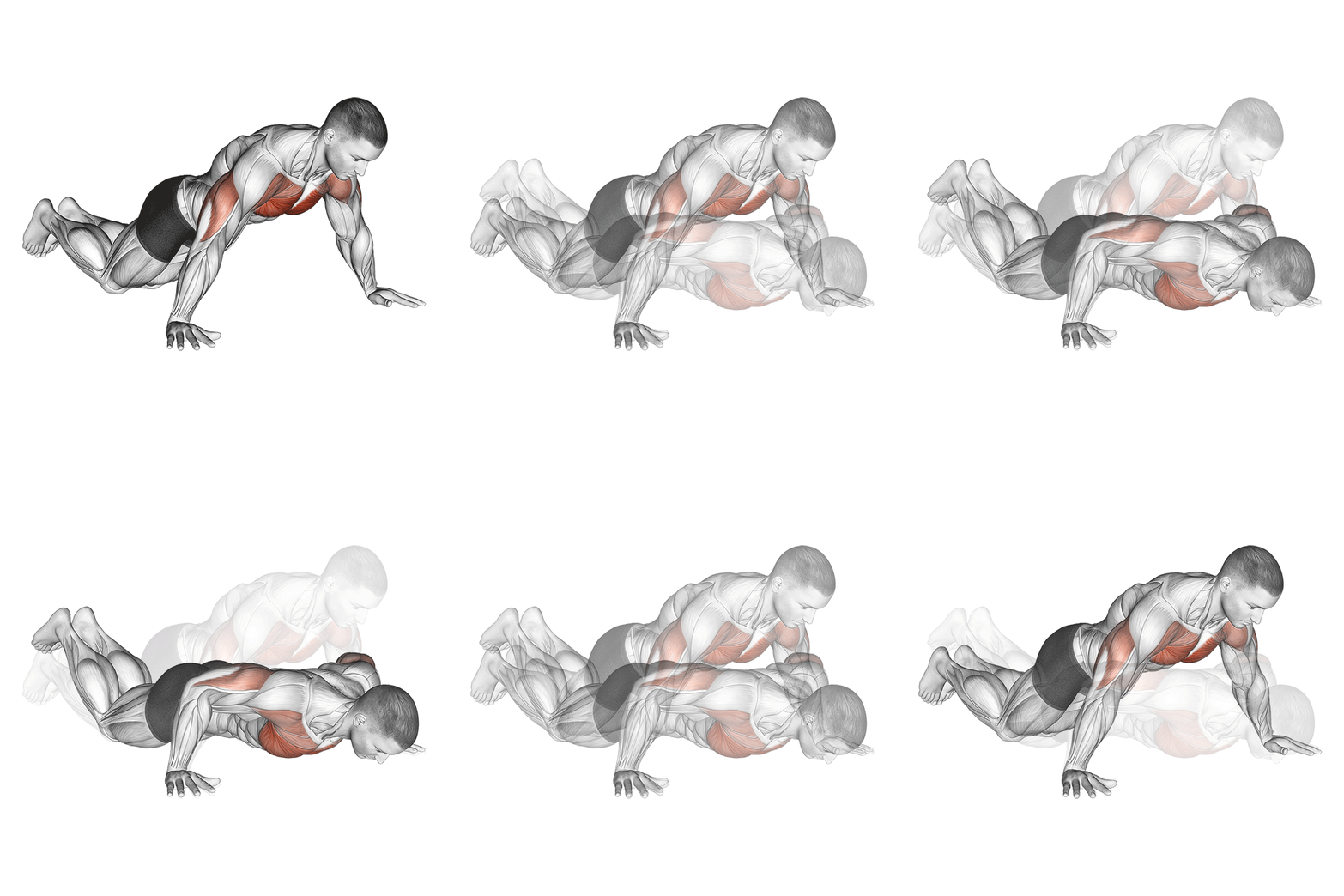
Kneeling Wide Push-Up
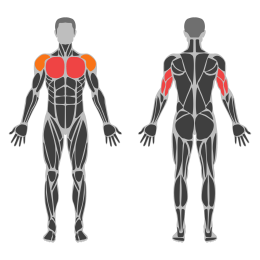
The Kneeling Wide Hand Push Up is a bodyweight exercise targeting the chest, shoulders, and triceps. By performing this exercise on your knees with a wide hand placement, it reduces the load compared to a standard push-up, making it suitable for beginners or as a warm-up for more advanced athletes.
Muscle focus
Step-by-step cues
- Start by kneeling on the floor with your hands placed wider than shoulder-width apart.
- Keep your body straight from your knees to your head, engaging your core.
- Lower your chest towards the floor by bending your elbows outwards.
- Stop when your chest is just above the ground, then push back up to the starting position.
- Maintain a steady pace and controlled movement throughout the exercise.
Technical tips
- Ensure your hands are placed wider than shoulder-width to target the chest effectively.
- Engage your core to maintain a straight line from knees to head.
- Focus on controlled movements; avoid letting gravity do the work during the descent.
- Keep elbows slightly bent at the top of the movement to maintain tension in the muscles.
- Breathe in as you lower your body and exhale as you push back up.
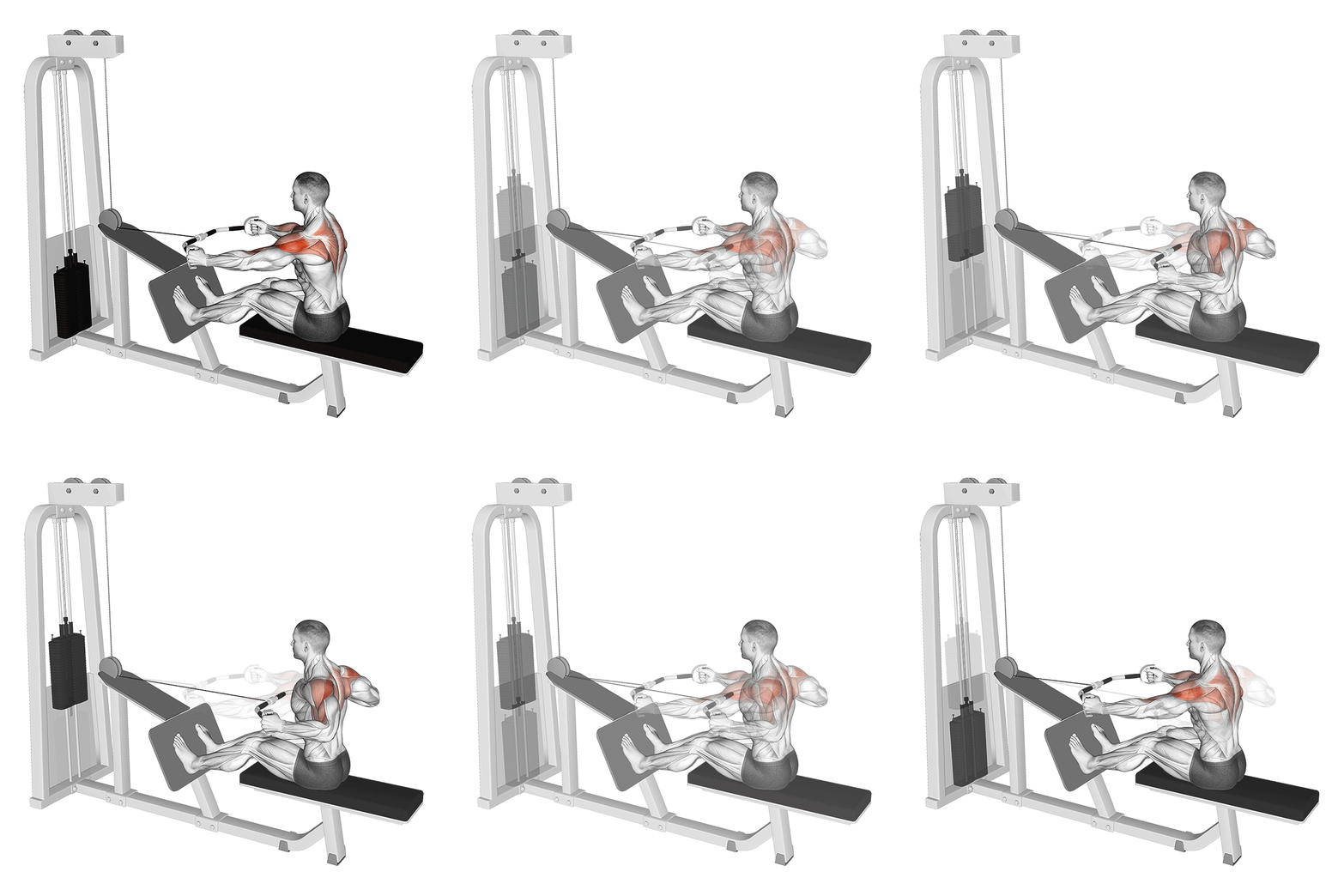
Cable Seated Row Neutral Grip
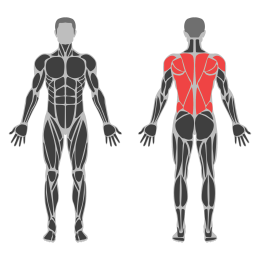
The Cable Seated Row Neutral Grip is a compound exercise that targets the muscles of the upper back, including the latissimus dorsi, rhomboids, and trapezius. It also engages the biceps and forearms as secondary muscles. This exercise is performed using a cable machine with a neutral grip attachment, allowing for a natural hand position that reduces strain on the wrists.
Muscle focus
Step-by-step cues
- Sit on the cable row machine with your feet firmly placed on the foot platform and knees slightly bent.
- Grasp the neutral grip handle with both hands, palms facing each other.
- Keep your back straight and chest up as you lean slightly forward to extend your arms fully.
- Pull the handle towards your torso by retracting your shoulder blades and bending your elbows.
- Pause briefly when the handle reaches your abdomen, ensuring your back remains straight.
- Slowly extend your arms back to the starting position while maintaining control of the weight.
- Repeat for the desired number of repetitions.
Technical tips
- Maintain a straight back throughout the movement to avoid lower back strain.
- Focus on squeezing your shoulder blades together at the peak of the contraction.
- Avoid using momentum; control the weight during both pulling and releasing phases.
- Keep your elbows close to your body to maximize engagement of the back muscles.
- Breathe out as you pull the handle towards you and inhale as you return to the starting position.
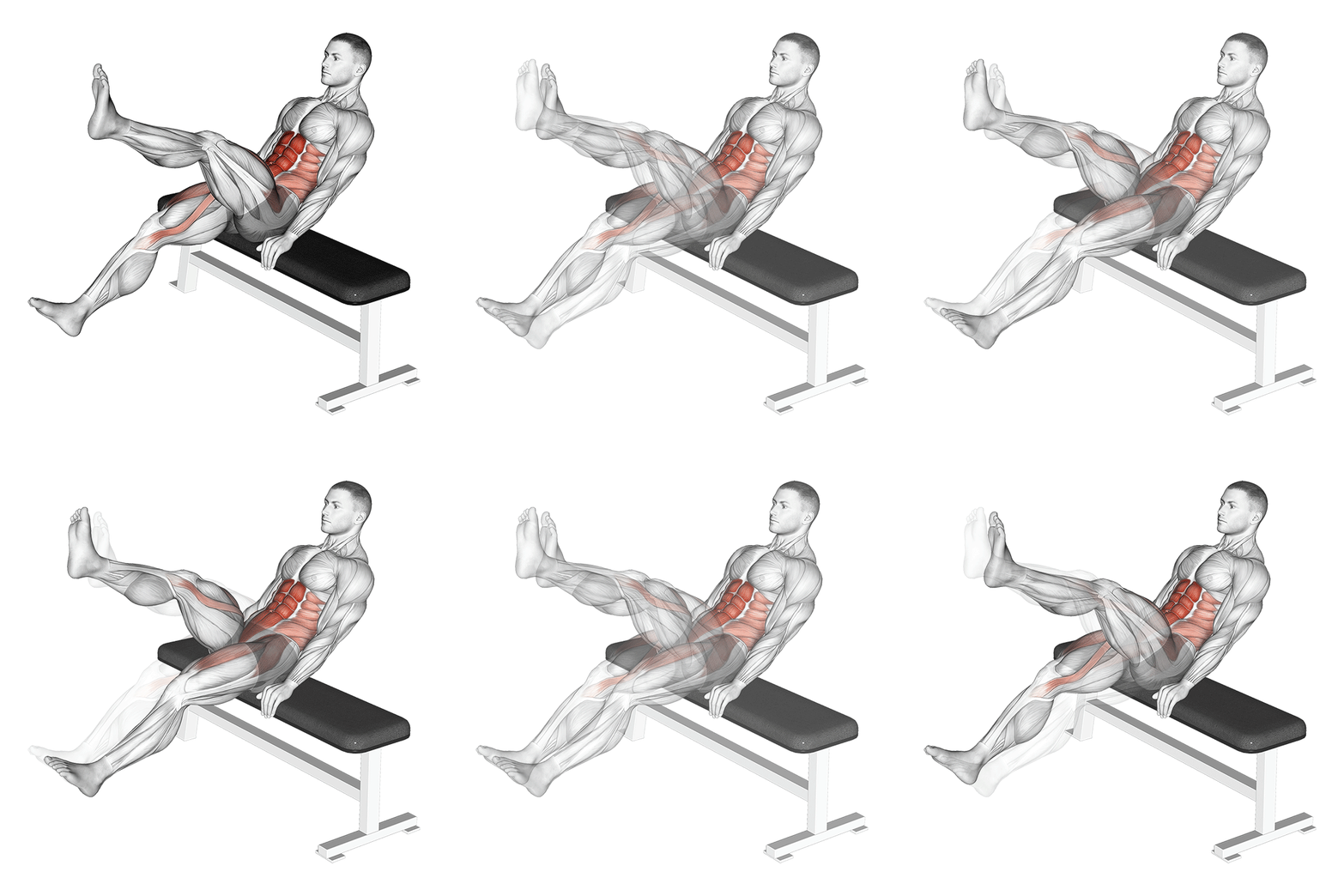
Seated Flutter Kick
The Seated Flutter Kick is an abdominal exercise that targets the lower abs, hip flexors, and obliques. It involves performing a fluttering motion with the legs while seated, engaging the core muscles to maintain stability and control.
Muscle focus
Step-by-step cues
- Sit on the edge of a bench or sturdy surface with your legs extended in front of you.
- Place your hands slightly behind your hips for support, keeping your back straight and chest lifted.
- Lean back slightly to engage your core muscles.
- Lift both legs off the ground a few inches while keeping them straight.
- Begin to alternate kicking your legs up and down in a fluttering motion, keeping the movement controlled and steady.
- Continue the flutter kicks for the desired number of repetitions or time duration.
Technical tips
- Keep your core engaged throughout the exercise to maintain stability.
- Ensure your back remains straight and avoid rounding your shoulders.
- Perform the movement slowly and with control to maximize muscle engagement.
- Breathe steadily and avoid holding your breath during the exercise.
- If you experience any discomfort in your lower back, adjust your posture or reduce the range of motion.
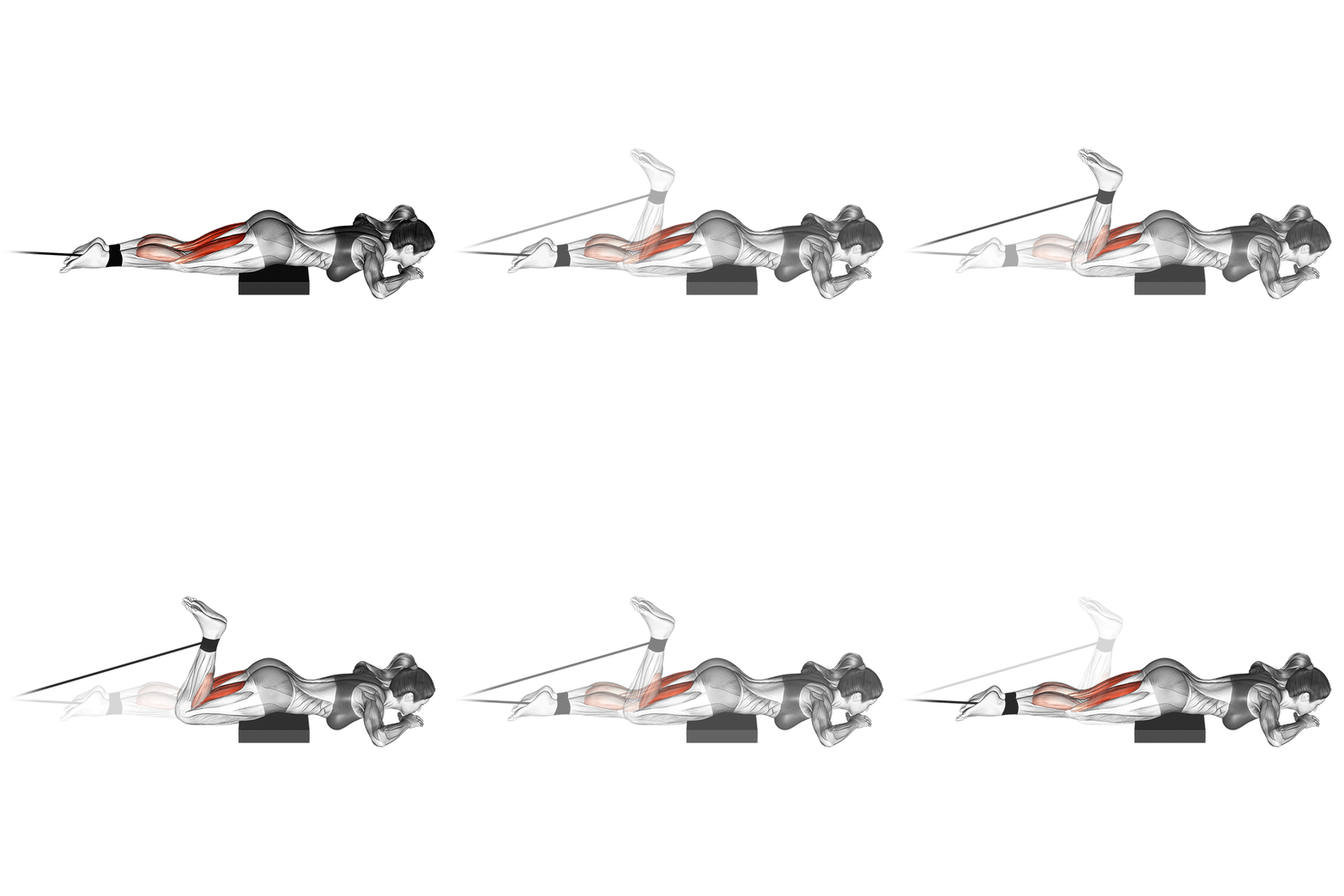
Band Lying Leg Curl
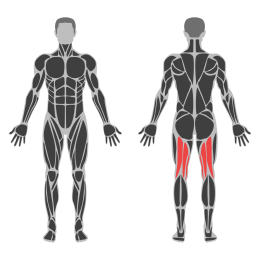
The Band Lying Leg Curl is an isolation exercise targeting the hamstrings. It involves using a resistance band to perform leg curls while lying face down. This exercise helps in strengthening the hamstrings and improving knee flexion.
Muscle focus
Step-by-step cues
- Attach a resistance band to a sturdy anchor point at floor level.
- Lie face down on a mat, with your legs extended and feet close to the anchor point.
- Secure the other end of the band around your ankles.
- Keep your core engaged and hips pressed into the ground.
- Flex your knees, pulling your heels towards your glutes against the band's resistance.
- Pause briefly at the top of the movement, ensuring maximum contraction in the hamstrings.
- Slowly extend your legs back to the starting position, maintaining control throughout.
- Repeat for the desired number of repetitions.
Technical tips
- Ensure the band is securely anchored to prevent slippage during the exercise.
- Keep your hips and pelvis stable by engaging your core muscles.
- Focus on a slow and controlled movement to maximize muscle engagement.
- Avoid using momentum; let the hamstrings do the work.
- Adjust the band's tension by changing its length or using a band with different resistance levels.
- Breathe out as you curl your legs up and inhale as you lower them back down.
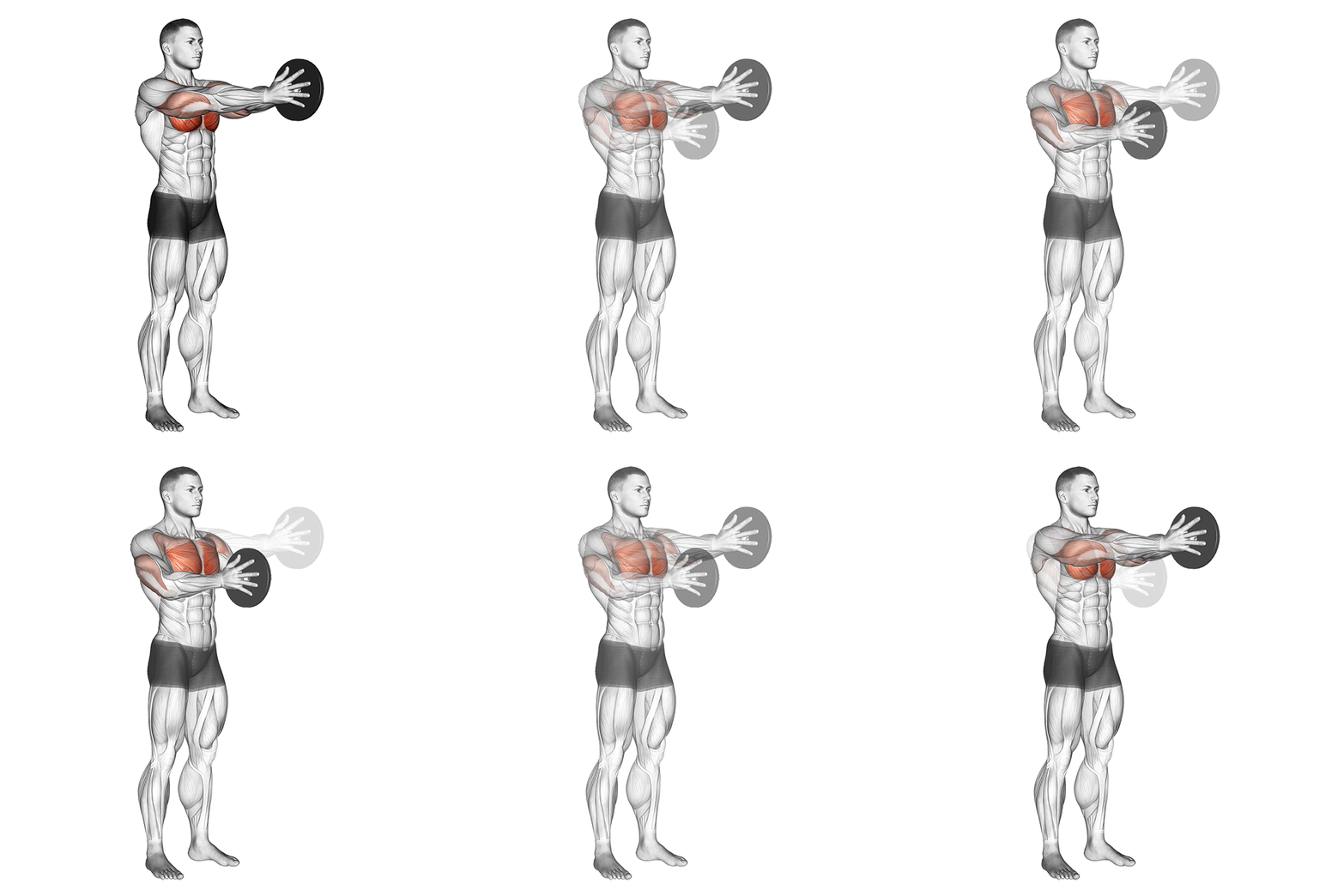
Svend Press
The Standing Svend Press is an isolation exercise targeting the chest muscles, particularly the pectoralis major. It involves pressing a weight plate while keeping constant tension in the chest, promoting muscle engagement and growth. This exercise is performed standing, which also engages the core for stability.
Muscle focus
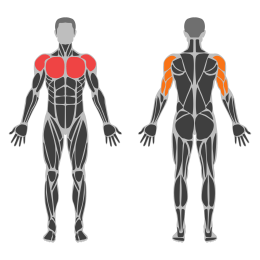
Step-by-step cues
- Stand upright with your feet shoulder-width apart, maintaining a slight bend in your knees for stability.
- Hold a weight plate between your palms at chest level, keeping your elbows bent and close to your body.
- Press your palms together to squeeze the weight plate, engaging your chest muscles.
- Extend your arms forward slowly until they are fully extended in front of you, keeping the plate squeezed tightly.
- Pause briefly at full extension, maintaining tension in your chest.
- Slowly bring the weight plate back to the starting position at chest level while maintaining pressure on the plate.
- Repeat for the desired number of repetitions.
Technical tips
- Focus on squeezing the weight plate throughout the movement to maximize chest engagement.
- Keep your core tight to maintain balance and prevent unnecessary movement.
- Avoid locking your elbows at full extension to keep constant tension on your chest muscles.
- Start with a lighter weight to master the form before progressing to heavier plates.
- Breathe out as you press the plate forward and inhale as you return to the starting position.
One-Arm Cable Low Row
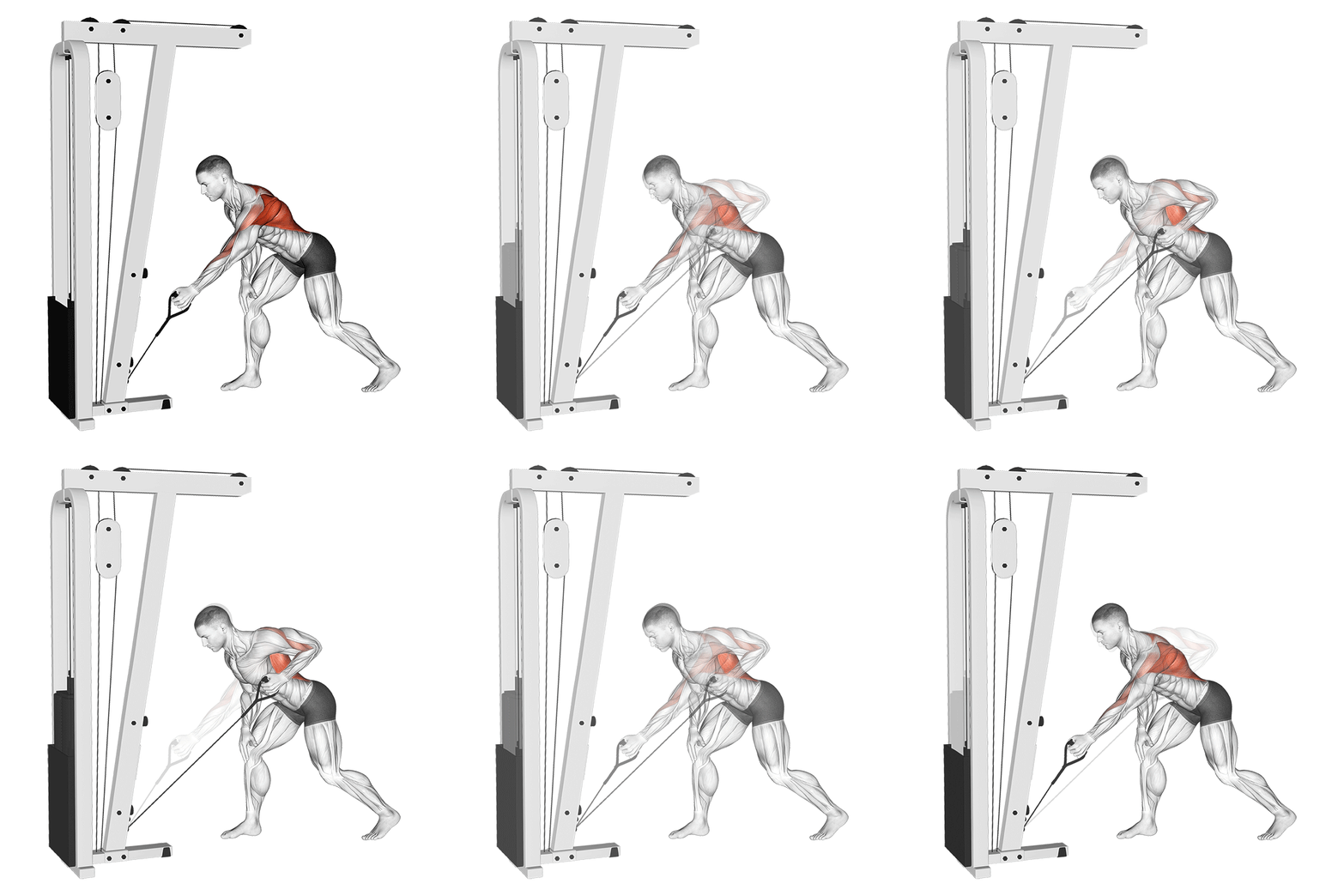
The Single Arm Cable Row is an isolation exercise targeting the latissimus dorsi, rhomboids, and trapezius muscles. It enhances unilateral strength and improves muscle symmetry by allowing each side of the body to work independently. This exercise also engages the biceps and forearms as secondary muscles.
Muscle focus
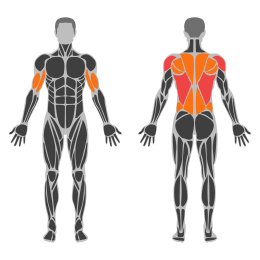
Step-by-step cues
- Attach a single handle to a low pulley cable machine.
- Stand facing the machine with feet shoulder-width apart.
- Grip the handle with one hand, palm facing inward.
- Step back slightly to create tension in the cable, keeping your knees slightly bent.
- Hinge forward slightly at the hips while maintaining a straight back.
- Pull the handle towards your torso, keeping your elbow close to your body.
- Squeeze your shoulder blade at the peak of the movement.
- Slowly extend your arm back to the starting position under control.
- Complete the desired number of repetitions before switching arms.
Technical tips
- Maintain a neutral spine throughout the exercise to avoid lower back strain.
- Focus on pulling with your back muscles rather than your arm to maximize effectiveness.
- Keep your core engaged to stabilize your body during the movement.
- Avoid using momentum; control the weight throughout both phases of the lift.
- Ensure full range of motion by fully extending and contracting your arm.
- Breathe out as you pull the handle towards you and inhale as you return to starting position.
Saturday
Easy Cardio
Choose enjoyable low-impact cardio for 40-60 minutes.
Sunday
Full Rest
Rest fully and plan balanced meals for the week ahead.
Four-week progression
Nutrition guidance

- Use a moderate daily energy deficit, commonly 250-450 kcal, and avoid crash diets.
- Target roughly 1.6-2.2 g of protein per kg of body weight to support recovery and muscle retention.
- Choose high-volume meals with vegetables, fruit, lean protein and minimally processed carbohydrates.
- Keep water intake consistent and plan satisfying meals before hunger becomes difficult to manage.
Use these numbers as practical starting ranges, not medical prescriptions. Adjust for your health, body size and activity, and consult a qualified professional when needed.



