Back to workout plan
Exercise guide

Powell Raise

A complete movement guide from 4-Week Bigger Chest Specialization Program: Progression Cycle 2

Shoulders Dumbbell StrengthPull
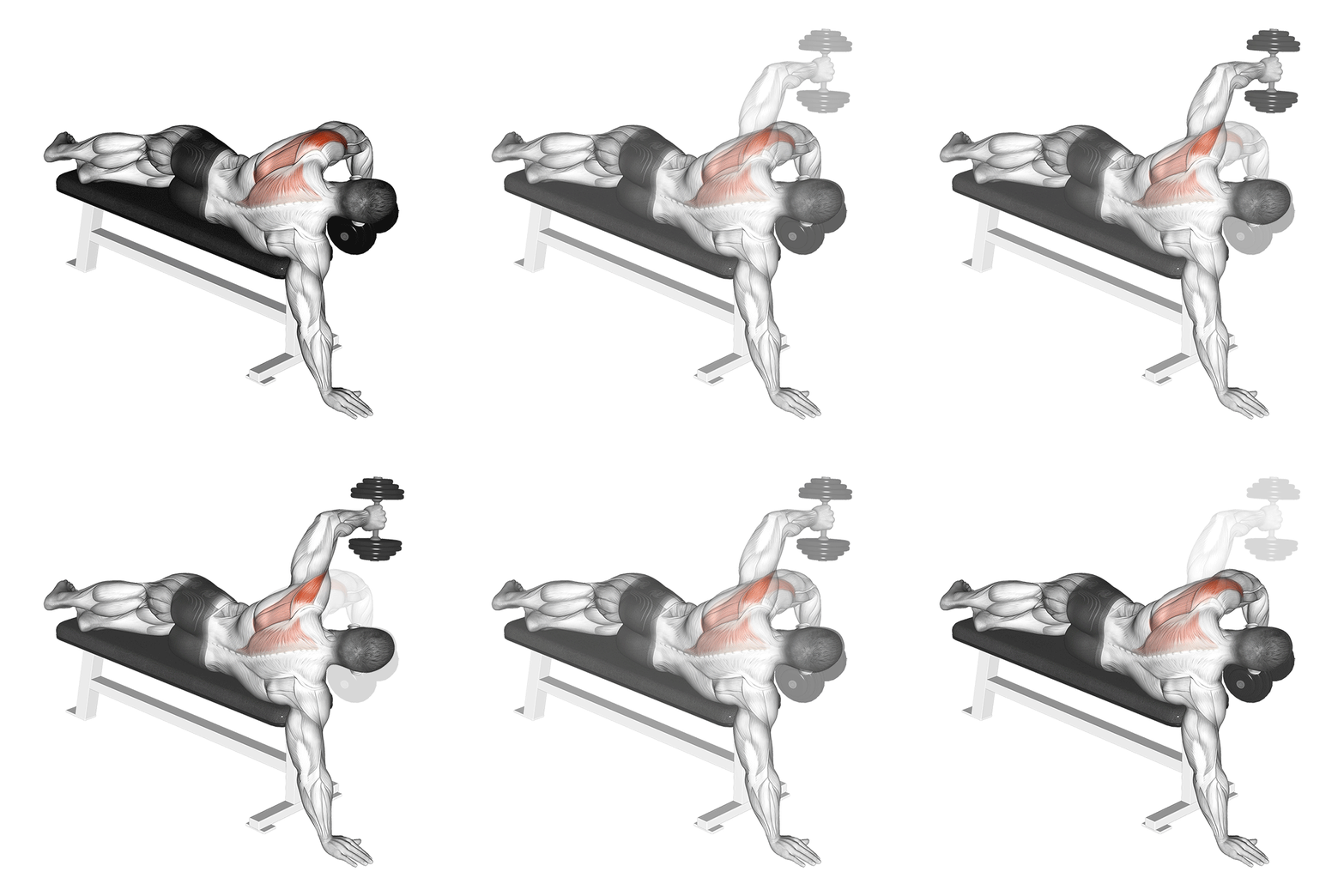
Powell Raise exercise animation
Purpose and technique

How this exercise works

The Dumbbell Powell Raise is an isolation exercise targeting the rear deltoids, part of the shoulder muscle group. It is performed with a single dumbbell, focusing on shoulder stabilization and control. This exercise helps improve shoulder symmetry and posture by strengthening the often underdeveloped rear deltoids.

ShouldersShoulders Back Back
Watch exercise video
Description

Movement overview

The Dumbbell Powell Raise is an isolation exercise targeting the rear deltoids, part of the shoulder muscle group. It is performed with a single dumbbell, focusing on shoulder stabilization and control. This exercise helps improve shoulder symmetry and posture by strengthening the often underdeveloped rear deltoids.

Execution

Step-by-step cues

  1. Begin by lying on your side on a bench, with your upper body supported and your lower body hanging off the edge.
  2. Hold a dumbbell in your top hand with a neutral grip (palm facing down) and let it hang straight down from your shoulder.
  3. Keep your core engaged and your body stable throughout the movement.
  4. Slowly raise the dumbbell upward in an arc until your arm is parallel to the ground, keeping a slight bend in your elbow.
  5. Pause briefly at the top of the movement, ensuring you feel the contraction in your rear deltoid.
  6. Lower the dumbbell back to the starting position in a controlled manner.
  7. Repeat for the desired number of repetitions before switching sides.
Coach notes

Technical tips

  • Focus on maintaining a slow and controlled motion to maximize muscle engagement.
  • Avoid using momentum or swinging the weight; this ensures that the rear deltoids are doing most of the work.
  • Keep your shoulders relaxed and avoid shrugging them during the lift to prevent tension in the neck.
  • Ensure that your core is tight to stabilize your body and prevent unnecessary movement.
  • Start with a lighter weight to master form before progressing to heavier loads.
  • Breathe out as you lift the dumbbell and inhale as you lower it back down.
Continue your session

Return to the complete workout plan

Back to workout plan