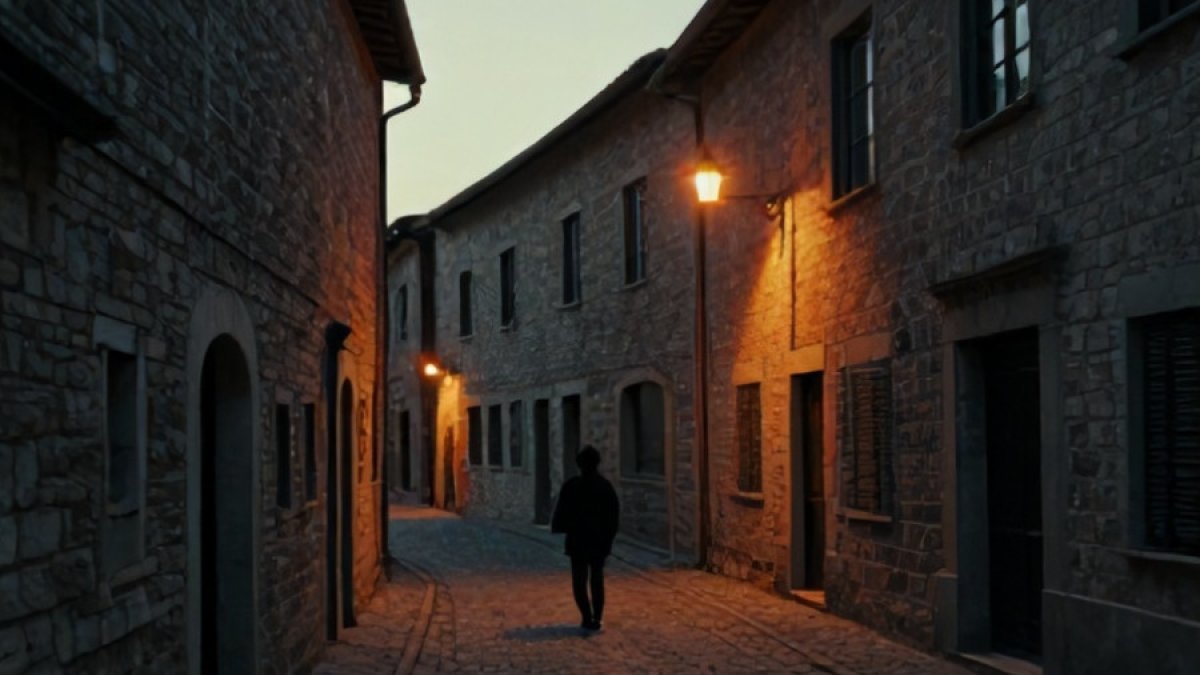
Zamijenite kaldrmu jasnoćom: ponovno otkrijte sebe u mirnim kutcima Europe
The most valuable travel rarely begins with a landmark. It begins when the usual inputs fall quiet: no familiar commute, no routine notifications, no pressure to turn every free hour into output. In Europe’s smaller towns and less-promoted regions, that silence is easier to find.
For developers, technical leads, and ambitious professionals, travel can be more than recovery time between demanding quarters. A changed environment can expose habits that have become invisible: the tendency to fill every pause, to confuse speed with progress, or to approach every problem with the same well-worn mental model. Quiet corners of Europe offer a useful interruption—not because they promise reinvention, but because they create room to notice what deserves adjustment.
Choose texture over a checklist
Major cities have enormous rewards, but they also make it easy to travel as if completing a backlog. You move from one famous site to the next, compare queues, take the expected photograph, and leave with a fuller camera roll but little space for reflection.
A smaller destination changes the pace. Consider the fishing villages of the Croatian islands outside the busiest routes, the slate-roofed towns of Portugal’s interior, Slovenia’s Soča Valley, or the hill settlements of southern Italy. None needs to be treated as a productivity retreat or a search for hidden perfection. Their value is simpler: they make ordinary life visible.
A morning market, a train that arrives when it arrives, a conversation conducted with gestures, or an afternoon walk without a predetermined endpoint can be more restorative than another packed itinerary. These experiences are not “content.” They are a reminder that attention is finite and that a day can be meaningful without being optimized.
Let unfamiliar systems teach you something
Technology professionals spend much of their working life inside systems designed for efficiency: ticket queues, release pipelines, dashboards, calendars, and communication channels. Travel introduces systems that are less familiar and often less controllable. That is part of the education.
In a rural rail station, you may need to read a timetable carefully rather than rely on a real-time recommendation. In a family-run guesthouse, you may need to clarify arrival plans directly. In a town where shops close for part of the afternoon, you adapt instead of treating the closure as a defect.
These are small frictions, but they sharpen useful professional instincts. Good engineering is not just about making every process faster. It is about understanding constraints, communicating clearly, planning for uncertainty, and distinguishing a true failure from a system behaving according to local rules.
Travel with a light operational plan
Quiet travel benefits from preparation, especially when services are less frequent. The goal is not to schedule every hour; it is to remove avoidable stress so curiosity has room to operate.
- Book the first and last night. A secure arrival and departure create flexibility in the middle of a trip.
- Check transport cadence. In smaller places, one missed bus can change the whole day. Know the final connection and keep a backup option.
- Carry offline essentials. Save accommodation details, basic maps, and transport information before leaving reliable connectivity.
- Learn a few practical phrases. Greetings, thanks, food requests, and a polite question about directions go further than perfect grammar.
- Leave one day deliberately unplanned. This is where a recommendation from a café owner or a local walking path can become the trip’s defining memory.
Make space for observation, not just consumption
Changing environments refresh creativity because they disrupt automatic interpretation. At home, a familiar street is mostly background. Elsewhere, you notice doorways, work rhythms, sounds, meal times, and the way public spaces invite people to linger or move on.
That heightened observation can be brought back to work. A product team may discover that it has normalized a confusing workflow. A manager may recognize that a recurring meeting has become noise. An individual contributor may see that a difficult problem needs a walk, a sketch, or a conversation before it needs another hour of concentrated screen time.
There is no need to force grand insights. A better practice is to keep a small, low-pressure record. Each evening, write down three details: something that worked differently than expected, something that held your attention, and one question you want to carry home. The point is not journaling for its own sake. It is training yourself to detect patterns while they are still fresh.
Seek culture through participation
Respectful cultural discovery does not require expert knowledge. It requires patience and a willingness to participate on local terms. Eat where the menu is concise and seasonal. Visit a small museum even if it covers a subject you did not plan to study. Ask what a regional dish is called and how it is usually eaten. Attend a public market, a modest concert, or a neighborhood festival if one happens to be taking place.
These choices resist the shallow version of authenticity that turns communities into scenery. A place does not exist to provide a revelation on demand. It has its own routines, pressures, and pleasures. The visitor’s role is to be attentive, considerate, and appropriately modest.
That mindset also produces better memories. The most durable moments are often specific rather than spectacular: a bakery opening before sunrise, a handwritten menu, a hillside path after rain, or the calm of a square after the day’s visitors have gone.
Bring back a different definition of progress
The practical value of a quiet European journey is not that it makes work disappear. It can make your return to work more intentional. After days shaped by walking, waiting, noticing, and choosing less, the pressure to respond instantly to every request can look less inevitable.
Keep one element of the trip when you return. Protect a screen-free walk. Make one meeting shorter. Reserve an hour each week for uninterrupted thinking. Replace a reflexive “yes” with a clearer question about what outcome is actually needed.
You do not need to trade ambition for slowness. You need enough distance to decide which momentum is yours and which momentum was simply inherited. Europe’s quiet corners offer that distance in a form that is humble, concrete, and deeply human: a different street, a different rhythm, and just enough silence to hear yourself think again.



