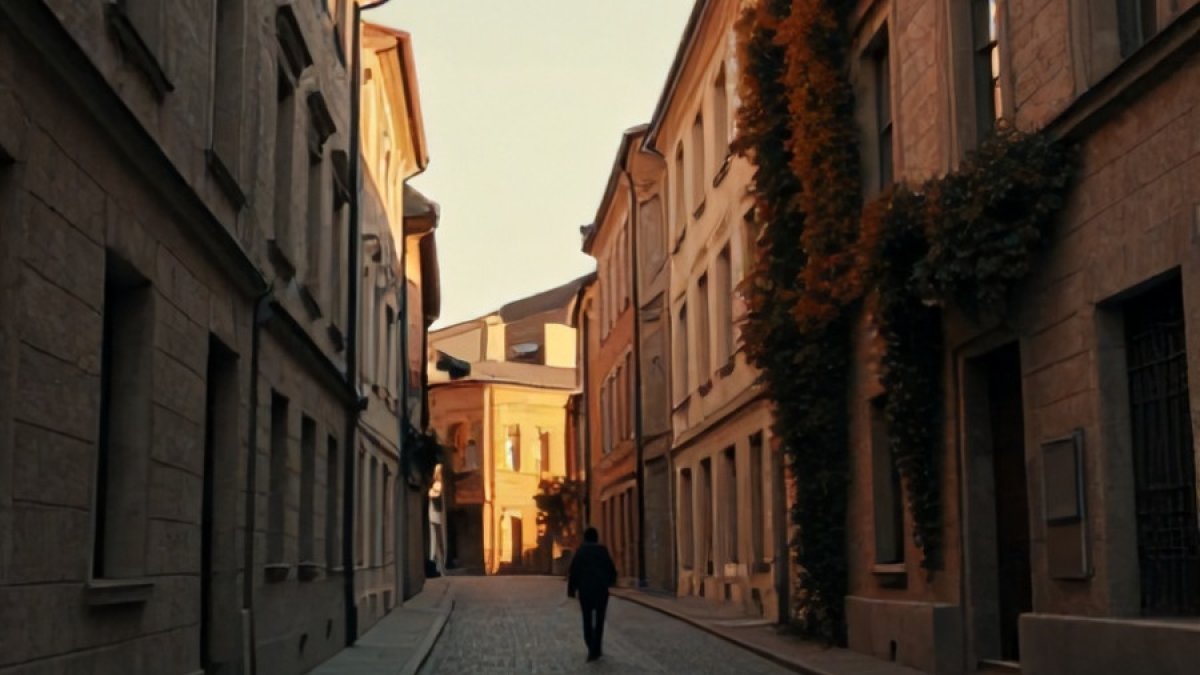
Pronađite svoju sljedeću sjajnu ideju lutajući nehurjenim europskim stazama
Great ideas rarely arrive on schedule. They tend to appear after the meeting ends, after the browser tabs close, or while you are walking somewhere with no urgent reason to check a notification. Europe’s unhurried paths are especially good at creating that kind of space: old lanes that refuse efficiency, coastal walks that stretch a short distance into an afternoon, and train journeys that make looking out of the window feel like part of the work.
For developers, technical leaders, and curious professionals, travel is not an escape from thinking. Done well, it is a change in the conditions under which thinking happens. A different pace can reveal assumptions that felt invisible at a desk: what you optimize for, how quickly you make decisions, and which problems deserve more patient attention.
Choose places that reward lingering
The most productive travel itineraries are not necessarily packed with landmarks. They leave room for a neighborhood to become familiar. In Lisbon, that might mean following steep streets through Alfama without treating every turn as a route failure. In Bologna, it could mean walking beneath the porticoes, stopping at a market, and noticing how the city protects pedestrians from sun and rain without making the experience feel engineered.
These places offer more than scenery. They show what happens when systems evolve around human habits over long periods. A street may be inconvenient for cars but perfect for conversation. A public square may have no single intended use, yet support eating, meeting, resting, performing, and simply watching the day unfold.
That observation transfers surprisingly well to technical work. Many digital products become brittle when designed around one ideal workflow. Places that have accommodated generations of changing needs are a useful reminder to design for variation, recovery, and informal use rather than only the happy path.
Walk without turning the day into a checklist
Walking is one of the simplest ways to let a destination influence your attention. It removes the friction between observation and discovery. You see the repair work on old shutters, the rhythm of delivery vehicles, the way a café changes from morning to evening, and the shortcuts local residents actually use.
Try setting one loose direction instead of a rigid destination. In Edinburgh, walk from the Old Town toward Dean Village and allow the route to change when a side street looks promising. In Copenhagen, follow the harbor or cycle paths slowly enough to notice how crossings, benches, water access, and everyday transport fit together. In the Dolomites, choose a trail with enough time to stop rather than treating the summit as a performance metric.
The point is not to become deliberately inefficient. It is to stop measuring every hour only by output. When work rewards speed and certainty, a walk with no clear deliverable can restore the ability to notice weak signals: a recurring annoyance, an unexpected connection, a question worth carrying home.
A practical walking prompt
Bring a small notebook or use a note app in airplane mode. At the end of a walk, record only three things:
- One detail that made the place easier or more pleasant to use.
- One friction point that residents appear to have adapted around.
- One idea from your work that looks different in this setting.
This is not travel journaling for its own sake. It is a lightweight way to practice observation without converting every experience into content or a productivity exercise.
Let culture challenge your default settings
Culture is often discussed as a collection of attractions. It is more useful to treat it as a set of working assumptions made visible. A late dinner in Spain, a long lunch in France, an evening passeggiata in Italy, or a quiet coffee at a Viennese café can reveal different boundaries around time, sociability, and attention.
There is no need to romanticize any of these customs or assume they solve modern life. Every place has pressures, compromises, and contradictions. The value lies in comparison. If your normal routine compresses meals, conversations, and breaks into administrative gaps, spending time in a setting that gives them a clearer role can make your own habits easier to inspect.
For a technical lead, this can sharpen questions about team culture. Does the team leave enough room for unstructured discussion? Are decisions made quickly because the evidence is clear, or because calendars are full? Is a quiet period seen as a failure of momentum when it may be necessary for sound judgment?
Use travel constraints as a creativity tool
A new environment works best when you do not try to recreate your entire home setup inside it. Keep a minimal toolkit. Capture ideas, read something substantial, and leave the rest deliberately lighter. If you are carrying a laptop, reserve it for a short morning or evening session rather than allowing it to absorb the day.
One useful approach is to take a single open question with you. It might be a difficult architecture trade-off, a career direction, a product concept, or a learning goal. Do not demand an answer. Revisit the question after a museum visit, a train ride, or a long walk, and write down what has changed in your framing.
You may find that the next step is smaller than expected: identify an assumption, sketch a boundary, remove a dependency, ask a better question, or decide that a problem does not need solving yet. Those are meaningful outcomes. Creativity is often less about producing a dramatic breakthrough than reducing confusion enough for the next decision to become obvious.
Build an itinerary with breathing room
A balanced trip needs anchors, not an overfilled calendar. Choose one major activity for a day, then protect open time around it. A morning visit to the Rijksmuseum in Amsterdam can be followed by an aimless walk through quieter canals. A day exploring Kyoto-like density is not required in Europe; instead, consider the compact layers of Porto, Prague, or Florence, where wandering between planned stops can be the main event.
When moving between cities, trains are often ideal for reflection because they create a natural transition. Save offline reading, review your notes, or simply watch the landscape change. Avoid treating transit time as wasted time that must be reclaimed with messages and tasks.
Leave room for the ordinary
The most durable memories are not always the famous view. They may be buying fruit from a market, hearing a language you do not fully understand, waiting in a small station, or returning to the same bakery twice. Ordinary moments make a destination feel less like a collection of evidence that you visited and more like a temporary way of living.
That shift matters because meaningful travel is not about accumulating novelty. It is about becoming more available to it.
Bring home practices, not just photos
The real test of a restorative trip begins after you return. Instead of trying to preserve the feeling of travel, identify one practice worth importing into ordinary life. Take a weekly walk without a destination. Protect an hour for deep thinking before meetings begin. Replace one rushed meal with a slower conversation. Explore a different neighborhood in your own city with the same attention you gave a foreign one.
Europe’s unhurried paths do not hand out ideas on demand. They offer something more useful: a setting where your attention can widen, your routines can become visible, and a stubborn question can loosen its grip. Walk long enough, pause often enough, and the next great idea may not feel like a flash of inspiration at all. It may feel like the natural next turn in the road.



