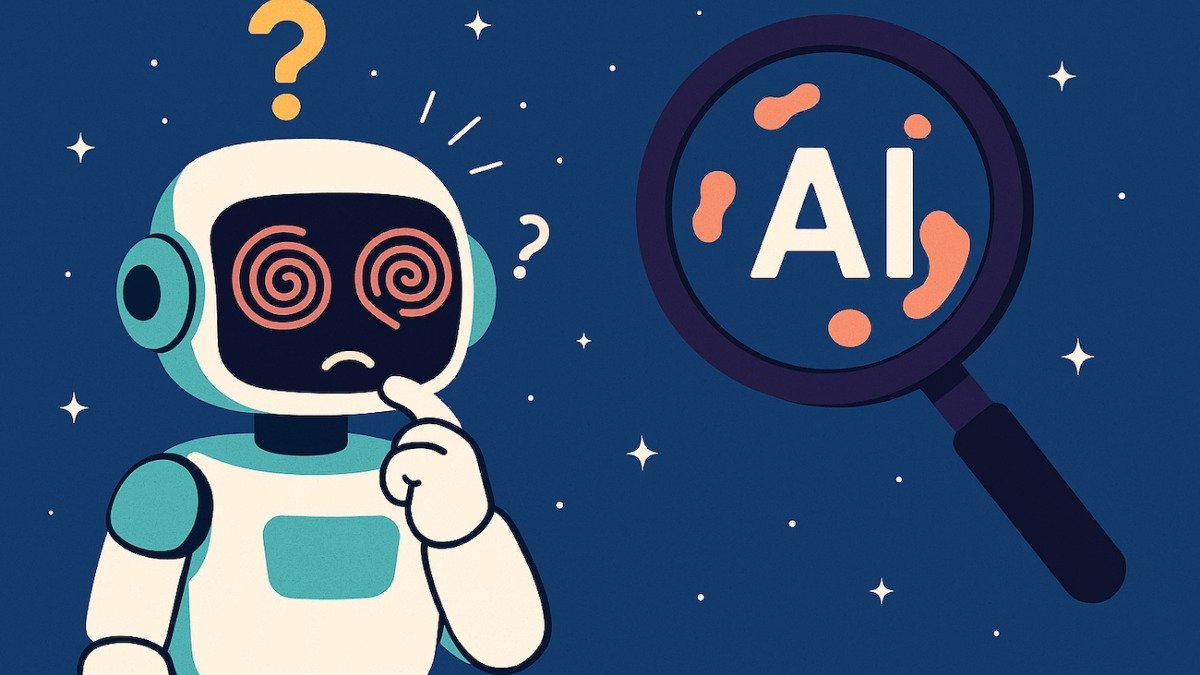
What Is an AI Hallucination and How to Avoid It with a Good Prompt
In the world of artificial intelligence, AI hallucination doesn’t mean the machine is dreaming — it means the model is making things up that sound convincing but aren’t true.
It happens when an AI, trying to be helpful, fills in the gaps with the most likely-sounding answer instead of a factual one.
How AI Hallucinations Happen
An AI model doesn’t “know” facts — it predicts the most probable sequence of words based on patterns it has seen in its training data.
So when your prompt is vague, contradictory, or lacking context,
the model improvises — and that’s when hallucinations occur.
Example:
❌ “Tell me the latest law about data protection in Croatia.”
If the model doesn’t have updated information, it might generate something that sounds official but is completely inaccurate.
⚙️ How to Avoid Hallucinations with a Strong Prompt
-
Be specific and structured.
Instead of asking, “Tell me about security laws,” say:“Summarize the GDPR principles relevant to data protection in Croatia (as of 2024), and provide source references if available.”
This gives the model clarity on what you need, for which timeframe, and in what format. -
Provide context.
Tell the model who you are and what you’re trying to do.
Example:“I’m a web developer preparing an internal privacy policy — focus on practical points for small tech teams.”
That way, the model doesn’t “fill in” from imagination; it adapts to your real situation. -
Ask for sources or confidence levels.
Use instructions like:“List the sources you used,” or “If unsure, say ‘Not certain’ instead of guessing.”
This encourages transparency and reduces overconfident, fabricated statements. -
Avoid ambiguous terms.
Commands like “make it better” are open to interpretation.
Be specific:“Optimize the code for readability and performance.”
Precision limits the model’s freedom to improvise. -
Check the tone of the answer.
When AI sounds overly confident about something that feels off — that’s usually a hallucination.
Add a safeguard like:“Respond factually and include a confidence level (high / medium / low) for each claim.”
The Bottom Line
AI hallucinations are not lies — they’re overconfident guesses.
The model isn’t trying to deceive you; it’s trying too hard to be helpful.
The key is you — the clarity, precision, and context you give through your prompt.
The better you define what you need, the less room the model has to fill in blanks with imagination.
In other words:
AI doesn’t fail because it’s bad — it fails when the human doesn’t think clearly enough before asking.



