WebRTC — When to Use It, and When Not To
What is WebRTC, really?
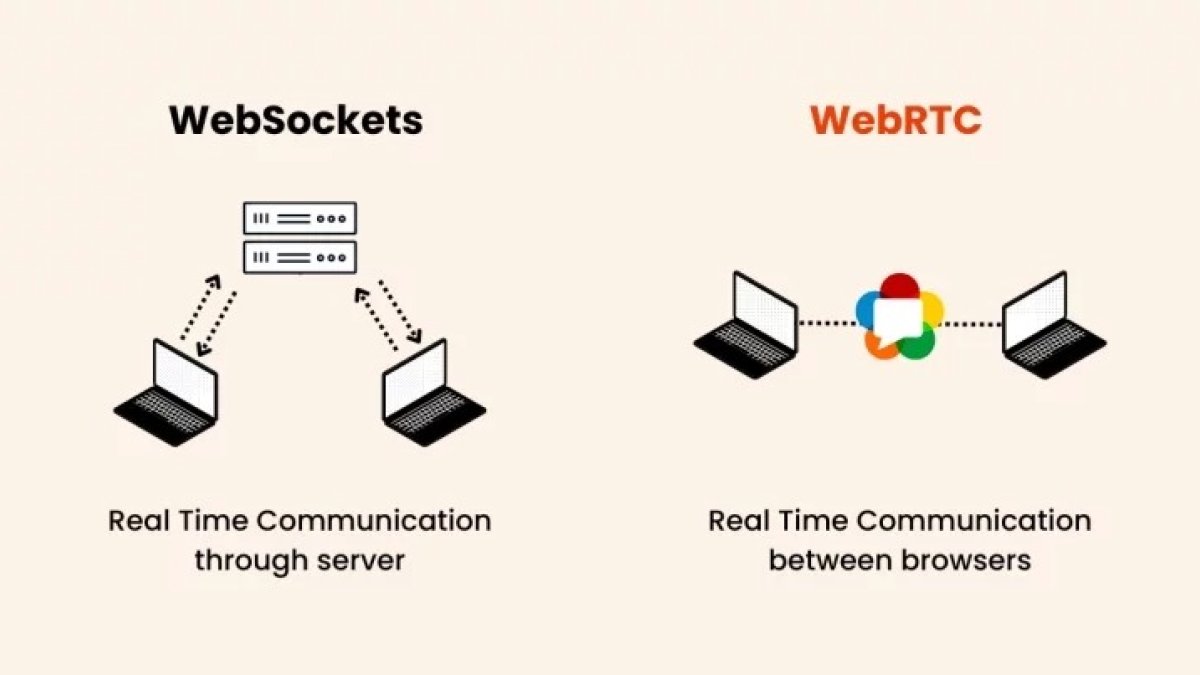
WebRTC (Web Real-Time Communication) is an open-source technology that allows browsers and mobile devices to communicate directly — peer-to-peer — using audio, video, or data.
No plugins, no extra installations, no middleman servers.
Sounds perfect, right? Well… not always.
WebRTC is a powerful tool, but like any tool, it shines in the right hands and context — and can be overkill or risky if used wrong.
✅ When to Use WebRTC
1. When you need low latency
If you’re building apps that require real-time interaction — video conferencing, customer support chats, gaming, live collaboration tools — WebRTC is your best friend.
It connects users directly, bypassing central servers, which cuts latency to milliseconds.
2. When scalability is not your bottleneck
For small to medium user bases or P2P setups (like 1-on-1 calls, or small group chats), WebRTC is extremely efficient and cost-effective.
No need for big backend infrastructure — just signaling and TURN/STUN servers for connection setup.
3. When privacy and encryption matter
WebRTC comes with built-in encryption (DTLS and SRTP) by default.
That makes it ideal for healthcare apps, secure communication tools, or internal enterprise systems where data protection is key.
4. When you want native browser integration
Modern browsers (Chrome, Firefox, Edge, Safari) natively support WebRTC — no plugins, no downloads.
That’s great for frictionless onboarding: users just click allow camera/mic and they’re connected.
⚠️ When Not to Use WebRTC
1. When you need mass scalability (1000+ users)
WebRTC connections are peer-to-peer, meaning every participant connects directly to every other participant.
That’s perfect for 1-on-1 or small groups — but a nightmare for large broadcasts.
If you need to stream to thousands, go for WebRTC with SFU architecture (like Jitsi, mediasoup) or better yet, use HLS / RTMP for broadcast-scale events.
2. When you can’t control network conditions
WebRTC relies on stable network connectivity.
Behind strict firewalls, NATs, or poor connections — expect issues.
TURN servers can help, but they increase cost and latency.
3. When you don’t need real-time communication
If your app doesn’t need instant interaction — say, a YouTube-like streaming platform or recorded webinar — WebRTC adds unnecessary complexity.
Use traditional CDN-based streaming or REST APIs instead.
4. When you need full server-side control
WebRTC is decentralized by design.
If your product relies on logging, content moderation, analytics, or server-side processing — you’ll have to build additional infrastructure to manage it.
Rule of Thumb
Use WebRTC when interaction speed matters more than scale.
Avoid it when reliability, cost, or massive audience reach are your priorities.
Developer Insight
A lot of devs fall in love with the “cool factor” of WebRTC —
real-time video, instant data streams, direct peer connections.
But every technology has its trade-offs.
Sometimes the smart choice is not what’s trendy, but what’s appropriate.
The real skill isn’t in knowing how to implement WebRTC,
but in knowing when not to.
Final Thoughts
WebRTC represents the future of communication — lightweight, fast, and decentralized.
But as a developer or architect, your job is to balance innovation with practicality.
Use WebRTC when it amplifies value for your users.
And when it doesn’t — don’t hesitate to choose the simpler, more predictable path.
Technology is powerful only when it’s used with clarity, not excitement.



