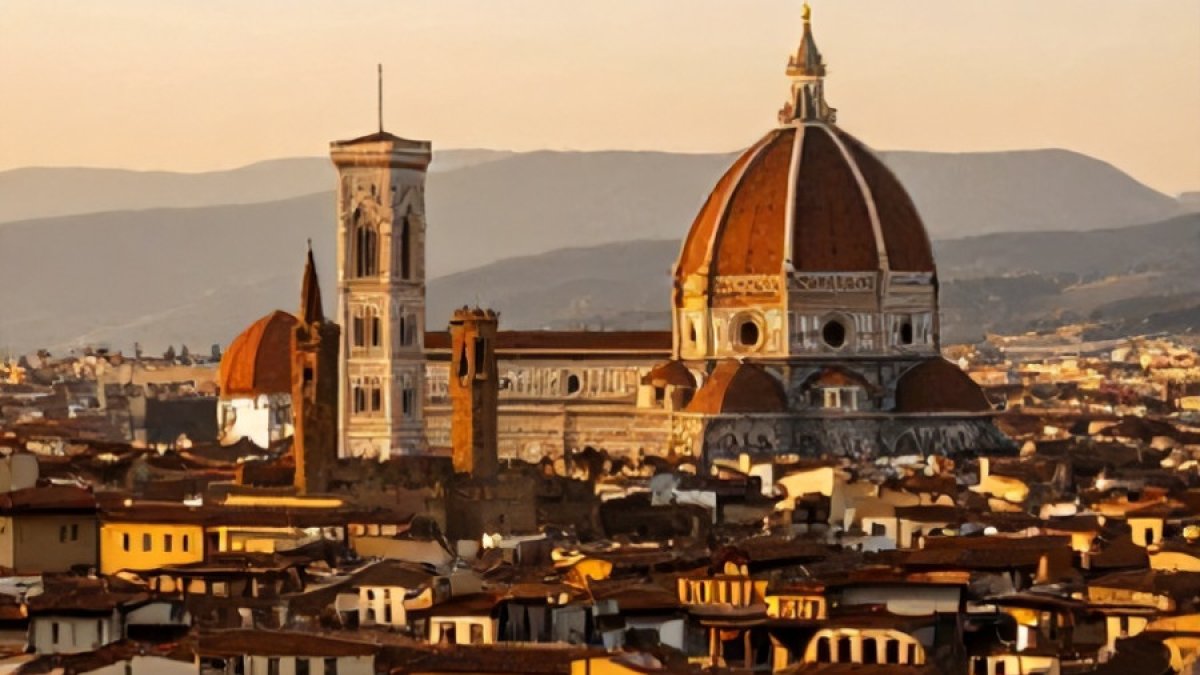
Florence: Where Every Cobblestone Tells a Story
A Renaissance Reset for the Modern Mind
There are cities that impress with their sheer scale, their relentless pace, or their cutting-edge modernity. Florence, however, operates on a different frequency. It’s a place that whispers its grandeur, a city where history isn't confined to museums but is etched into the very fabric of its existence. For those of us who spend our days wrestling with complex systems, debugging code, and architecting the future, a journey to Florence can feel less like a vacation and more like a profound system reset. It’s an opportunity to step outside the relentless hum of the digital world and immerse ourselves in a tangible, enduring beauty that has inspired for centuries.
The allure of Florence lies in its density of meaning. Every piazza, every bridge, every unassuming doorway seems to hold layers of narrative. As a developer, I'm accustomed to deconstructing problems, identifying dependencies, and tracing the lineage of a feature. In Florence, this analytical instinct finds a different kind of application. Instead of tracking down a bug, you might be tracing the artistic lineage of a fresco, or understanding the urban planning that shaped its compact, walkable core. The process is similar: observation, pattern recognition, and a deep dive into context.
The Art of Observation: Beyond the Mona Lisa
When most people think of Florence, they think of Michelangelo's David or Botticelli's Venus. And while these masterpieces are undeniably breathtaking and absolutely worth experiencing, the true magic of Florence often lies in the subtler discoveries. It’s in the way sunlight filters through the narrow streets, illuminating centuries-old stone. It’s in the intricate details of a lesser-known sculpture tucked away in a quiet corner of the Uffizi, or the unexpected beauty of a decorated doorway in the Oltrarno district.
This is where the developer’s eye for detail can be particularly rewarding. We’re trained to spot anomalies, to appreciate elegant solutions, and to understand the craftsmanship that goes into a well-built system. Florence offers a similar landscape for aesthetic and historical appreciation. Take the time to look beyond the obvious headliners. Wander through the Mercato Centrale, not just for the food, but to observe the organized chaos, the vibrant displays, and the human interactions. Notice the architectural transitions as you move from one district to another. These are the "edge cases" of urban design, the unexpected features that reveal the city's evolution.
Practical Discovery: Navigating the Renaissance Landscape
Florence is a highly walkable city, a design choice that feels almost revolutionary to those accustomed to vast urban sprawls and reliance on public transport or cars. This pedestrian-centric design is not just a historical artifact; it’s a fundamental aspect of the Florentine experience. It encourages slow travel, serendipitous encounters, and a deeper connection with the environment.
For ambitious professionals, this translates into a powerful lesson in mindful movement and focus. When you’re walking, you’re not just commuting; you’re actively engaging with your surroundings. You’re more likely to notice a small artisan workshop, hear the strains of an impromptu street performance, or simply feel the texture of the cobblestones beneath your feet. This deliberate pace can be incredibly refreshing for a mind accustomed to rapid context switching and high-pressure deadlines. It’s a reminder that progress isn’t always about speed, but about intentionality.
Consider the practicalities of navigating Florence as a microcosm of project management. You have your key objectives (the Duomo, Ponte Vecchio), but the most rewarding experiences often come from deviating from the main path. Plan your major sites, but leave ample room for spontaneous exploration. Learn a few basic Italian phrases – it’s not just polite, it’s a surprisingly effective tool for unlocking more authentic interactions and discovering hidden gems. This mirrors how understanding a new technology stack often involves diving into its documentation, but the real insights come from experimenting and interacting with it directly.
The Architecture of Inspiration: Learning from Master Builders
The sheer audacity of Florentine architecture is staggering. Brunelleschi's Dome, a feat of engineering that defied convention, stands as a testament to human ingenuity and problem-solving. The Palazzo Pitti, a testament to the power and ambition of its patrons. These structures aren't just buildings; they are expressions of vision, skill, and a deep understanding of materials and form.
For developers, there’s a profound parallel here. We too are builders, albeit of a different kind. We construct complex systems from abstract concepts, striving for elegance, efficiency, and scalability. Studying the works of Renaissance masters offers a unique perspective. How did Brunelleschi solve the problem of lifting heavy stones without traditional scaffolding? How did the Medici family leverage art and architecture to project power and influence? These are questions of problem-solving, resource management, and strategic execution – principles that resonate deeply with technical leadership.
The key takeaway is not to become an architect, but to appreciate the principles of solid construction, thoughtful design, and enduring impact. It’s about understanding that what appears seamless and effortless in a masterpiece often has a foundation of meticulous planning, rigorous execution, and a deep respect for the craft.
A Refreshed Perspective, a Renewed Creativity
Florence is more than just a collection of beautiful buildings and artworks. It's an environment that actively cultivates a shift in perspective. The slower pace, the rich historical context, and the sheer density of human achievement conspire to quiet the noise of everyday life and open up space for new thoughts.
For professionals in fast-paced, technology-driven fields, this immersion in a world built on different values and different timelines can be incredibly rejuvenating. It can spark creativity by exposing you to different ways of thinking and problem-solving. It can refresh your perspective by reminding you of the enduring power of human creativity and the lasting impact of thoughtful design. You might find yourself approaching a tricky coding challenge with a new analogy, or an organizational problem with a fresh set of questions, inspired by the way a Renaissance city was built, piece by enduring piece.
Leaving Florence, you carry not just souvenirs, but a subtle recalibration. The vibrant hues of a fresco, the weight of ancient stone, the echoes of centuries of human endeavor – these experiences embed themselves. They serve as a reminder that even in our digital age, the most profound innovations often build upon timeless principles of beauty, ingenuity, and a deep understanding of human experience. Florence, in its quiet majesty, offers a powerful lesson in the art of building something that truly lasts.



