Choosing the Right PHP Architecture: Monolith vs Modular Monolith vs Microservices
I'll be honest, deciding on an architecture is a bit like choosing a car. You wouldn't take a tiny city car on a cross-country road trip, right? Similarly, the architecture you choose should align with your project's needs, its anticipated growth, and, crucially, your team's skills and experience. We're going to explore three main contenders today: the Monolith, the Modular Monolith, and the Microservices architecture.
The Monolith: The "Everything-in-One-Place" Approach
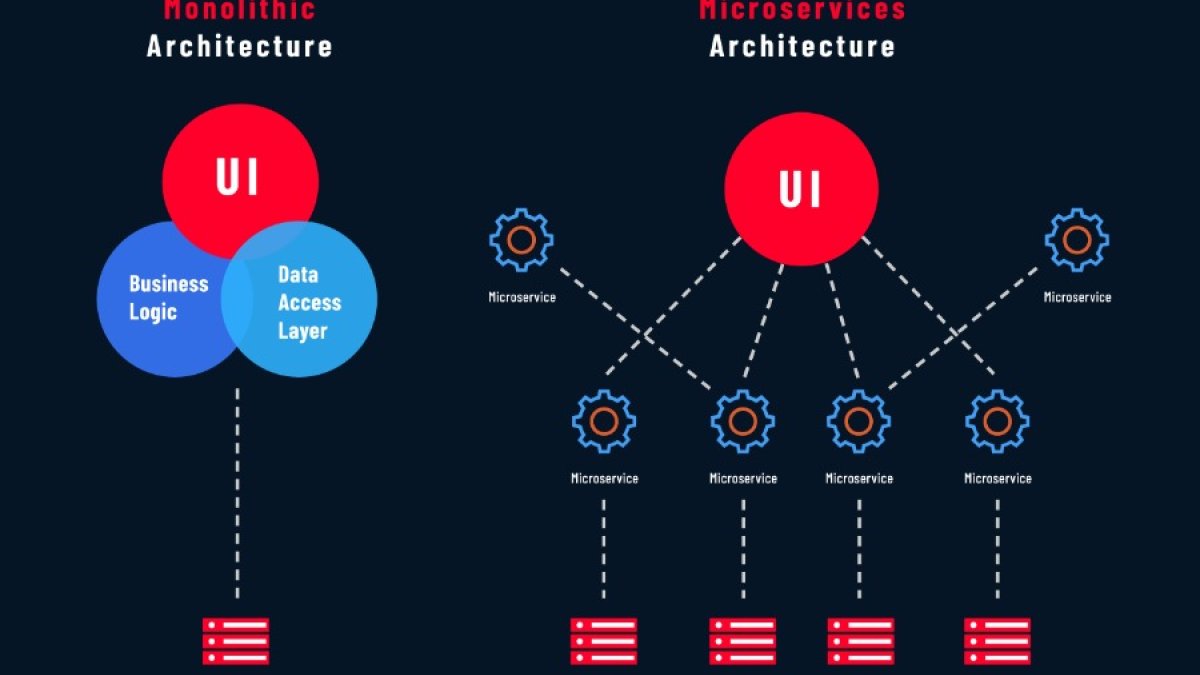
Let's start with the classic: the Monolith. Think of it as a single, self-contained unit. All the code for your application, from the user interface to the business logic to the database interactions, lives in one big codebase. It's like having everything under one roof.
Pros of a Monolith:
- Simplicity: This is often the easiest architecture to get started with. Everything is in one place, which simplifies development, testing, and deployment. There's no need to worry about complex inter-service communication or distributed transactions.
- Easy Development and Debugging: Because everything's in one codebase, you can easily jump between different parts of the application while debugging. IDEs and code editors are generally well-suited for working with a single, large project.
- Performance (Initially): A monolith can be very performant because all the components can interact directly with each other without the overhead of network calls.
- Simplified Deployment: Deploying a monolith is usually straightforward – you deploy the entire application at once.
- Mature Tools and Ecosystem: The tools and frameworks available for building monoliths (think of frameworks like Laravel or Symfony) are incredibly mature and well-documented. You'll find tons of examples, tutorials, and a supportive community.
Cons of a Monolith:
- Scalability Challenges: Scaling a monolith can be tricky. If one part of your application is experiencing high load, you have to scale the entire application, even if other parts are underutilized. This can lead to inefficient resource usage.
- Complex Codebase: As the application grows, the codebase becomes increasingly complex and difficult to understand. This can slow down development and make it harder to onboard new developers.
- Longer Build and Deployment Times: As the codebase grows, so does the time it takes to build and deploy the application. A small change can trigger a full redeployment, which can be time-consuming.
- Technology Lock-in: Changing the underlying technology stack can be a major undertaking. If you want to switch from PHP to another language, you'll likely have to rewrite the entire application.
- Risk of Failure: A bug in one part of the application can potentially bring down the entire system.
When to Consider a Monolith:
A monolith is a great choice for smaller projects, prototypes, or applications with relatively simple requirements. It's also suitable if you need to get something up and running quickly or if your team is small and prefers a simpler approach.
In my experience, I've seen monoliths excel in the early stages of a startup. They allow you to quickly build and iterate on your product, test the market, and validate your ideas. But, it's crucial to keep in mind the potential limitations and be prepared to refactor as your application grows.
The Modular Monolith: The "Organized Monolith"
The Modular Monolith is a refined version of the monolith. It's still a single application, but the codebase is organized into well-defined modules or components. Think of it like a house with separate rooms, each serving a specific purpose (kitchen, bedroom, living room), but still under one roof.
Pros of a Modular Monolith:
- Improved Code Organization: Modules promote better code organization, making the codebase easier to understand and maintain.
- Independent Development: Different teams or developers can work on different modules independently, without affecting other parts of the application.
- Testability: Modules are easier to test in isolation.
- Incremental Scalability: While you can't scale modules independently in the same way you can with microservices, you can often optimize or scale specific modules that are experiencing high load.
- Easier to Refactor: If you decide to move to a microservices architecture later, the modular structure can make the transition easier. Modules can often be extracted and transformed into independent microservices.
Cons of a Modular Monolith:
- Still a Monolith: It still suffers from some of the scalability limitations of a monolith. Scaling individual modules isn't as flexible as with microservices.
- Complexity: Introducing modules adds complexity to the architecture. You need to carefully define module boundaries and ensure proper communication between modules.
- Dependency Management: Managing dependencies between modules can become complex, especially as the application grows.
- Deployment: Deploying the entire application is still required, even if you've only changed one module.
- Potential for Tight Coupling: If not carefully designed, modules can become tightly coupled, defeating the purpose of modularity.
When to Consider a Modular Monolith:
The Modular Monolith is an excellent choice for medium-sized applications or for applications that are expected to grow over time. It provides a good balance between simplicity and maintainability. It’s a great stepping stone from a monolith towards microservices if you anticipate needing to scale more granularly in the future.
I often recommend the Modular Monolith as the preferred approach for many projects. It provides a good balance of agility and scalability, and it sets you up well for future growth. Implementing a clear modular structure from the beginning will save you a lot of headaches down the road.
Microservices: The "Divide and Conquer" Approach
Microservices are the most distributed and complex of the three architectures. Instead of a single application, you build a collection of small, independent services. Each service is responsible for a specific business capability and can be developed, deployed, and scaled independently.
Think of it like a restaurant. You have different services: front-of-house, kitchen, bar, etc. Each service operates independently but works together to provide the overall dining experience.
Pros of Microservices:
- Independent Scalability: You can scale individual services based on their specific needs. This allows you to optimize resource usage and handle peak loads more effectively.
- Technology Diversity: You can use different technologies and programming languages for different services, allowing you to choose the best tool for the job.
- Independent Deployments: Services can be deployed independently, allowing for faster release cycles and reduced risk.
- Fault Isolation: If one service fails, it doesn't necessarily bring down the entire application. Other services can continue to function.
- Improved Team Autonomy: Teams can own and manage their specific services, leading to increased autonomy and faster development cycles.
Cons of Microservices:
- Increased Complexity: Microservices introduce significant complexity in terms of development, deployment, monitoring, and operations.
- Distributed Systems Challenges: You need to deal with distributed systems problems, such as inter-service communication, data consistency, and service discovery.
- Operational Overhead: Managing a large number of services requires a robust infrastructure and automation.
- Debugging Difficulties: Debugging across multiple services can be challenging.
- Network Latency: Communication between services introduces network latency, which can impact performance.
When to Consider Microservices:
Microservices are best suited for large, complex applications that require high scalability, flexibility, and resilience. They are also a good choice if you have a team with experience in building and operating distributed systems. However, microservices require a significant investment in infrastructure, tooling, and expertise.
I've found microservices to be incredibly powerful for large-scale applications with constantly evolving requirements. However, it's critical to start with a solid foundation and a well-defined architecture. Otherwise, you can easily end up with a distributed mess.
Making the Right Choice: Key Considerations
So, how do you decide which architecture is right for your project? Here are some key factors to consider:
- Project Size and Complexity: Smaller, simpler projects are usually best suited for a monolith. As the project grows in size and complexity, you might consider a Modular Monolith or Microservices.
- Team Size and Skills: Do you have a small team with limited experience? A monolith or Modular Monolith might be the better choice. Do you have a team with experience in building and operating distributed systems? Microservices might be a good fit.
- Scalability Requirements: Do you anticipate needing to scale your application significantly? Microservices offer the best scalability options.
- Development Speed: If you need to get something up and running quickly, a monolith is often the fastest way to start.
- Deployment Frequency: How often do you need to deploy changes? Microservices enable more frequent deployments.
- Business Requirements: Consider your business needs and how they might change in the future. Will you need to add new features quickly? Will you need to integrate with other systems?
- Budget: Microservices require a significant investment in infrastructure and tooling. Monoliths and Modular Monoliths are generally less expensive to build and operate.
In my experience, the best approach is often to start with a monolith or Modular Monolith and refactor to microservices later if needed. This allows you to get started quickly, validate your ideas, and then evolve your architecture as your needs change. This incremental approach will minimize risk and maximize your chances of success.
A Practical Example: E-commerce Application
Let's consider an e-commerce application to illustrate the different architectures:
- Monolith: Everything – product catalog, user accounts, shopping cart, checkout, order processing – is in a single application.
- Modular Monolith: The application is divided into modules: a product catalog module, a user accounts module, a shopping cart module, and so on.
- Microservices: Separate services for product catalog, user accounts, shopping cart, checkout, order processing, payment processing, and so on. Each service can be developed and scaled independently.
For a small e-commerce startup, a Monolith or Modular Monolith might be a good starting point. As the business grows and the application becomes more complex, you might transition to microservices to support increased traffic and new features.
Conclusion: Choose Wisely, Adapt Quickly
Choosing the right PHP architecture is a critical decision that can significantly impact your project's success. There's no one-size-fits-all answer. The best architecture depends on your project's specific requirements, your team's skills, and your long-term goals.
Start with a simple architecture that meets your immediate needs and be prepared to adapt as your project evolves. Consider the trade-offs of each approach and choose the architecture that provides the best balance of simplicity, scalability, and maintainability. Always prioritize the needs of your project and your team.
Remember, architecture is not a one-time decision. It's an ongoing process. Be prepared to revisit and refactor your architecture as your application grows and your needs change. Embrace the learning process, and don't be afraid to experiment. Your ability to adapt and evolve your architecture will be a key factor in your success as a software architect.
Good luck, and happy coding!



